PCOS Fertility Lubricant: Why Your Cervical Mucus Is Compromised and How to Fix It


PCOS Fertility Lubricant: Why Your Cervical Mucus Is Compromised and How to Fix It
If you have PCOS and you're trying to conceive, you've probably already heard about irregular cycles, anovulation, and elevated androgens. But there's one aspect of PCOS fertility that rarely gets discussed openly: the impact of PCOS on cervical mucus — and why choosing the right PCOS fertility lubricant can make a significant difference to your chances of conception.
Polycystic ovary syndrome affects up to 1 in 10 women of reproductive age, making it one of the most common hormonal disorders in the world. While most conversations focus on ovulation, what's often overlooked is that PCOS also disrupts the vaginal environment in ways that can directly impair sperm function. This article explains exactly what happens to cervical mucus in PCOS, why a fertility lubricant PCOS-sufferers use matters, and what science says about supporting your natural fertility environment.
Understanding PCOS and Cervical Mucus Dysfunction
Cervical mucus plays a critical role in conception. In a healthy menstrual cycle, mucus produced by the cervix changes in consistency and composition throughout the month. Around ovulation, it becomes clear, stretchy, and highly sperm-permeable — often described as "egg white cervical mucus" (EWCM). This fertile-quality mucus nourishes sperm, neutralises the acidic vaginal environment, and guides sperm toward the egg.
In women with PCOS, this process is frequently disrupted:
- Elevated androgens: High levels of testosterone and DHEA-S common in PCOS can suppress estrogen's normal effects on the cervix, reducing the production of fertile-quality mucus.
- Anovulatory cycles: Without a true LH surge and ovulation, the cervix may never produce the surge of fertile mucus typical of an ovulatory cycle.
- Insulin resistance: Affects hormonal balance at multiple levels, further disrupting mucus quality and cervical gland function.
- Altered vaginal pH: Some studies suggest women with PCOS have a more hostile vaginal environment, with pH levels that can impair sperm motility and survival.
A 2021 study published in the Journal of Clinical Endocrinology & Metabolism found that women with PCOS had significantly lower scores for fertile-quality cervical mucus across their cycles compared to ovulatory controls — even on days when LH surges were detected. This means that even when you do ovulate, your mucus environment may not be supportive of conception.
How a Hostile Vaginal Environment Affects Sperm
🌟 Recommended by Fertility Clinics Worldwide
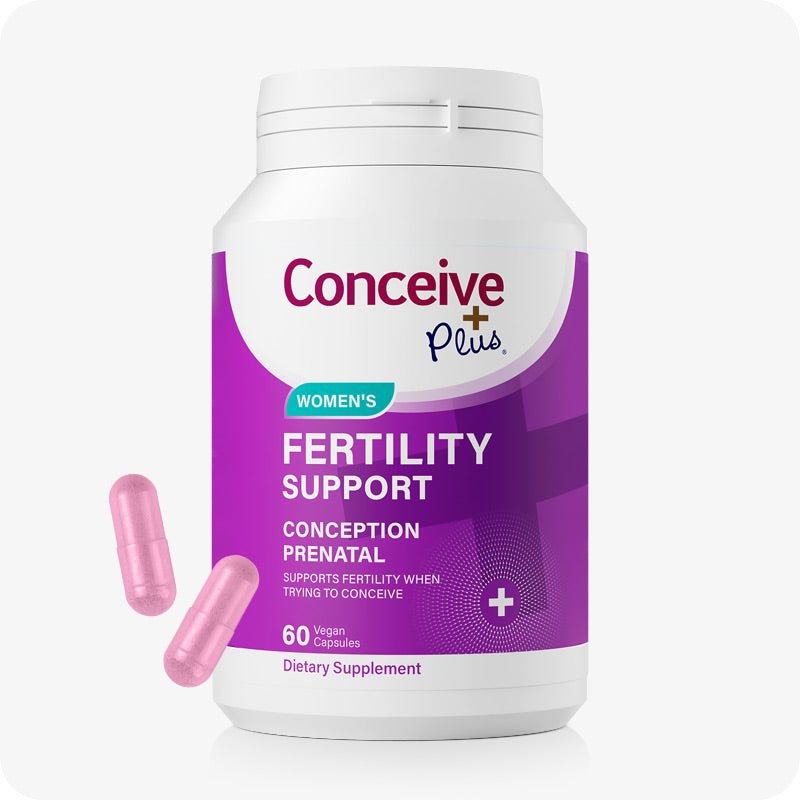
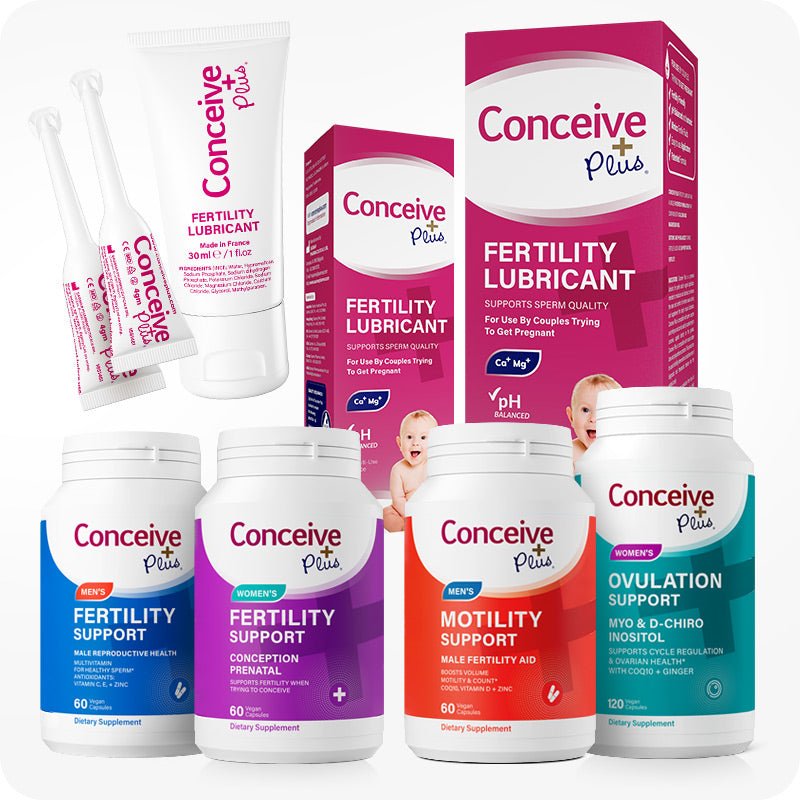
Conceive Plus is clinically formulated to support your fertility journey — from sperm health and ovulation support to specialised lubricants and prenatal vitamins.
Explore Conceive Plus Products →The vaginal environment is naturally acidic, with a pH between 3.8 and 4.5. This acidity protects against infection but is toxic to sperm. Sperm require a pH closer to 7.2–8.0 to survive and function optimally. During ovulation, fertile cervical mucus acts as a buffer — raising pH, filtering out abnormal sperm, and providing nutrients for sperm on their journey.
When this mucus is absent or insufficient — as is frequently the case with PCOS TTC lubricant needs — sperm entering the vaginal canal face a hostile, acidic environment. Research from the American Society for Reproductive Medicine has shown that:
- Sperm motility drops sharply in environments below pH 6.5
- Sperm DNA fragmentation increases in acidic conditions
- The survival time of sperm in an unsupported vaginal environment may be as short as 15–30 minutes
Normally, fertile cervical mucus can keep sperm viable for up to 5 days. Without adequate mucus, that window shrinks dramatically — and with PCOS, timing intercourse becomes even more difficult given irregular cycles.
The Problem With Standard Lubricants for PCOS TTC
Many women with PCOS experience vaginal dryness — partly due to hormonal imbalances, partly due to the stress of TTC, and sometimes as a side effect of medications like metformin or clomiphene. It's completely natural to reach for a lubricant.
However, most commercially available lubricants are toxic to sperm. Studies published in Fertility & Sterility have demonstrated that products like KY Jelly, Astroglide, and even some "natural" lubricants cause significant reductions in sperm motility — sometimes by as much as 60-100% — due to their osmolality, pH, and chemical composition.
The key problems with standard lubricants for PCOS TTC lubricant use:
- High osmolality: Most lubricants are hyperosmotic, drawing water out of sperm cells and causing osmotic damage
- Incorrect pH: Many lubricants have an acidic pH that mimics the hostile vaginal environment rather than correcting it
- Toxic ingredients: Glycerol, propylene glycol, and certain preservatives have been shown to impair sperm function
- No sperm support: Standard lubricants provide no nutritional support for sperm during their journey
For women with PCOS, who already face a compromised mucus environment, using a standard lubricant compounds the problem significantly.
Conceive Plus vs Pre-Seed: Which Is Better for PCOS?
When researching fertility lubricant PCOS options, two products consistently come up: Conceive Plus and Pre-Seed. Both are marketed as sperm-friendly, but there are meaningful differences — particularly relevant for women with PCOS.
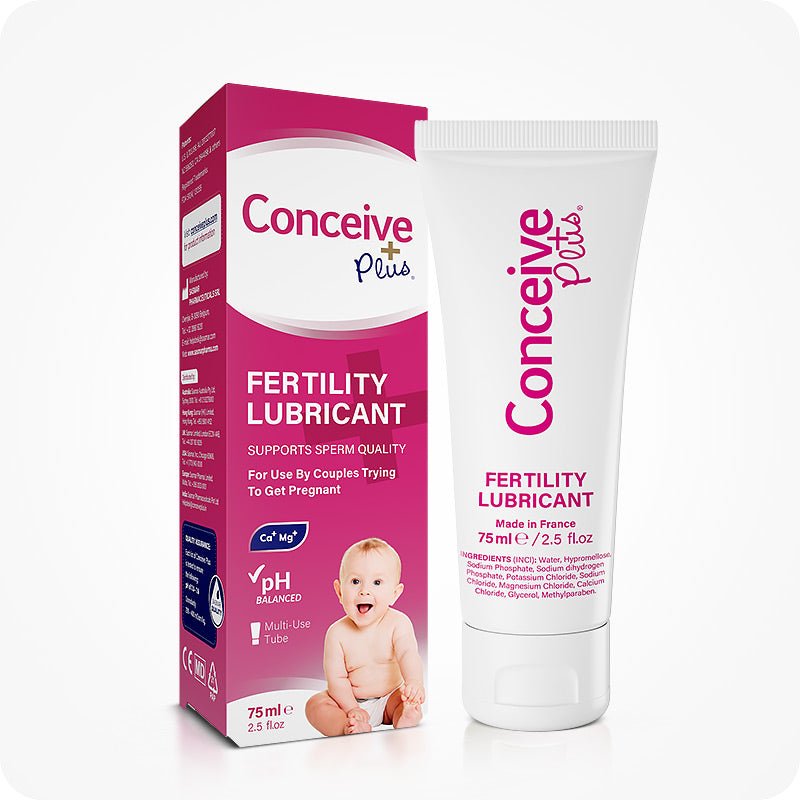
Conceive Plus is the only FDA-cleared fertility lubricant that contains both calcium and magnesium ions — minerals that play a role in sperm capacitation (the process by which sperm become capable of fertilising an egg). It is formulated to match the pH of fertile cervical mucus (6.9–7.4), has an osmolality in the range considered safe for sperm (200–380 mOsm/kg per WHO guidelines), and is clinically backed for use by fertility clinics worldwide.
Pre-Seed is also pH-balanced and sperm-safe, but it does not contain the calcium and magnesium ions that Conceive Plus provides. For women with PCOS whose cervical mucus may be nutritionally deficient as well as structurally reduced, the additional ionic support in Conceive Plus may be clinically meaningful.
Key comparison for PCOS TTC lubricant needs:
| Feature | Conceive Plus | Pre-Seed |
|---|---|---|
| FDA Cleared | ✓ | ✓ |
| Sperm-safe pH | 6.9–7.4 | 6.9–7.4 |
| Calcium + Magnesium ions | ✓ | ✗ |
| Mimics cervical mucus | ✓ | Partially |
| Used by fertility clinics | Widely | Some |
| Available without prescription | ✓ | ✓ |
For women with PCOS who are using a fertility lubricant as a partial substitute for compromised cervical mucus, Conceive Plus provides a more complete biochemical environment for sperm — making it the stronger choice.
How to Use a PCOS Fertility Lubricant for Best Results
Using a fertility lubricant PCOS-appropriately means timing it correctly and using the right amount. Here's the evidence-based approach:
- Track ovulation carefully: With PCOS, LH strips can give false positives due to chronically elevated LH. Use a combination of BBT charting, ultrasound follicle monitoring, and ovulation predictor kits for the most reliable results.
- Apply 15 minutes before intercourse: This allows the PCOS TTC lubricant to warm to body temperature and distribute evenly.
- Use the internal applicator: For maximum coverage of the vaginal canal, use the internal applicators included with Conceive Plus rather than external application only.
- Use the correct amount: 2–4ml is typically sufficient; more is not necessarily better and can actually dilute sperm concentration.
- Time intercourse across the fertile window: With PCOS, the fertile window may be shorter or harder to predict. Consider intercourse every 1–2 days during the suspected fertile window, using Conceive Plus each time.
Shop Conceive Plus Fertility Lubricants →
Lifestyle Factors That Support Cervical Mucus in PCOS
While using the right fertility lubricant PCOS management strategy is important, it works best alongside lifestyle interventions that address the root causes of mucus dysfunction:
Stay well-hydrated: Dehydration directly reduces cervical mucus volume. Aim for at least 8 glasses of water per day, more in hot weather or during exercise.
Manage insulin resistance: Metformin, inositol supplementation (particularly myo-inositol), and a low-glycaemic diet have all been shown to improve hormonal balance in PCOS and may support more regular mucus production.
Consider evening primrose oil (EPO): EPO contains gamma-linolenic acid (GLA), which some practitioners recommend as a cervical mucus support supplement. Use during the follicular phase only — not after ovulation.
Avoid antihistamines in the fertile window: These medications dry up all mucus secretions in the body, including cervical mucus. Avoid them during your expected fertile window if possible.
Manage stress: Chronic stress elevates cortisol, which further suppresses estrogen and can reduce mucus quality. Mind-body interventions including yoga, meditation, and acupuncture have shown benefits for PCOS management and fertility outcomes.
Review medications: Some medications prescribed for PCOS — including certain forms of letrozole dosing — may affect cervical mucus. Discuss with your reproductive endocrinologist if you're concerned.
When to Seek Additional Support
Using a PCOS fertility lubricant and optimising your lifestyle are important steps, but PCOS is a complex condition that often benefits from professional fertility support. Consider speaking to a reproductive endocrinologist or fertility specialist if:
- You've been trying to conceive for 6+ months without success (or 12+ months if under 35 without a PCOS diagnosis)
- Your cycles remain very irregular despite lifestyle interventions
- Ovulation induction medications (Clomid/letrozole) are being considered
- You're interested in IUI or IVF as fertility treatment options
- You have additional fertility factors such as partner infertility, blocked tubes, or other hormonal disorders
Many women with PCOS go on to conceive successfully — often with the right combination of medical treatment, lifestyle support, and tools like Conceive Plus to optimise their natural fertility environment.
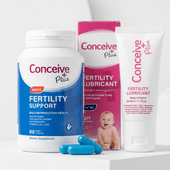
Conceive Plus is the only fertility lubricant with calcium and magnesium ions, clinically formulated to mimic fertile cervical mucus.
Get Conceive Plus Today →
Frequently Asked Questions: PCOS Fertility Lubricant
Q: Does PCOS always affect cervical mucus?
A: Not always, but it frequently does. The hormonal imbalances characteristic of PCOS — particularly elevated androgens and estrogen dysregulation — often reduce the quantity and quality of fertile cervical mucus. The extent varies between individuals.
Q: Can I use Conceive Plus even if I'm unsure about my ovulation timing with PCOS?
A: Yes. Because ovulation timing is difficult to predict with PCOS, using Conceive Plus regularly during your suspected fertile window is a reasonable approach. It won't harm sperm even if you use it on days you're not ovulating.
Q: Is Conceive Plus safe with PCOS medications like metformin or clomiphene?
A: Conceive Plus is a topical lubricant and is not absorbed systemically. It has no known interactions with PCOS medications. However, always consult your doctor if you have specific concerns.
Q: Does a fertility lubricant replace cervical mucus entirely?
A: No lubricant can fully replicate the complex biology of cervical mucus. However, a high-quality PCOS fertility lubricant like Conceive Plus can provide sperm-safe pH buffering, osmolality support, and ionic supplementation that meaningfully improves the conception environment.
Q: How long should I keep trying with a fertility lubricant before seeking medical help?
A: With PCOS, it's generally recommended to seek specialist advice after 6 months of trying if cycles are irregular, or after 12 months if cycles are regular and you're under 35. Don't delay if you're 35 or older — seek advice after 6 months regardless.
Q: Can my partner's sperm quality affect results even if I use a fertility lubricant?
A: Absolutely. Male factor infertility contributes to around 40-50% of conception difficulties. If you've been using a fertility lubricant consistently and have optimised your cycles, it's worth arranging a semen analysis for your partner.
Q: Is Conceive Plus better than Pre-Seed for PCOS specifically?
A: Both are sperm-safe. Conceive Plus has the advantage of containing calcium and magnesium ions that support sperm capacitation, which may be particularly relevant when cervical mucus — normally the source of these ions — is reduced due to PCOS. For this reason, many reproductive specialists recommend Conceive Plus for PCOS TTC.
Q: Does using a fertility lubricant guarantee conception?
A: No lubricant guarantees conception. However, using a clinically-formulated, sperm-safe fertility lubricant removes one barrier to conception — hostile vaginal environment — and may meaningfully improve your chances, particularly if cervical mucus dysfunction is a factor.
Q: Can inositol supplements improve cervical mucus in PCOS?
A: Myo-inositol and D-chiro-inositol have been extensively studied in PCOS and have shown benefits for ovulation regularity and hormonal balance. Some studies suggest improved mucus scores in women taking inositol, though more research is needed specifically on mucus quality outcomes.
Q: What other steps can I take alongside using a PCOS fertility lubricant?
A: Ovulation tracking (via BBT, OPKs, or ultrasound), optimising nutrition, managing insulin resistance, taking appropriate supplements (folate, inositol, vitamin D), maintaining a healthy weight, and reducing stress are all evidence-based steps that complement lubricant use.
Living with PCOS while trying to conceive comes with unique challenges — but understanding the impact of your condition on your fertile environment, and taking targeted action to support it with the right PCOS fertility lubricant and lifestyle strategies, puts you in a much stronger position. Conceive Plus is designed specifically for moments like this: when every element of your conception journey matters.
Ready to Support Your Fertility Journey?
Conceive Plus offers a complete range of clinically-backed fertility products — from sperm-friendly lubricants to targeted supplements for women and men. Trusted by couples and fertility specialists worldwide.
Shop Conceive Plus Now →