Fertility Myths Debunked: What Science Actually Says About Getting Pregnant


When you're trying to conceive, it seems like everyone has advice. Your grandmother swears by one thing, the internet says another, and your doctor tells you something entirely different. With so much conflicting information, it can be incredibly difficult to separate fertility fact from fiction. Worse still, believing the wrong myths can lead to unnecessary stress, wasted effort, or even delayed medical care when you actually need it.
This article is your evidence-based guide to the most pervasive fertility myths — and the real science behind them. Whether you're just starting your conception journey or have been trying for a while, understanding what's true and what isn't could make all the difference.
Myth #1: You Can Get Pregnant Any Day of the Month
One of the most fundamental misconceptions about fertility is that conception is possible at any point during a menstrual cycle. In reality, the fertile window is remarkably narrow.
Ovulation — the release of a mature egg from the ovary — happens just once per cycle, typically around day 14 in a 28-day cycle (though this varies widely). The egg survives for only 12 to 24 hours after ovulation. Sperm, by contrast, can survive in the female reproductive tract for up to 5 days.
This means the realistic fertile window is only about 6 days per cycle: the 5 days before ovulation and the day of ovulation itself. According to research published in the New England Journal of Medicine, pregnancy rates are highest when intercourse occurs on the two days preceding ovulation.
Tracking ovulation using basal body temperature (BBT), cervical mucus changes, or ovulation predictor kits (OPKs) can help you identify your personal fertile window and optimise your timing.
Myth #2: Infertility Is Always a "Female Problem"
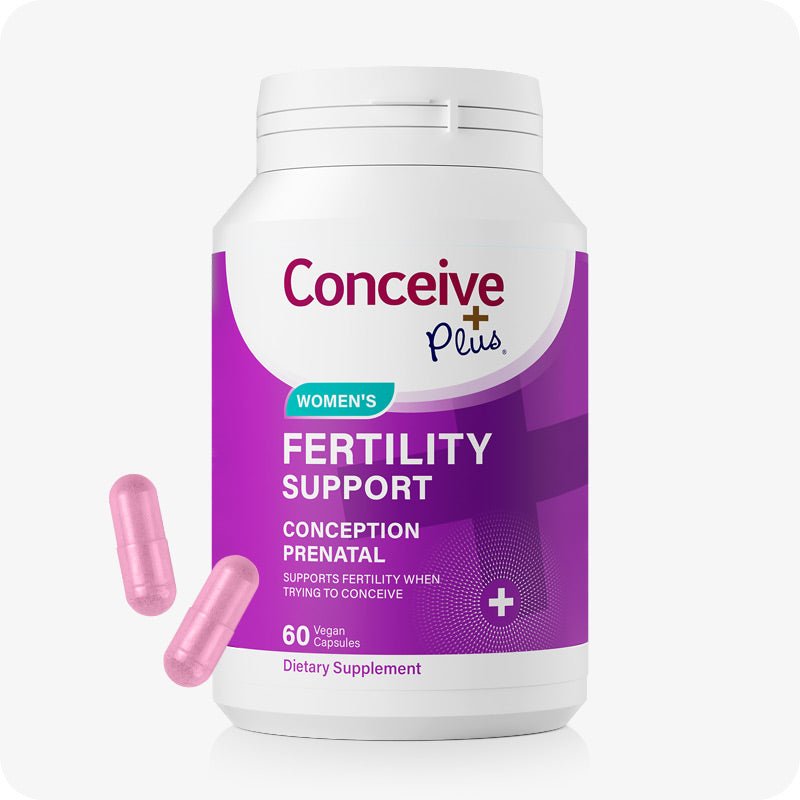
Support your fertility from the inside out. Conceive Plus Women's Fertility Support is clinically formulated with myo-inositol, folate, CoQ10, and key antioxidants to support hormonal balance and egg quality.
This deeply entrenched myth has caused enormous emotional harm to couples throughout history — and it's simply wrong. Male factor infertility contributes to approximately 40–50% of all infertility cases, according to the American Society for Reproductive Medicine (ASRM).
In fact, studies suggest that in roughly one-third of infertile couples, the primary issue is with the male partner; in another third, it's the female partner; and in the final third, both partners have contributing factors — or no cause can be identified at all.
Male infertility is most often related to sperm quality issues: low sperm count (oligospermia), poor sperm motility, abnormal sperm morphology, or a combination of these factors. A basic semen analysis can reveal these problems, yet many couples delay male testing for months or years due to stigma or the assumption that the woman must be the "issue."
The takeaway: both partners should be evaluated when a couple is struggling to conceive. Getting a semen analysis done early can save months of frustration and point treatment in the right direction.
Myth #3: Just Relax and You'll Get Pregnant
Few phrases are more dismissive — or more harmful — than "just relax." While stress certainly affects overall health, the idea that stress directly causes infertility and that relaxation will cure it dramatically oversimplifies a complex biological reality.
Yes, chronic severe stress can disrupt the hypothalamic-pituitary-ovarian axis, potentially affecting ovulation and hormone levels. A 2014 study published in Human Reproduction found that women with high levels of alpha-amylase (a stress biomarker) had a lower probability of conceiving in any given cycle. However, correlation is not causation.
The vast majority of couples who are struggling to conceive have real, identifiable physiological reasons for their difficulty — not stress. Telling them to "just relax" dismisses their genuine medical concerns and can delay appropriate diagnosis and treatment.
Managing stress is valuable for overall wellbeing, and practices like yoga, meditation, acupuncture, and therapy can all be helpful during the fertility journey. But relaxation alone is not a fertility treatment, and framing infertility as a stress-induced problem adds an unjust layer of blame to people who are already suffering.
Myth #4: You Need to Have Sex Every Day to Maximise Your Chances
More isn't always better — especially when it comes to conception timing. While it might seem logical that daily intercourse would maximise your chances, the research is more nuanced.
For men with normal sperm parameters, having sex every day during the fertile window does not significantly improve conception rates compared to every other day. However, for men with borderline sperm counts, frequent ejaculation can temporarily deplete sperm reserves.
The consensus from fertility specialists is to aim for intercourse every 1–2 days during the fertile window (roughly the 5 days before ovulation through ovulation day). This frequency maintains sperm freshness while ensuring adequate sperm counts.
It's also worth noting that excessive focus on "scheduled sex" can become a source of significant psychological pressure for couples. The stress and performance anxiety associated with perfectly timed intercourse can strain relationships and reduce spontaneity. A balanced approach — informed timing without obsessive scheduling — tends to work best for most couples.
Myth #5: Age Only Affects Women's Fertility
While it's widely understood that female fertility declines with age — with a more pronounced decline after 35 — male fertility also deteriorates over time, though more gradually.
Research consistently shows that as men age, sperm quality declines: sperm motility decreases, DNA fragmentation increases, and the risk of genetic mutations rises. A landmark study published in the American Journal of Obstetrics & Gynecology found that paternal age above 40 was associated with increased time to conception and higher rates of miscarriage, regardless of maternal age.
Advanced paternal age has also been linked to increased risk of certain conditions in offspring, including autism spectrum disorder, schizophrenia, and other neurodevelopmental differences — though it's important to note that absolute risk remains relatively small.
For women, egg quantity and quality decline significantly in the mid-to-late 30s. By age 37, a woman has approximately 25,000 eggs remaining (down from roughly 1–2 million at birth). At 40, the monthly probability of natural conception drops to around 5%. These are sobering statistics, but not hopeless ones — especially with assisted reproductive technologies.
Myth #6: Birth Control Causes Long-Term Infertility
Many people worry that years of hormonal contraception will permanently damage their fertility. This is one of the most persistent myths around — and one of the most thoroughly disproven.
The largest study to date on this topic, published in the British Medical Journal, followed over 17,000 women and found that fertility returns relatively quickly after stopping most forms of hormonal contraception. For oral contraceptive pills, fertility typically returns within 1–3 months; for injectable contraceptives like Depo-Provera, return of fertility may take up to 18 months in some cases.
Intrauterine devices (IUDs) — both hormonal and copper — are among the most rapidly reversible forms of contraception: fertility typically returns within the first menstrual cycle after removal.
One important caveat: if an underlying condition like PCOS or endometriosis was present before starting contraception, it may become more apparent after stopping — because contraception often masks symptoms like irregular periods. This is sometimes misattributed as "birth control causing problems" when the condition predated its use.
Myth #7: A Healthy Lifestyle Guarantees Fertility
A healthy body is certainly an asset when trying to conceive, and optimising your lifestyle is genuinely worthwhile. But it would be a harmful oversimplification to suggest that eating well, exercising, and not smoking is all it takes to guarantee pregnancy.
Many people with exemplary health habits struggle with infertility due to structural issues (blocked fallopian tubes, uterine fibroids), genetic factors, chromosomal abnormalities in eggs or sperm, autoimmune conditions, or simply unexplained causes. Conversely, people with imperfect lifestyles conceive easily.
Lifestyle factors that genuinely impact fertility include: maintaining a healthy BMI (being both underweight and overweight can disrupt hormonal balance), avoiding smoking (which accelerates egg loss in women and damages sperm DNA), limiting alcohol consumption, and managing chronic health conditions.
Nutrition matters too: folate deficiency is linked to neural tube defects, and deficiencies in zinc, vitamin D, and antioxidants have been associated with poorer sperm quality. However, a broadly healthy diet and targeted supplementation supports fertility — it doesn't control it.
FAQ: Common Fertility Questions Answered
How long should I try before seeing a doctor?
The standard guideline is: if you're under 35 and have been trying for 12 months without success, consult a fertility specialist. If you're 35 or older, seek evaluation after 6 months. If you have known risk factors (irregular periods, previous STIs, endometriosis, etc.), don't wait — see a doctor sooner.
Does the position during sex affect conception?
No credible scientific evidence supports the idea that specific sexual positions improve conception rates. Sperm are highly motile and reach the cervix within minutes regardless of position. Post-sex gravity rituals like lying down for 30 minutes have not been proven effective either, though they're harmless.
Can I be too fit to get pregnant?
Extreme athletic training — particularly endurance sports with very high caloric expenditure — can disrupt the hormonal axis and lead to hypothalamic amenorrhoea (loss of periods). This is more common in elite athletes. Moderate exercise, including high-intensity workouts, is generally beneficial for fertility and does not cause menstrual disruption in most women.
Do fertility supplements actually work?
The evidence varies by supplement. Folic acid (or folate) is strongly recommended for all women trying to conceive to reduce neural tube defect risk. Coenzyme Q10 has some evidence supporting improved egg and sperm quality. Myo-inositol shows promise for women with PCOS. Zinc, selenium, vitamin D, and omega-3s have supporting evidence for sperm health. Always choose clinically formulated supplements and consult your doctor.
Is it a myth that temperature affects sperm quality?
No — this one is actually true. The testes are located outside the body precisely because sperm production is optimal at temperatures slightly below core body temperature (around 34°C vs 37°C). Prolonged heat exposure — from saunas, hot tubs, laptops on laps, or even tight underwear — can temporarily reduce sperm production. The effect is reversible, typically within 10–12 weeks.
Does the lunar cycle affect fertility?
Despite being a popular folk belief in many cultures, there is no scientific evidence linking lunar cycles to ovulation timing or conception rates. The similar length of the lunar cycle (~29.5 days) and the average menstrual cycle (~28 days) has led to correlation confusion, but they are unrelated physiologically.
Can stress cause miscarriage?
The majority of miscarriages (approximately 60–70%) are caused by chromosomal abnormalities in the embryo — a random event unrelated to stress. While some studies have found associations between severe psychological stress and elevated miscarriage risk, these are observational studies and cannot establish causation. Crucially, everyday life stress has not been shown to cause miscarriage.
Is secondary infertility common?
Yes — secondary infertility (difficulty conceiving after having a child) affects approximately 3 million people in the US alone. It can occur due to age-related changes, new health conditions like fibroids or polyps, changes in partner fertility, weight changes, or simply unexplained factors. Having conceived previously does not guarantee future fertility.
Do irregular periods always mean infertility?
Not necessarily. Irregular periods can indicate that ovulation is occurring unpredictably or not at all, which does affect fertility. Common causes include PCOS, thyroid disorders, stress, and low body weight. However, many people with irregular cycles do conceive naturally, and the underlying cause is often treatable. A proper hormonal workup can clarify what's happening.
Are fertility apps reliable for tracking ovulation?
Fertility tracking apps vary widely in accuracy. Apps that rely solely on calendar calculations assume a regular cycle, which many women don't have. Apps that incorporate BBT data, LH surge detection, or cervical mucus tracking are significantly more reliable. No app or device replaces a professional fertility evaluation when conception has been delayed.
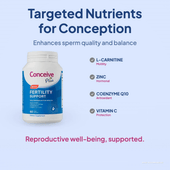
Fertility is a partnership. Conceive Plus Men's Fertility Support is powered by zinc, selenium, CoQ10, and L-carnitine to support healthy sperm count, motility, and DNA integrity.