Does Pre-Seed Really Work? An Honest Comparison With Conceive Plus


If you are trying to conceive, you have probably come across Pre-Seed — the lubricant marketed for couples who want to be sperm-friendly during intercourse. Many fertility forums swear by it. But does Pre-Seed actually work? And how does it compare to Conceive Plus, which is the only fertility lubricant that is both FDA cleared and ion-balanced to match the natural reproductive environment? This article gives you the full, honest picture.
What Is Pre-Seed and How Does It Work?
Pre-Seed is a lubricant launched in the early 2000s specifically for couples trying to conceive. Unlike standard personal lubricants — which research has shown can reduce sperm motility by up to 60% within 60 minutes — Pre-Seed is designed to be isotonic, meaning it has a water content and osmolality intended to be less harmful to sperm. It uses a hydroxyethylcellulose base, which mimics the consistency of fertile cervical mucus.
Pre-Seed quickly became popular because it was one of the first lubricants to acknowledge that most commercial products are sperm-toxic. Its pH is buffered to around 6.0–7.2, which sits within the range generally considered safe for sperm function. For couples where natural lubrication is insufficient during intercourse, Pre-Seed offered a legitimate improvement over products like KY Jelly or Astroglide — both of which have been shown to significantly impair sperm motility in controlled studies.
So far, Pre-Seed sounds reasonable. But when you look more closely at the science — and compare it to what Conceive Plus offers — significant differences emerge.
💙 Support Sperm on Their Journey
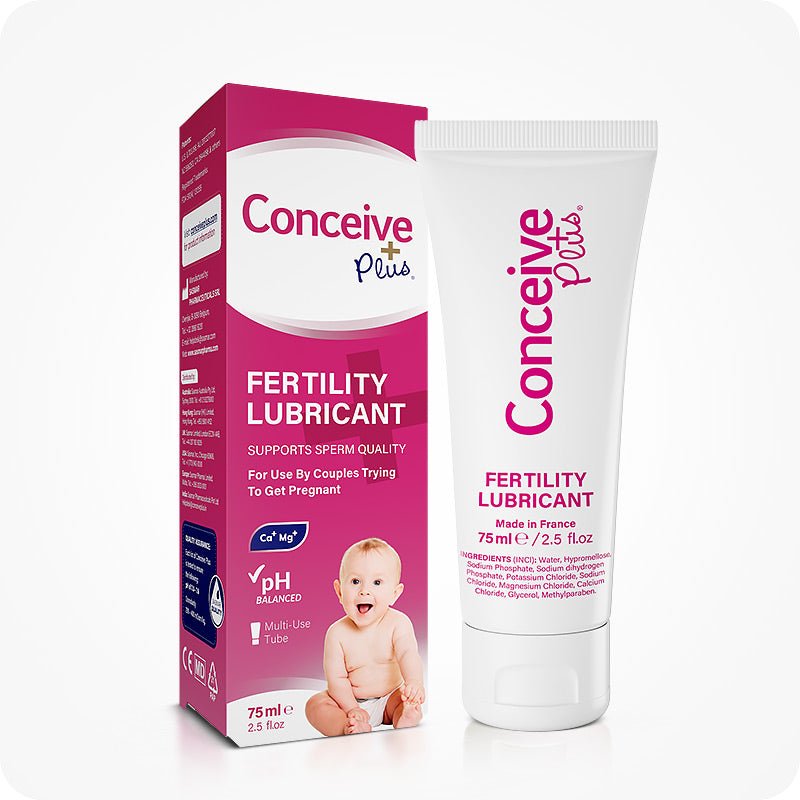
Conceive Plus Fertility Lubricant is FDA cleared and clinically formulated with magnesium and calcium ions to protect sperm from the moment of ejaculation. Shop Conceive Plus Fertility Lubricant →
The Clinical Evidence: Does Pre-Seed Actually Help You Conceive?
The honest answer: Pre-Seed has limited published clinical evidence demonstrating that it improves conception rates. The product's marketing leans heavily on its sperm-friendly formulation — and it is less harmful than standard lubricants — but that is a low bar. The critical question for someone trying to conceive is not simply "does this product avoid harming sperm?" but "does it actively support the conception process?"
A 2014 study published in Fertility and Sterility tested multiple lubricants — including Pre-Seed, Conceive Plus, and several standard lubricants — for their effects on sperm motility, progressive motility, and DNA fragmentation. The results showed that Conceive Plus demonstrated statistically superior sperm motility preservation compared to Pre-Seed at the standard dilution (10% lubricant to sperm ratio). At higher dilutions of 25% and 50%, Conceive Plus continued to outperform Pre-Seed on total and progressive motility metrics.
Another key study from 2012, published in the Journal of Andrology, evaluated commercial lubricants on human sperm. Once again, while Pre-Seed performed better than standard lubricants, it was not the top performer. Products containing divalent cations — specifically calcium and magnesium — showed superior outcomes for sperm function parameters. These ions are a core component of Conceive Plus's formula.
This distinction matters enormously. Sperm capacitation — the biological process by which sperm become capable of fertilising an egg — requires specific ionic conditions. Calcium ions are critical for the hyperactivated motility that allows sperm to penetrate the zona pellucida of the egg. Magnesium supports sperm energy metabolism and helps regulate the biochemical cascades involved in fertilisation. Pre-Seed does not include these ions. Conceive Plus does.
FDA Clearance: Why This Matters More Than You Think
One of the most frequently overlooked distinctions between these two products is regulatory status. Conceive Plus is FDA cleared as a medical device under the category of a fertility-aiding device. Pre-Seed is registered as a cosmetic product.
This is not a technicality. FDA clearance for a medical device requires the manufacturer to demonstrate, through clinical and laboratory evidence, that the product is safe and effective for its intended purpose. The 510(k) clearance pathway that Conceive Plus went through involves rigorous review — including data on sperm toxicity, motility preservation, and biocompatibility. The FDA specifically reviewed clinical evidence showing Conceive Plus supports sperm function and fertilisation.
Pre-Seed, as a cosmetic product, faces a significantly lower regulatory bar. The company self-certifies its safety without the same independent scrutiny that FDA medical device clearance requires. For couples who are serious about every decision they make on their fertility journey, this difference is meaningful.
💙 The Only FDA Cleared Fertility Lubricant
Conceive Plus is clinically formulated and FDA cleared — giving you confidence backed by independent review. Shop Conceive Plus Fertility Lubricant →
pH, Osmolality, and Ion Balance: The Science of Reproductive Environment
Healthy human sperm thrive in a narrow biochemical corridor. The vaginal environment at peak fertility (around ovulation) has a pH of approximately 7.0–8.5. Cervical mucus at this time becomes clear, stretchy (Spinnbarkeit), and has an osmolality of around 260–370 mOsm/kg. These conditions create the ideal pathway for sperm to swim through the cervix and toward the fallopian tubes.
Pre-Seed targets a pH of approximately 6.0–7.2 and an osmolality of around 260–380 mOsm/kg. These are defensible ranges, but they sit at the lower end of the optimal pH window. Studies suggest that at pH 6.0, sperm motility is already meaningfully reduced compared to optimal pH levels above 7.0. The buffering in Pre-Seed is designed to prevent the lubricant from being as acidic as the non-fertile vaginal environment, but it does not actively replicate peak-fertility cervical conditions.
Conceive Plus, by contrast, is specifically formulated to match the ionic profile of human reproductive fluids at the time of ovulation. Its pH of 7.2–8.2 sits squarely in the optimal range for sperm survival and motility. Its inclusion of calcium (Ca²⁺) and magnesium (Mg²⁺) ions at physiologically relevant concentrations directly supports the biochemical processes that sperm need to capacitate and fertilise an egg. No other commercial fertility lubricant — including Pre-Seed — replicates this complete ionic environment.
Think of it this way: Pre-Seed opens a door that standard lubricants slam shut. Conceive Plus opens the same door and also paves the road beyond it.
User Experience: Real Differences in Practice
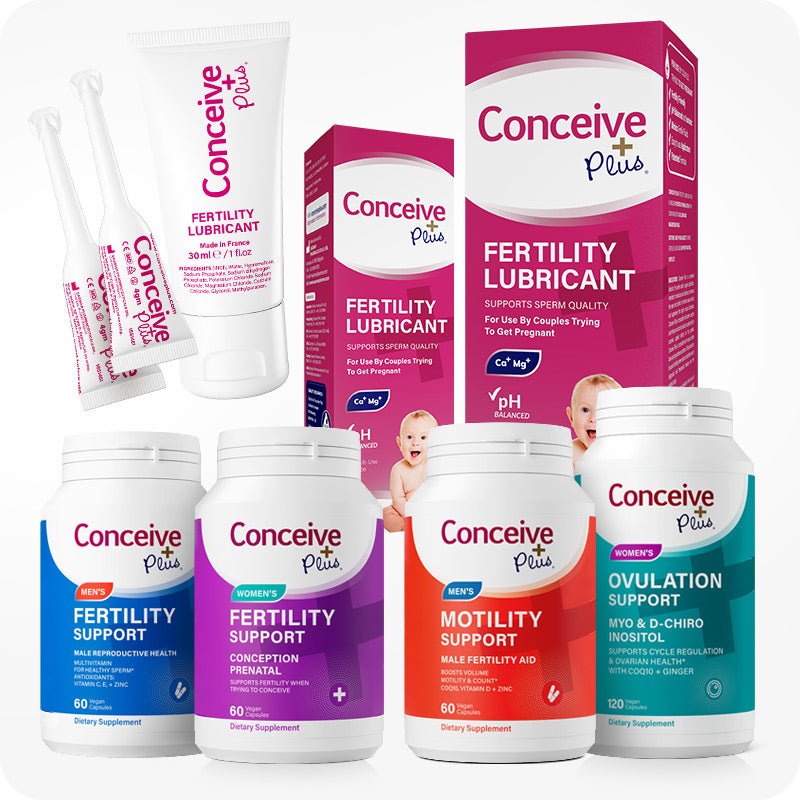
From a practical standpoint, both products are designed for internal use, and both are water-based and condom compatible. Pre-Seed comes primarily in a multi-use tube with applicators for internal application. Conceive Plus is available in a similar tube format as well as pre-filled single-use applicators that allow for precise internal placement before intercourse.
Pre-Seed applicators deliver the lubricant directly to the cervical area, which is the correct placement for a fertility lubricant. Conceive Plus single-use applicators offer the same targeted delivery. Both products can also be used externally as a standard lubricant during intercourse.
Many couples report that Pre-Seed has a slightly watery texture and can feel thin during use. Conceive Plus is frequently described as having a texture more closely resembling natural fertile cervical mucus — which makes sense given its formulation goals. For couples who are particularly attentive to the sensory experience (and who may be stressed about the clinical nature of timed intercourse), this tactile similarity to natural mucus can be genuinely reassuring.
In terms of availability, both products are widely available online and in pharmacy chains across the United States. Price points are comparable, typically ranging from $15–$25 depending on the format chosen.
💙 Experience the Difference
Try Conceive Plus — formulated to match your body's peak fertility environment, not just avoid harming sperm. Shop Conceive Plus Fertility Lubricant →
Who Should Consider Switching From Pre-Seed to Conceive Plus?
If you are currently using Pre-Seed and wondering whether it is working, here are the scenarios where switching to Conceive Plus makes the most clinical sense:
- You have been trying for more than 3 months with Pre-Seed with no success. When conception is not happening and you have already made lifestyle improvements, optimising every variable — including lubricant — is sensible. Switching to a clinically superior formulation costs little and may make a measurable difference.
- There are known or suspected sperm factor concerns. If semen analysis has shown reduced motility or morphology, the ionic support in Conceive Plus may offer meaningful additional benefit for sperm function compared to Pre-Seed's simpler formulation.
- You are undergoing IUI or other assisted reproductive procedures. Sperm quality at the moment of insemination matters enormously. Some fertility clinics recommend Conceive Plus for use around IUI cycles precisely because of its superior sperm-supportive properties.
- You want the reassurance of FDA clearance. If regulatory backing and independent clinical review matter to your decision-making process, Conceive Plus is the clear choice.
- You care about cervical mucus quality. If you track your cycle and know that your cervical mucus is not optimal at ovulation, Conceive Plus provides an environment that more closely replicates fertile-quality cervical mucus than Pre-Seed does.
The Honest Verdict on Pre-Seed
Pre-Seed is not a bad product. Compared to using standard lubricants like KY Jelly or Astroglide when trying to conceive, Pre-Seed is a meaningful upgrade — and if those are your only alternatives, Pre-Seed is the right choice. The product is genuinely sperm-friendly in the sense that it avoids the worst harms of conventional lubricants.
But when you compare Pre-Seed directly to Conceive Plus, the differences are real and clinically significant. Conceive Plus offers:
- Superior sperm motility preservation in head-to-head studies
- A complete ionic environment (Ca²⁺, Mg²⁺) that actively supports sperm capacitation
- Optimal pH range (7.2–8.2) that more closely replicates peak-fertility cervical conditions
- FDA clearance as a fertility-aiding medical device
- A formulation that not only avoids harming sperm but actively supports the conditions needed for fertilisation
For couples who are serious about every decision on their fertility journey, and especially for those who have not yet conceived after several months of trying, Conceive Plus is the evidentially stronger choice.
Frequently Asked Questions
Does Pre-Seed increase your chances of getting pregnant?
Pre-Seed is formulated to be less harmful to sperm than standard lubricants. However, there is limited published clinical evidence that Pre-Seed directly increases conception rates. Its value is primarily in avoiding the significant sperm toxicity associated with conventional personal lubricants. Conceive Plus, by contrast, has clinical studies demonstrating superior sperm motility preservation and includes ionic components that actively support fertilisation biology.
Is Conceive Plus better than Pre-Seed?
Based on peer-reviewed clinical evidence, Conceive Plus outperforms Pre-Seed on key sperm function metrics including total motility and progressive motility. Conceive Plus also carries FDA clearance as a medical device and includes magnesium and calcium ions that support sperm capacitation — something Pre-Seed does not provide. For most couples trying to conceive, Conceive Plus represents the stronger clinical choice.
Can I use Pre-Seed or Conceive Plus during IUI?
Always consult your fertility clinic before using any lubricant around IUI procedures. Some clinics recommend Conceive Plus for use in the days leading up to IUI due to its sperm-supportive formulation. Lubricants are generally not used during the IUI procedure itself. Ask your reproductive endocrinologist or nurse coordinator for guidance specific to your protocol.
When should I use a fertility lubricant during my cycle?
Fertility lubricants are most relevant during your fertile window — typically the five days before ovulation and the day of ovulation itself. Using ovulation predictor kits (OPKs) can help you identify your peak fertility days so you can time intercourse and lubricant use for maximum effect.
Are there any side effects of using Conceive Plus?
Conceive Plus is formulated from biocompatible ingredients and has been tested for safety. Side effects are rare but may include mild sensitivity reactions in some individuals. If you experience irritation, discontinue use and consult your healthcare provider. As with any fertility-related product, discuss usage with your doctor if you have underlying health conditions or are undergoing fertility treatment.
Does the lubricant you use really make a difference when trying to conceive?
Yes — the scientific evidence is clear that lubricant choice matters when trying to conceive. Studies published in respected journals including Fertility and Sterility and the Journal of Andrology have demonstrated that standard personal lubricants can reduce sperm motility by up to 60% within an hour of exposure. Switching to a sperm-friendly lubricant like Conceive Plus eliminates this risk and provides active ionic support for sperm function.
💙 Ready to Make the Switch?
Join the thousands of couples who choose Conceive Plus — the only FDA cleared, ion-balanced fertility lubricant clinically formulated to support conception. Shop Conceive Plus Fertility Lubricant →