Where Does Sperm Production Occurs in the Body and How Does It Travel?
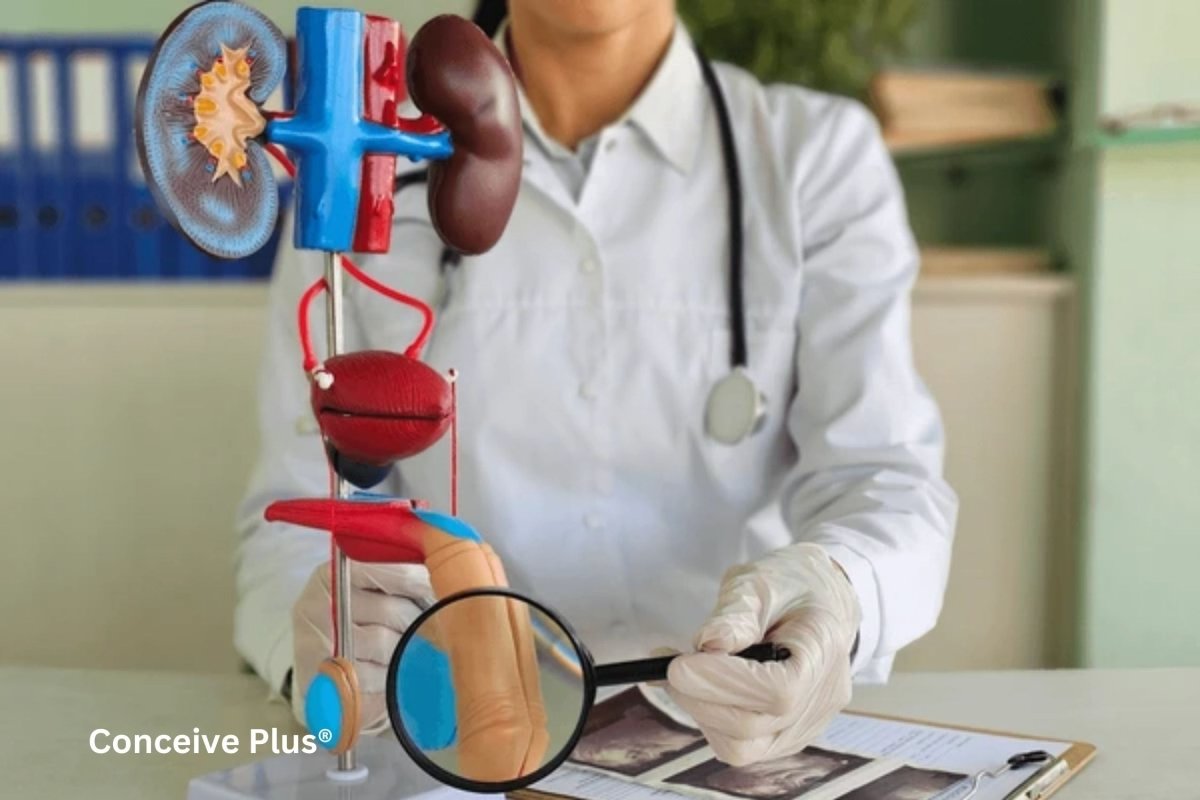

For couples trying to conceive, understanding how sperm production occurs in the male body can be incredibly helpful. This knowledge, from the creation of sperm to its final journey, can make a significant difference in fertility efforts. By breaking down this complex process, we can better appreciate the factors that influence conception and how to support reproductive health. Let’s explore each step of sperm production, maturation, and the path it takes, diving deep into the spermatic pathway.

The Beginning of Sperm Production
So, where does spermatogenesis take place? It all starts in the testes, which are located in the scrotum. The testes are where sperm production occurs in the male reproductive system. Inside the testes are tiny, coiled tubes known as seminiferous tubules. This is where in the human male does spermatogenesis occur. This structure is the site of sperm production and is essential for producing sperm [1].
The Process of Making Sperm: Spermatogenesis
Scientifically, what is the process of sperm production called? The process by which sperm are made is called spermatogenesis, a term that refers to the series of steps that transform immature germ cells into mature, motile sperm. The process spermatogenesis happens over several weeks and involves various stages [2].
During these sperm development stages, cells divide and undergo changes, assisted by hormones like testosterone. Spermatogenesis produces millions of sperm every day, but it requires time. How long does spermatogenesis take? Generally, it takes around 64 days to complete from start to finish [3].
Top Tip: Maintaining a diet rich in essential nutrients like zinc and folic acid can support healthy sperm production.
Where Do Sperm Mature?
After their initial formation, sperm aren't quite ready to fertilize an egg. They need to mature. Where do spermatozoa mature? The answer lies in the epididymis, a long, coiled tube on top of each testicle. Here, where do sperm cells mature is crucial because this is where sperm gain motility and the capability to fertilize an egg [4].
The Journey of Sperm: The Spermatic Pathway
Once mature, the sperm begins its journey through the male reproductive system. This journey is known as the pathway of sperm. It starts in the epididymis and moves through the vas deferens, a muscular tube that propels the sperm forward. This is part of the spermatic pathway and is essential for moving sperm from storage to potential ejaculation [5].
The path of the sperm continues as the sperm travels into the ejaculatory ducts, where it mixes with fluids from the seminal vesicles and the prostate gland. This mixture forms semen, which provides nutrients and a medium for sperm movement. The sperm pathway is completed when the semen is ejaculated through the urethra and out of the body.
What is the pathway of sperm in order? It goes from the testes to the epididymis, then to the vas deferens, ejaculatory ducts, and finally through the urethra.
Top Tip: Regular physical activity and avoiding smoking can improve sperm health and support their journey.

✨ Support Healthy Sperm
Our Motility Support supplement contains Zinc, CoQ10, and L-Carnitine — clinically studied nutrients for sperm health and motility.
Shop Now — $34.95✓ Free shipping on orders over $40 | ✓ Trusted by millions of couples worldwide
If you're wondering does working out increase sperm count, be sure to read our article on how exercise can impact male fertility and sperm production.

How Does Sperm Travel to the Egg?
How does sperm travel? Once ejaculated, sperm begin their quest to reach the egg. The sperm travel path involves navigating through the female reproductive system, starting with the cervix, moving through the uterine cavity, and finally reaching the fallopian tubes, where fertilization typically occurs.
The pathway for sperm isn't a straightforward one. It's filled with challenges, such as navigating cervical mucus and uterine contractions. That's why understanding the pathway of a sperm cell is so important.
Top Tip: Staying hydrated and maintaining a balanced diet can improve sperm motility and reproductive health.
Storage and Maturation: The Role of the Epididymis
After spermatogenesis sperm are stored in the epididymis, where they remain until ejaculation. This period is crucial for sperm maturation, enabling them to acquire the motility and functionality needed for fertilization. The sperm cell pathway from production to ejaculation is a well-coordinated process that ensures only the best sperm have a chance at fertilization.

If you're curious about the site of storage and maturation of sperm in the male body, you can learn more about its crucial role in fertility in this detailed article.
Visualizing the Pathway: Sperm Flow Chart
For visual learners, a pathway of sperm flow chart can be a helpful tool to understand the entire journey of sperm from the testes to potential fertilization. This chart maps out every step of the pathway of the sperm and can be instrumental in education about male fertility.
Common Challenges Along the Pathway of the Sperm
Sometimes, the pathway of the sperm can face obstacles, like blockages or low motility, making conception harder. Issues such as varicocele, hormonal imbalances, and lifestyle factors like diet and stress can all impact how sperm production occurs in the body and their subsequent journey through the spermatozoa pathway.
Understanding which structure is the site of sperm production—the testes—can help pinpoint where things might be going wrong and allow for targeted interventions to improve fertility.
Top Tip: Wearing loose-fitting clothing and avoiding excessive heat can help maintain a healthy environment for sperm production.

The Bottom Line
By knowing how sperm production occurs in the body and the pathway of a sperm from start to finish, couples can better understand the factors that affect conception. Familiarity with the spermatic pathway and the sperm pathway can help in recognizing potential obstacles and taking proactive steps to enhance fertility. A healthy lifestyle, early detection of potential issues, and professional guidance can significantly improve the chances of successful conception.
FAQs
What is the pathway of sperm in order?
The pathway starts in the testes, moves to the epididymis, then through the vas deferens, ejaculatory ducts, and finally out through the urethra.
How long does spermatogenesis take?
The entire process of spermatogenesis takes about 64 days, plus an additional 14 days for sperm to mature in the epididymis.
Where do sperm start their journey?
Sperm begin their journey in the seminiferous tubules within the testes.
What is the process of sperm production is called?
The process of sperm production is called spermatogenesis.
After spermatogenesis, where are sperm stored?
After spermatogenesis, sperm are stored in the epididymis until ejaculation.
Citations
- Parekh NV, Lundy SD, Vij SC. Fertility considerations in men with testicular cancer. Transl Androl Urol. Available at: https://www.ncbi.nlm.nih.gov/pmc/articles/PMC6995852/
- Johnson L, Thompson DL Jr. Age-related and seasonal variation in the Sertoli cell population, daily sperm production and serum concentrations of follicle-stimulating hormone, luteinizing hormone and testosterone in stallions. Biol Reprod. Available at: https://pubmed.ncbi.nlm.nih.gov/6414546/
- Amann RP. The cycle of the seminiferous epithelium in humans: a need to revisit? J Androl. Available at: https://pubmed.ncbi.nlm.nih.gov/18497337/
- Cooper TG. Sperm maturation in the epididymis: a new look at an old problem. Asian J Androl. Available at: https://pubmed.ncbi.nlm.nih.gov/17589792/
- Vasan SS. Semen analysis and sperm function tests: How much to test? Indian J Urol. Available at: https://www.ncbi.nlm.nih.gov/pmc/articles/PMC3114587/
🌱 Boost Male Fertility Naturally
Conceive Plus Men's Motility Support is formulated with the nutrients that matter most for sperm quality, count, and motility.
Shop Men's Fertility →Frequently Asked Questions
Recommended by Fertility Experts
Conceive Plus Men's Fertility Support
Designed to support healthy sperm production, motility, and overall male reproductive health with clinically studied nutrients.
Shop Now →Q: How is sperm produced in the body?
A: Sperm production, known as spermatogenesis, occurs in the seminiferous tubules of the testicles through a highly organized process that takes approximately 74 days from start to finish. The process begins when germ cells divide and mature under the influence of testosterone and follicle-stimulating hormone (FSH), eventually developing into mature sperm cells with a head, midpiece, and tail. According to the American Society for Reproductive Medicine (ASRM), a healthy male produces approximately 1,500 sperm per second, or about 1.5 million per day. This continuous production depends on optimal testicular temperature, adequate nutrition, and hormonal balance, all of which can be supported through proper lifestyle choices and supplementation like Conceive Plus for women or complementary male fertility support.
Q: Where does sperm production occur in the male body?
A: Sperm production takes place primarily in the seminiferous tubules, which are tightly coiled tubes found within the testicles (also called testes). Each testicle contains approximately 300 to 600 seminiferous tubules where spermatogenesis occurs, supported by specialized cells called Sertoli cells that nourish developing sperm. The testicles maintain a temperature approximately 2-3 degrees Fahrenheit lower than core body temperature, which is essential for proper sperm development and motility. After maturation in the seminiferous tubules, sperm move into the epididymis—a comma-shaped structure attached to each testicle—where they continue to mature and gain the ability to swim.
Q: How does sperm get released from the body?
A: During ejaculation, sperm travel from the epididymis through the vas deferens (a muscular tube) toward the urethra, where they mix with seminal fluid from the seminal vesicles and prostate gland to form semen. The seminal fluid provides nutrients, including fructose and proteins, that support sperm survival and motility during their journey through the female reproductive tract. During typical ejaculation, a male releases approximately 2-5 milliliters of semen containing 40 to 300 million sperm, though fertility can occur with lower counts depending on sperm quality and motility. For couples focused on conception, understanding this process highlights the importance of overall male reproductive health, which can be supported through proper nutrition and supplementation alongside female fertility support products like Conceive Plus.
Q: Does sperm get absorbed into the female body?
A: Sperm are not absorbed into the female body in the traditional sense; instead, they are transported through the reproductive tract toward the egg. After ejaculation into the vagina, sperm must navigate through the cervix, into the uterus, and finally into the fallopian tubes, where fertilization typically occurs. The female reproductive tract contains acidic cervical mucus that can be hostile to sperm, though during the fertile window, cervical mucus becomes more alkaline and receptive to support sperm survival and transport. Healthy cervical mucus quality is crucial for conception success—this is why many fertility-focused couples use products like Conceive Plus, which is specifically formulated to support the cervical environment and enhance sperm survival and transport during intercourse.
Q: How can I improve sperm production and quality?
A: Sperm production can be optimized through lifestyle modifications including maintaining a healthy weight, avoiding smoking and excessive alcohol, managing stress, and ensuring adequate sleep—factors supported by research from the National Institutes of Health. Nutrition plays a critical role in spermatogenesis; adequate intake of zinc, selenium, vitamin C, and vitamin E has been shown to support sperm health and motility according to ASRM guidelines. Regular moderate exercise, avoiding excessive heat exposure to the testicles, and limiting exposure to environmental toxins can all contribute to better sperm parameters. For couples trying to conceive, while male reproductive health is important, supporting the entire conception environment—including female reproductive health through products like Conceive Plus—creates the best conditions for natural conception and improved fertility outcomes.
Trusted by Couples in Over 70 Countries
Support Male Fertility From the Inside Out
Male fertility is just as important as female fertility in the conception journey. Conceive Plus Men's range delivers targeted nutritional support to promote healthy sperm and overall reproductive wellbeing.
Shop Men's Range →