What Are the Early Signs and Symptoms of Pregnancy?


Women trying to conceive often feel excited but also confused about knowing exactly when they’ve become pregnant. If you are also one trying to conceive, identifying the early signs and symptoms of pregnancy can help you clear your confusion.
As you achieve pregnancy, which is when a fertilized egg implants into the uterus, your body undergoes many hormonal and physical changes. These changes result in some characteristic signs and symptoms that indicate you are pregnant [1].
In this article, we will understand some common early pregnancy signs, what causes them, and when it is the best time to perform a pregnancy test.

What are the Signs of Early Pregnancy?
Here are some common signs and symptoms of early pregnancy and an explanation of what causes these signs and symptoms:
-
Missed Period
If you have regular menstrual cycles and suddenly your period is late or absent, it could be a sign that you're pregnant. When the body detects pregnancy, it increases the progesterone and human chorionic gonadotrophin hormone (hCG). These hormones prevent the uterine lining from shedding, which results in no period in pregnancy [2].
However, some women may still experience light bleeding or spotting during early pregnancy, for example, implantation bleeding when the fertilized egg implants into the uterus [3]. So, it's not a good idea to rely solely on missed periods as an indication of pregnancy.
-
Morning Sickness
Nausea or morning sickness can occur at any time of the day and is one of the most common symptoms in early pregnancy. It usually lasts until the end of the first trimester.
Some women may also experience vomiting along with nausea. Reports show that hormonal changes during early pregnancy, especially the rise in hCG levels, are possible causes of morning sickness in the first trimester [4].
-
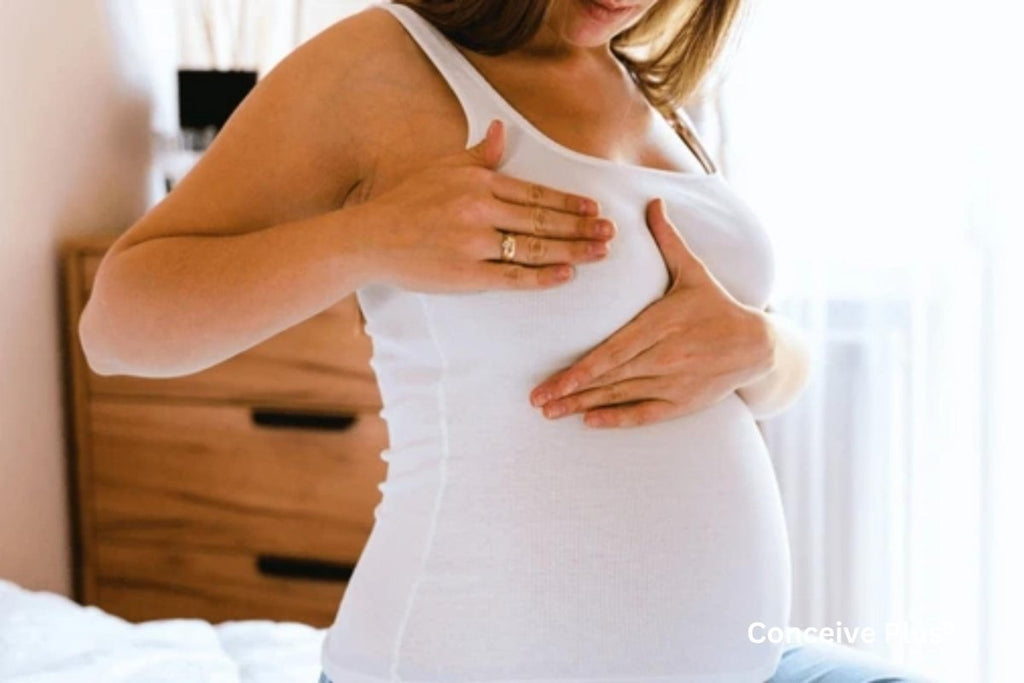
Tender or Swollen Breasts
Changes in your breast tissues occur multiple times during the menstrual cycle, but some characteristic changes can be an indication of pregnancy. You may notice that your breasts feel more tender, swollen, or sore than usual.
Some women may also notice the darkening of the areolas, which is also a normal sign of pregnancy. These changes in breast tissue are influenced by increased estrogen and progesterone hormones in the early days of pregnancy.
-
Fatigue
It is normal to feel tired or exhausted during the early phases of pregnancy. As your body undergoes many changes to support a growing baby, it requires more energy.
Increased progesterone levels can also make you feel more fatigued. If, by the end of your menstrual cycle, you find that you need more naps or rest than usual, this could be an early pregnancy symptom.
-
Frequent Urination
Pregnancy increases the production of blood in the mother's body to support her reproductive organs and the growing fetus [5]. Increased blood flow during pregnancy means your kidneys work harder to filter extra fluids. This can cause frequent urination, especially in the first few weeks.
Frequent urination happens throughout pregnancy, but in the later stages, it’s mainly caused by the growing uterus, which expands beyond the normal size of uterus, pressing on the bladder.

✨ Think You Might Be Pregnant?
Get fast, accurate results up to 6 days before your missed period with our early detection pregnancy test.
Shop Now — $9.80✓ Free shipping on orders over $40 | ✓ Trusted by millions of couples worldwide
-
Food Cravings or Aversions
Pregnancy-related changes in the body can also change your sense of taste and smell. You may start craving certain foods or drinks, or you might experience strong aversions to foods that you once loved. These signs are also due to the hormonal changes during early pregnancy, such as an increase in hCG and estrogen.
-
Mild Cramping and Spotting
Light cramping and spotting can also occur in early pregnancy. Some women experience mild abdominal cramps as the uterus begins to stretch and grow. Women may mistake spotting or light bleeding as a light period, but it actually occurs due to implantation and is also known as implantation bleeding [3].
When to Take a Pregnancy Test?
So, you are noticing many signs and symptoms of pregnancy; what's next? Experts suggest that if you start noticing the signs of pregnancy, in addition to a missed period, it is the right time to take a pregnancy test.
When you achieve pregnancy, your body increases the production and release of hCG hormone. Pregnancy tests work by detecting the hCG hormone in urine and blood.
There are two common pregnancy test options:
- At-Home Pregnancy Test: Home pregnancy tests help you detect your pregnancy from the comfort of your home. All you need to do is buy a pregnancy test kit and follow the instructions in the manual to perform the test. This test usually involves immersing the test strip into the urine to detect hCG presence. Most home pregnancy test kits provide you with up to 99% accurate results.

- In-Clinic Pregnancy Test: Pregnancy tests at the clinic usually check the presence of hCG hormone in the blood, which is more precise than urine tests. However, this option can be costly and involve more inconvenience than the at-home pregnancy test option.
If you get negative pregnancy test results but still experience early pregnancy symptoms, you must perform the test again after a gap of a few days. However, if you get a positive result, it is recommended that you consult a professional to confirm pregnancy and start prenatal care.
Symptoms to Watch for During Pregnancy
While early pregnancy symptoms in teenage are often mild, it’s important to be aware of potential warning signs that require medical attention. These include:
- Heavy bleeding
- Severe abdominal pain
- Severe nausea and vomiting
- Sudden swelling or pain in the legs
- Blurry vision or severe headaches
- Painful urination or blood in urine
If you are well aware of both the normal and abnormal symptoms of pregnancy, it can help you have a healthier experience. If you ever feel concerned about anything you're experiencing, don't hesitate to contact your healthcare provider. Remember that the early detection and management of pregnancy issues can ensure the health and safety of you and your baby.

The Bottom Line
A woman trying to conceive wishes to get the exciting news of her pregnancy as early as she conceived. Detecting early pregnancy signs is an effective way to identify if you are pregnant and your body is undergoing pregnancy related changes.
Early pregnancy signs in most women include missed period, nausea, tender breasts, fatigue, frequent urination, food cravings, and abdominal cramping or light spotting. When you start noticing many of these symptoms, you must go for a pregnancy test to confirm if you are pregnant.
Resources Used
- Ertmann, R. K., Nicolaisdottir, D. R., Kragstrup, J., Overbeck, G., Kriegbaum, M., & Siersma, V. (2022c). The predictive value of common symptoms in early pregnancy for complications later in pregnancy and at birth. Acta Obstetricia Et Gynecologica Scandinavica, 102(1), 33–42. https://doi.org/10.1111/aogs.14474
- Cole, L. A. (2010). Biological functions of hCG and hCG-related molecules. Reproductive Biology and Endocrinology, 8(1), 102. https://doi.org/10.1186/1477-7827-8-102
- What is Implantation Bleeding? American Pregnancy Association. https://americanpregnancy.org/pregnancy-symptoms/what-is-implantation-bleeding/
- Lee, N. M., & Saha, S. (2011). Nausea and vomiting of pregnancy. Gastroenterology Clinics of North America, 40(2), 309–334. https://doi.org/10.1016/j.gtc.2011.03.009
- Soma-Pillay, P., Nelson-Piercy, C., Tolppanen, H., & Mebazaa, A. (2016c). Physiological changes in pregnancy. Cardiovascular Journal of South Africa/Cardiovascular Journal of Southern Africa, 27(2), 89–94. https://doi.org/10.5830/cvja-2016-021
🌱 Get Answers Early
Millions of women trust Conceive Plus for their fertility journey. Clinically validated pregnancy tests delivered to your door.
Shop Pregnancy Tests →Frequently Asked Questions
Recommended by Fertility Experts
Conceive Plus PCOS Range
A targeted nutritional approach to support hormonal balance and reproductive health for women with PCOS.
Shop Now →Q: How soon can you get pregnancy symptoms after conception?
A: Pregnancy symptoms typically begin 6-12 days after ovulation and conception, once the fertilized egg implants into the uterine lining. However, the American Society for Reproductive Medicine (ASRM) notes that some women may not experience noticeable symptoms for several weeks. The earliest detectable sign is usually a missed period, which occurs about 14 days after ovulation. Hormonal changes like increased progesterone and human chorionic gonadotropin (hCG) trigger early symptoms such as breast tenderness, fatigue, and nausea in many women. It's important to remember that symptom timing varies significantly between individuals, and absence of symptoms doesn't indicate pregnancy failure.
Q: What are the first signs of pregnancy before a missed period?
A: Before a missed period, women may experience implantation bleeding (light spotting 6-12 days after conception), breast tenderness, fatigue, and food cravings or aversions. Other pre-period symptoms include mild cramping, mood changes, and heightened sense of smell due to rising estrogen and progesterone levels. Some women also report nausea, frequent urination, and bloating in the days leading up to their missed period. According to fertility research, approximately 70% of women experience at least one symptom before their period is due. While these signs can suggest pregnancy, they may also be caused by hormonal fluctuations from the menstrual cycle itself, which is why a pregnancy test remains the most reliable confirmation method.
Q: Can you have pregnancy symptoms without being pregnant?
A: Yes, pregnancy symptoms can occur without pregnancy in a condition called pseudocyesis, though this is rare in modern medicine, or more commonly from hormonal imbalances, stress, thyroid disorders, or medications. Pre-menstrual syndrome (PMS) shares many symptoms with early pregnancy, including breast tenderness, mood changes, fatigue, and bloating, making it difficult to distinguish between the two. Conditions such as endometriosis, polycystic ovary syndrome (PCOS), and hormonal contraceptive side effects can also mimic pregnancy symptoms. If you're experiencing persistent symptoms and have been trying to conceive, maintaining overall reproductive health through proper nutrition and supplementation with products like Conceive Plus, combined with lifestyle optimization, may help clarify whether symptoms are pregnancy-related or hormonal. A blood test measuring hCG levels remains the definitive way to confirm pregnancy versus other causes.
Q: When should I take a pregnancy test for accurate results?
A: The most accurate time to take a pregnancy test is at least 12-14 days after ovulation, which typically corresponds to your missed period or slightly after. Home urine pregnancy tests have a sensitivity of 95-99% when used correctly on or after a missed period, according to FDA-reviewed data, but accuracy drops significantly if taken too early. Blood tests measuring beta-hCG can detect pregnancy 6-8 days after ovulation, making them more sensitive than urine tests for very early detection. For best results, use a test with the first morning urine when hCG concentration is highest, and follow package instructions precisely. If your first test is negative but you still suspect pregnancy, retest 3-5 days later or consult with your healthcare provider about a blood test for definitive confirmation.
Q: What should I do if I think I'm pregnant?
A: If you suspect pregnancy, the first step is to take a home pregnancy test or schedule a blood test with your healthcare provider for confirmation. Once pregnancy is confirmed, schedule an appointment with your OB-GYN or midwife within the first 8 weeks to establish prenatal care, which is critical for monitoring fetal development and maternal health. The CDC recommends that women planning pregnancy or who are pregnant begin taking 400 micrograms of folic acid daily to reduce the risk of neural tube defects. During this time, it's important to avoid alcohol, tobacco, and unnecessary medications while focusing on prenatal nutrition and wellness. If you've been using supplements like Conceive Plus during conception attempts, discuss with your healthcare provider which supplements are safe to continue during pregnancy, as some ingredients may need adjustment during gestation.
Trusted by Couples in Over 70 Countries
Take Control of Your Reproductive Health With PCOS
Living with PCOS presents unique challenges on the path to conception. Conceive Plus PCOS range is formulated with key nutrients to help support hormonal balance and a healthy cycle, empowering you on your fertility journey.
Explore the PCOS Range →