Selenium for Male Fertility: The Most Underrated Sperm Health Mineral


Selenium for Male Fertility: The Most Underrated Sperm Health Mineral
When couples begin researching ways to boost their chances of conception, conversations tend to focus on female fertility — tracking ovulation, optimising cycle health, or taking prenatal vitamins. Yet male factors contribute to infertility in up to 50% of cases, and the quality of sperm matters enormously. If you've been looking for evidence-based ways to support selenium male fertility, you may have found one of the most powerful and yet consistently overlooked micronutrients in reproductive health.
Selenium is a trace mineral found naturally in soil, water, and certain foods. It plays critical roles in antioxidant defence, thyroid function, and — critically for men trying to conceive — sperm production and motility. A growing body of clinical research confirms that selenium deficiency is directly linked to poor sperm quality, and that supplementation can meaningfully reverse these effects.
In this comprehensive guide, we'll explore exactly how selenium supports male reproductive health, why deficiency is more common than most men realise, what the research says about supplementation, and how Conceive Plus formulates selenium alongside other clinically studied nutrients to give your fertility the best possible foundation.
What Is Selenium and Why Does It Matter for Selenium Male Fertility?
Selenium is an essential micronutrient — meaning the body cannot produce it and must obtain it through diet or supplementation. In reproductive biology, selenium has several irreplaceable functions:
- Antioxidant protection: Selenium is a cofactor for glutathione peroxidase (GPx), one of the body's primary antioxidant enzymes. In the testes and sperm, GPx neutralises reactive oxygen species (ROS) that would otherwise damage sperm DNA, membranes, and flagella.
- Sperm structure: A specialised selenium-containing protein called Selenoprotein P is concentrated in the sperm midpiece, the energy-generating segment that powers forward motility.
- Testosterone synthesis: Selenium supports Leydig cell function in the testes, which directly influences testosterone production — the hormone that drives sperm creation.
- Thyroid-fertility axis: Adequate thyroid function is essential for male reproductive health, and selenium is indispensable for the enzymes that convert inactive thyroid hormone (T4) to active T3.
Research published in Fertility and Sterility found that selenium concentrations in seminal plasma were significantly lower in infertile men compared to fertile controls. A 2011 meta-analysis confirmed that men with poor sperm parameters — including low motility and abnormal morphology — consistently showed reduced selenium levels.
How Common Is Selenium Deficiency in Men?
Ready to support your fertility with clinically formulated supplements? Explore the full Conceive Plus range at conceiveplus.com/collections/fertility-supplements — trusted by couples worldwide.
Selenium content in food depends almost entirely on the selenium content of the soil in which plants are grown or animals are raised. This means selenium status varies dramatically by geography:
- Europe: Soils are notoriously selenium-poor; average dietary intake in the UK and much of Western Europe falls well below the recommended 55–75 mcg/day for adult men.
- North America: Generally better than Europe, but regions with selenium-depleted soils (parts of the Pacific Northwest, the Great Plains) still produce significant deficiency.
- Global trends: Intensive agriculture, food processing, and shifting dietary patterns are reducing selenium availability worldwide.
A 2020 study published in Nutrients estimated that approximately 1 billion people worldwide are selenium-deficient. For men trying to conceive, this is a particularly meaningful statistic — because selenium sperm health depends on consistent, adequate intake, not just occasional exposure.
Common signs of selenium deficiency include fatigue, muscle weakness, hypothyroid symptoms, and in the reproductive context, reduced sperm motility and increased sperm DNA fragmentation.
Selenium's Role in Sperm Motility: The Evidence
Of all the parameters that define sperm quality, motility — the ability of sperm to swim efficiently toward the egg — is one of the most important for natural conception. Poor motility (asthenozoospermia) is diagnosed when fewer than 40% of sperm exhibit any forward movement, or fewer than 32% demonstrate progressive motility.
Selenium sperm motility research is compelling:
- A landmark randomised controlled trial by Scott et al. (1998) gave infertile men 100 mcg of selenium daily for three months. Total motility improved significantly in the selenium group versus placebo, and five men (26%) in the treatment group achieved spontaneous pregnancies — versus none in the placebo group.
- A 2015 study published in the International Journal of General Medicine found that combining selenium with N-acetyl-cysteine significantly improved sperm concentration, motility, and morphology in men with idiopathic infertility over a 26-week period.
- Research in Andrologia demonstrated that selenium supplementation significantly reduced oxidative stress markers in seminal plasma, with a parallel improvement in progressive motility.
These findings are consistent with what we understand mechanistically: selenium protects the sperm flagella from oxidative damage, ensures adequate energy production in the midpiece, and supports the structural integrity that allows efficient forward propulsion.
Selenium and Sperm DNA Integrity
Beyond motility, sperm DNA fragmentation (SDF) is increasingly recognised as a critical factor in male fertility — particularly in couples experiencing recurrent miscarriage or repeated IVF failure. High levels of DNA damage within sperm nuclei compromise fertilisation and embryo development, even when sperm counts and motility appear normal.
Selenium's role in protecting sperm DNA is mediated through its antioxidant functions. Reactive oxygen species — generated by inflammation, heat exposure, toxins, or simply normal metabolic processes — attack DNA strands and cause fragmentation. Glutathione peroxidase, powered by selenium, neutralises these species before they can cause lasting damage.
A 2019 study in Reproductive BioMedicine Online found that men supplementing with selenium showed a statistically significant reduction in DNA fragmentation index (DFI) after 90 days — with the greatest improvement seen in men who began with the highest levels of oxidative stress.
For men undergoing IVF or ICSI, reducing sperm DNA damage before the cycle can materially improve embryo quality and implantation rates.
Selenium and Sperm Morphology
Normal sperm morphology — the shape and structure of sperm — is assessed using Kruger strict criteria. Fewer than 4% normal forms constitutes teratozoospermia, which can significantly reduce fertilisation rates. Selenium contributes to morphology through:
- Supporting proper head formation via antioxidant protection during spermatogenesis
- Enabling correct midpiece and flagella assembly through selenoprotein incorporation
- Reducing chromosomal abnormalities that distort sperm architecture
Clinical studies examining combined selenium and vitamin E supplementation have shown improvements in morphology scores over 12–26 week periods, suggesting that adequate selenium intake during the full spermatogenesis cycle (approximately 74 days) is necessary for meaningful morphology improvements.
Conceive Plus: Formulating for Real Selenium Male Fertility Impact
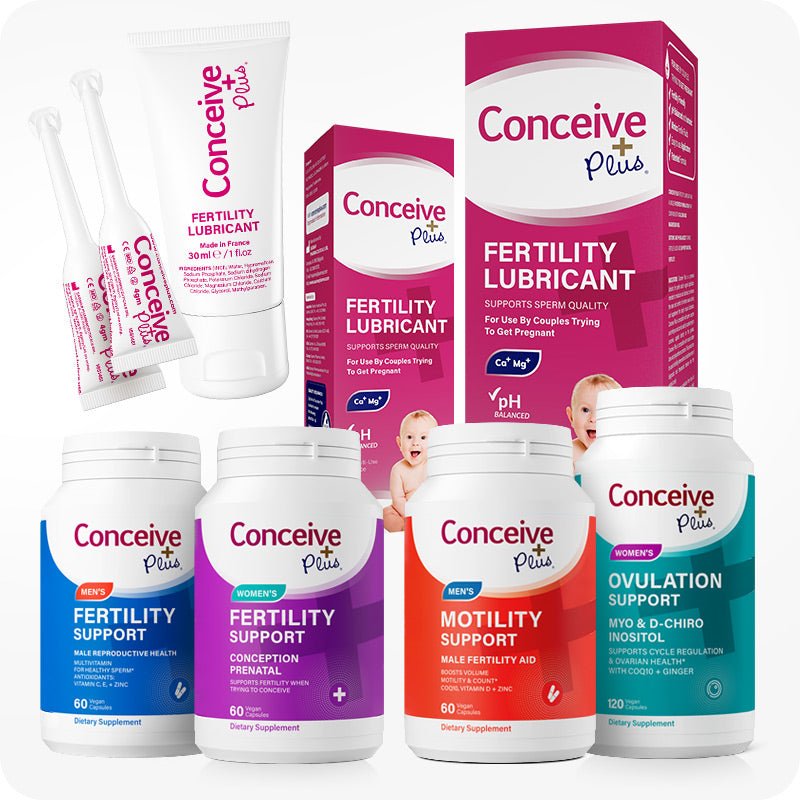
Conceive Plus men's fertility supplements are designed around the clinical evidence, not marketing trends. The Conceive Plus men's formula includes selenium at a clinically relevant dose, combined with complementary nutrients that have been shown to work synergistically in the reproductive system:
- Selenium (as selenomethionine): The most bioavailable form, with superior retention compared to inorganic selenium salts. Dosed at the level shown to support improved motility and reduced oxidative stress in clinical trials.
- Zinc: Partners with selenium in antioxidant pathways and is independently essential for testosterone production, sperm maturation, and DNA packaging. Zinc deficiency is the most common micronutrient deficiency in infertile men.
- CoQ10 (Coenzyme Q10): Drives energy production in the sperm midpiece mitochondria, directly supporting the forward swimming force that motility depends on. CoQ10 and selenium are both depleted by age, poor diet, and statin medications.
- Vitamin E: Selenium and vitamin E are synergistic antioxidants — each enhances the efficacy of the other in protecting sperm from oxidative damage.
- L-Carnitine: Fuels fatty acid oxidation in the sperm midpiece, providing a secondary energy substrate that supports stamina over the journey to the egg.
- Folic acid: Supports sperm DNA synthesis and reduces chromosomal abnormalities — particularly relevant for men whose partners are undergoing assisted reproduction.
This nutrient matrix reflects an understanding that male fertility is not dependent on any single compound. Selenium works best in a fully supported antioxidant and energy-production environment — which is precisely what Conceive Plus delivers.
You can find the full range of Conceive Plus fertility supplements at conceiveplus.com/collections/fertility-supplements.
How Much Selenium Do Men Need for Fertility Support?
The recommended dietary allowance (RDA) for adult men is 55 mcg/day, with a tolerable upper intake level (UL) set at 400 mcg/day. Clinical fertility studies have typically used doses in the 100–200 mcg range, and this appears to be the therapeutic sweet spot — sufficient to correct deficiency and support optimal selenoprotein activity without approaching toxicity thresholds.
Dietary sources of selenium include:
- Brazil nuts: 1–2 nuts provide approximately 100 mcg — but selenium content varies dramatically by region of origin
- Seafood: Tuna, halibut, sardines, and shrimp are reliable sources (20–60 mcg per serving)
- Poultry and lean meats: Chicken and turkey provide 20–30 mcg per 100g serving
- Eggs: Approximately 15 mcg per egg
- Whole grains: Selenium content varies by soil; wheat grown in high-selenium regions can provide meaningful amounts
For men who don't regularly consume these foods, or who live in selenium-depleted regions, a well-formulated supplement that includes selenium as selenomethionine is the most reliable way to ensure consistent, adequate intake throughout the 74-day spermatogenesis cycle.
Timing Your Selenium Supplementation
Because a single sperm takes approximately 74 days to mature from stem cell to ejaculate, the most impactful window for selenium supplementation is at least three months before you plan to conceive or before a scheduled ART cycle. Changes to sperm quality — including motility and DNA integrity — won't be reflected in semen analysis results until the next generation of sperm completes its full maturation cycle.
This timeline means:
- Start supplementing at least 3 months before your target conception window
- Maintain consistent daily intake throughout — selenium levels require sustained supplementation to achieve steady-state tissue saturation
- If you have a semen analysis scheduled, request a follow-up after 90+ days of supplementation to track objective improvement
Both partners should ideally be preparing simultaneously. While the male partner optimises sperm quality with selenium fertility supplement men formulas, the female partner can be supporting egg quality, cycle regularity, and uterine receptivity with Conceive Plus women's supplements.
Frequently Asked Questions About Selenium and Male Fertility
Q: How long does it take for selenium supplements to improve sperm quality?
A: Based on the spermatogenesis cycle of approximately 74 days, most clinical trials assess outcomes after 3 months of supplementation. Some improvements in oxidative stress markers may appear earlier, but meaningful changes in motility and morphology typically require the full 3-month cycle.
Q: Can I get enough selenium from food alone?
A: Potentially, but it depends entirely on your diet and where your food is grown. Men in Europe, parts of North America, and regions with selenium-depleted soils are at significantly higher risk of insufficiency from diet alone. A well-formulated supplement ensures consistent intake regardless of geography.
Q: Is too much selenium dangerous?
A: Yes — selenium toxicity (selenosis) can occur at doses consistently above 400 mcg/day. Symptoms include hair loss, nail brittleness, gastrointestinal distress, and neurological effects. Standard fertility supplement doses of 100–200 mcg/day are well within the safe range when used as directed.
Q: What's the best form of selenium for absorption?
A: Selenomethionine — an organic form found in most quality supplements — is substantially more bioavailable and better retained in body tissues than inorganic forms like sodium selenite or sodium selenate. Look for selenomethionine on the supplement label.
Q: Does selenium help with sperm DNA fragmentation?
A: Yes. Clinical evidence suggests selenium supplementation reduces oxidative damage to sperm DNA, with measurable reductions in DNA fragmentation index (DFI) after 90 days of supplementation. This is particularly relevant for couples experiencing recurrent miscarriage or repeated IVF failure.
Q: Can selenium help with low sperm count?
A: Selenium primarily affects motility and DNA integrity through its antioxidant functions. While some studies show modest improvements in sperm concentration with selenium supplementation, the strongest evidence is for motility and oxidative stress reduction. For oligozoospermia (low count), a comprehensive approach including zinc, CoQ10, and other nutrients alongside selenium is typically recommended.
Q: Should my partner also take selenium?
A: Selenium also supports female reproductive health — particularly thyroid function, which is critical for ovulation and early pregnancy. However, the Conceive Plus women's formula is designed with a female-specific nutrient profile. Both partners should take the supplements formulated for their respective biology.
Q: Are there lifestyle factors that deplete selenium?
A: Yes. High alcohol consumption, smoking, intense physical stress, and certain medications (particularly those affecting thyroid function or causing oxidative stress) can all deplete selenium levels. Men with these risk factors may benefit from higher-end dosing within the safe range.
Q: When should I start taking selenium if we're doing IVF?
A: Ideally 3 months before the egg retrieval date, to allow a full spermatogenesis cycle under selenium-optimised conditions. Some IVF clinics now routinely recommend antioxidant supplementation including selenium as part of their male preparation protocols.
Q: Is Conceive Plus available without a prescription?
A: Yes. Conceive Plus fertility supplements — including the men's formula with selenium — are available over the counter. Visit conceiveplus.com/collections/fertility-supplements to explore the full range and find the right product for your needs.
Conclusion: Make Selenium a Non-Negotiable in Your Fertility Plan
In the conversation about male fertility, selenium deserves far more attention than it typically receives. This trace mineral is not a peripheral player — it is structurally embedded in sperm architecture, enzymatically essential for antioxidant defence, and clinically proven to improve the very parameters — motility, morphology, and DNA integrity — that determine whether sperm can successfully fertilise an egg.
For men who are actively trying to conceive, preparing for ART cycles, or simply wanting to give their reproductive health the best foundation possible, ensuring adequate selenium male fertility support is one of the highest-impact, lowest-risk interventions available.
Conceive Plus makes it simple: a clinically formulated men's supplement that delivers selenium in its most bioavailable form, alongside the complementary nutrients that amplify its effects. Because when it comes to fertility, every cell counts — and your sperm deserve the best possible environment to thrive.
Explore the full range of Conceive Plus fertility supplements at conceiveplus.com/collections/fertility-supplements and take the first step toward better sperm health today.
Ready to support your fertility with clinically formulated supplements? Explore the full Conceive Plus range at conceiveplus.com/collections/fertility-supplements — trusted by couples worldwide.