What Are the Best Conception Prenatal Vitamins and Supplements to Take Before Pregnancy?
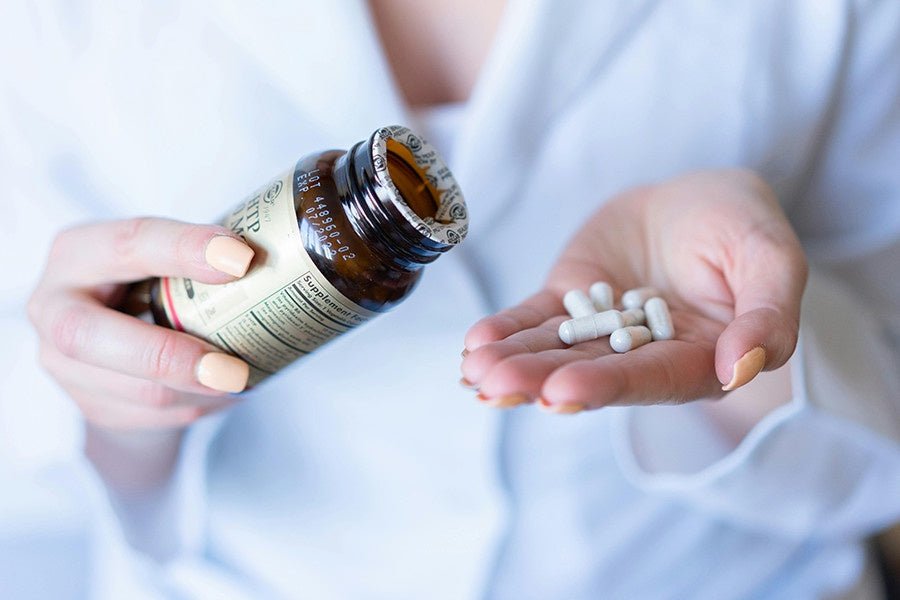

Trying to get pregnant? For couples wanting to start a family, making sure the body is prepped with the right nutrients is a smart move. That’s where conception prenatal vitamins and supplements come in. They’re designed to fill in nutritional gaps and give the body a good foundation for pregnancy. Picking the best conception vitamins and pre pregnancy vitamins helps you and your partner prepare for a smooth conception journey.
Let’s break down the essentials of conception pills and prenatal vitamins before pregnancy, along with what you should look for to make sure you're choosing the best prenatal vitamins for conception.

Why Take Conception Prenatal Vitamins?
Adding conception prenatal vitamins to your daily routine is about giving your body the vitamins and minerals it needs for fertility, early pregnancy, and reproductive health. Although a balanced diet is super important, prenatal multivitamins before pregnancy provide a concentrated source of the nutrients that can be hard to get from food alone. These conception supplements help:
- Support healthy hormones.
- Boost immunity.
- Provide antioxidants that guard cells from oxidative damage [1].
Top Tip: Starting pre pregnancy supplements a few months before you start trying to conceive is a great way to build nutrient reserves and support your body.
Key Ingredients to Look for in Conception Vitamins
When it comes to conception fertility prenatal vitamins, certain ingredients are real game-changers. Here’s a quick look at the top nutrients in before conception vitamins that support egg health, hormonal balance, and reproductive health.
Folic Acid for Healthy Cell Development
Folic acid is known for supporting healthy cell growth and reducing the risk of neural tube defects in a growing baby [2]. This essential B vitamin in preconception vitamins helps with cell division, so starting it a month before conception can be really helpful for early pregnancy.
Myo-Inositol and D-Chiro Inositol for Hormonal Balance
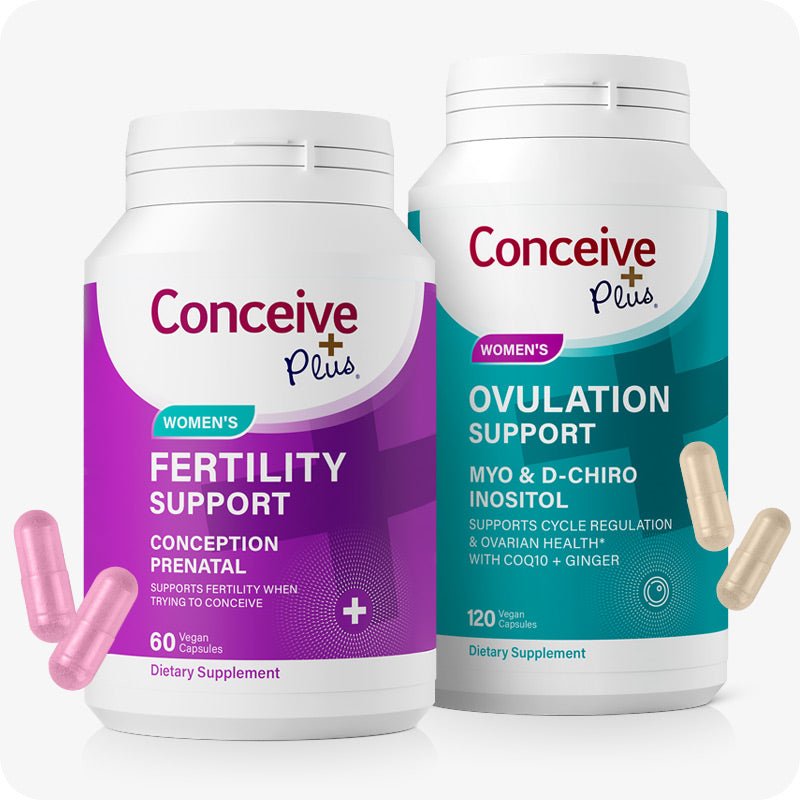
Myo-Inositol and D-Chiro Inositol work together to promote hormonal balance and regular ovulation. These nutrients are a big deal, especially for women with PCOS or irregular cycles, and are usually found in pre conception vitamins [3].
CoQ10 for Egg Quality
Coenzyme Q10, also known as CoQ10, is a powerful antioxidant in many conception tablets. CoQ10 helps protect eggs from oxidative damage and can improve overall egg quality. For women over 30, it’s a good idea to include CoQ10 in your daily conception pills for her, especially if you’re trying to boost egg health [4].
Top Tip: Taking conception pills for her that contain CoQ10 can improve egg quality and overall cell health, especially if you’re over 30 and planning to conceive soon.
Key Nutrients for Both Men and Women
Fertility isn’t just about one partner. Men and women both benefit from fertility prenatal vitamins that contain essential nutrients like zinc, iron, and L-arginine.
Zinc for Immune and Reproductive Health
Zinc is a critical mineral for both men and women. It supports sperm quality and helps with hormone balance. Including zinc in a pre pregnancy multivitamin for both partners can provide added fertility benefits.
L-Arginine for Better Circulation
L-Arginine is an amino acid that promotes healthy blood flow to reproductive organs. This nutrient, found in many conception supplements, helps ensure a good environment for conception [5]. L Arginine for fertility is often recommended to support reproductive health and improve circulation to the uterus and ovaries.

Choosing the Best Prenatal Vitamins for Conception
Finding the best multivitamin when trying to conceive means looking for a product with the right balance of essential nutrients. Here are the top things to look for in best prenatal vitamins for conception:

✨ Start Your Prenatal Care Today
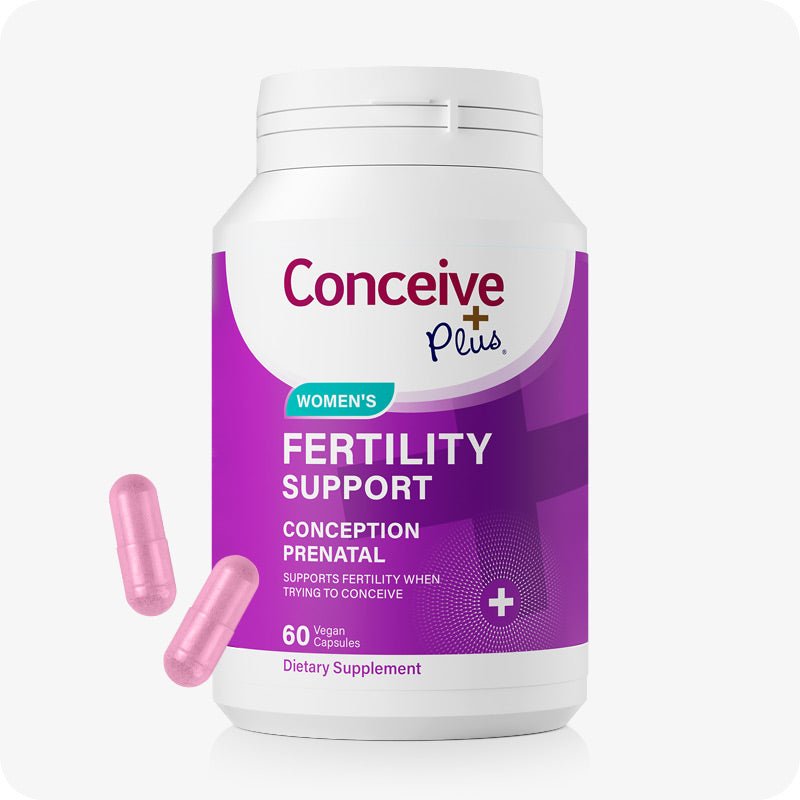
Our Prenatal Vitamins with DHA, Choline & Folate provide the essential nutrients you and your baby need for a healthy start.
Shop Now — $34.95✓ Free shipping on orders over $40 | ✓ Trusted by millions of couples worldwide
Comprehensive Nutrient Profile
Look for a balanced profile that includes folic acid, vitamins B6 and B12, vitamin D, calcium, and iron. These ingredients in best prenatal vitamins for ttc help make sure you and your baby get the basics for healthy growth.
Omega-3 Fatty Acids for Brain and Eye Health
Omega-3s like DHA support fetal brain and eye development and are often found in the best pre pregnancy vitamins. These fatty acids can also improve overall reproductive health [6].
Antioxidants for Cellular Protection
Antioxidants like vitamins C and E protect reproductive cells from damage. This added protection is valuable in conception prenatal vitamins and helps with the health of eggs and sperm [7].
Top Tip: Look for a conception prenatal that has a good combination of these nutrients to get everything you need in one place.
Starting Prenatal Vitamins Before Pregnancy
The best time to start prenatal vitamins before pregnancy is at least three months before actively trying to conceive. This lets nutrients build up in your system and gives you an optimal start when trying to get pregnant.
Benefits of Starting Early
- Reduced Risk of Birth Defects: Folic acid reduces the risk of neural tube defects [8].
- Improved Egg Health: Antioxidants protect and maintain healthy eggs.
- Enhanced Energy: Iron and B vitamins combat fatigue, which is especially helpful when preparing for pregnancy [9].
Top Tip: Keep your pre pregnancy vitamins somewhere visible as a reminder to take them daily. Consistency is key to seeing benefits!
Checking Reviews for Conception Pills
Reading conception for her reviews and conception pills reviews is an easy way to learn how these products have worked for others. Real user reviews can give insights into how effective certain supplements are for fertility and conception.
Top Tip: Make sure to read verified reviews for a realistic perspective, and always consult your doctor before adding new supplements to your routine.
Why Pre Pregnancy Multivitamins Are Important
Adding a pre pregnancy multivitamin helps ensure you’re getting all the important nutrients. These vitamins help close any gaps in your diet and support various aspects of reproductive health, including hormone balance and immune system support.
Supporting Male Fertility with Conception Vitamins
It takes two to conceive, so men benefit from conception pills for her just as much. Nutrients like zinc, selenium, and L-carnitine are especially beneficial for improving sperm motility and quality. Supporting male fertility with these conception for her supplements can make a real difference.

The Bottom Line
Adding conception prenatal vitamins and a pre pregnancy multivitamin to your daily routine is a smart step for anyone trying to conceive. From folic acid and inositols for hormonal support to antioxidants like CoQ10 for egg health, these vitamins help create an environment that supports conception. When you invest in the best prenatal vitamins for ttc, you’re setting yourself up for a successful fertility journey.
FAQs
Are conception prenatal vitamins different from regular prenatal vitamins?
Yes, conception prenatal vitamins are formulated specifically to support fertility, in addition to supporting early pregnancy health.
Can I take prenatal vitamins before pregnancy?
Absolutely! Prenatal vitamins before pregnancy should be started a few months before trying to conceive to help optimize fertility and support early fetal health.
How do I find the best multivitamin when trying to conceive?
The best multivitamin when trying to conceive will include essential nutrients like folic acid, iron, and omega-3s to support both reproductive health and early pregnancy.
Can I take conception pills for her with other medications?
Generally, yes, but it’s always best to check with a healthcare provider to ensure there are no interactions with your other medications.
Why are pre pregnancy supplements important?
Pre pregnancy supplements support overall reproductive health, hormonal balance, and egg quality, making them a helpful addition for those trying to conceive.
Citations
- Agarwal, A., Gupta, S., & Sharma, R. K. (2005). Role of oxidative stress in female reproduction. Reproductive biology and endocrinology. Available at: https://pubmed.ncbi.nlm.nih.gov/16018814/
- Herrmann, W. & Obeid, R. (2011). Vitamins in the prevention of human diseases. Berlin, New York: De Gruyter. Available at: https://www.degruyter.com/document/doi/10.1515/9783110214499/html?lang=en&srsltid=AfmBOootGP6zSd3qIfVw4KVPCyoN4Hevf6K_c5deAOzS-kAV8I-oI52X
- Dinicola, S., Chiu, T. T., Unfer, V., Carlomagno, G., & Bizzarri, M. (2014). The rationale of the myo-inositol and D-chiro-inositol combined treatment for polycystic ovary syndrome. Journal of clinical pharmacology. Available at: https://pubmed.ncbi.nlm.nih.gov/25042908/
- Bentov, Y., Yavorska, T., Esfandiari, N., Jurisicova, A., & Casper, R. F. (2011). The contribution of mitochondrial function to reproductive aging. Journal of assisted reproduction and genetics. Available at: https://pubmed.ncbi.nlm.nih.gov/21617930/
- Mateo, R. D., Wu, G., Bazer, F. W., Park, J. C., Shinzato, I., & Kim, S. W. (2007). Dietary L-arginine supplementation enhances the reproductive performance of gilts. The Journal of nutrition. Available at: https://pubmed.ncbi.nlm.nih.gov/17311955/
- Qin, J., Kurt, E., LBassi, T., Sa, L., & Xie, D. (2023). Biotechnological production of omega-3 fatty acids: current status and future perspectives. Frontiers in microbiology. Available at: https://pmc.ncbi.nlm.nih.gov/articles/PMC10662050/
- Agarwal, A., & Said, T. M. (2005). Oxidative stress, DNA damage and apoptosis in male infertility: a clinical approach. BJU international. Available at: https://pubmed.ncbi.nlm.nih.gov/15705068/
- Wald N. J. (2004). Folic acid and the prevention of neural-tube defects. The New England journal of medicine. Available at: https://pubmed.ncbi.nlm.nih.gov/14711907/
- Jacqueline M Lauer, Shilpa Bhaise, Varsha Dhurde, Abigail Gugel, Miloni Shah, Patricia L Hibberd, Archana Patel, Lindsey M Locks. Maternal Anemia during Pregnancy and Infant Birth Outcomes: A Prospective Cohort Study in Eastern Maharashtra, India. Current Developments in Nutrition Available at: https://www.sciencedirect.com/science/article/pii/S2475299124024107
🌱 Everything You and Baby Need
Conceive Plus Prenatal Vitamins are formulated with DHA for brain development and Folate for neural tube protection.
Shop Prenatal Vitamins →Frequently Asked Questions
Recommended by Fertility Experts
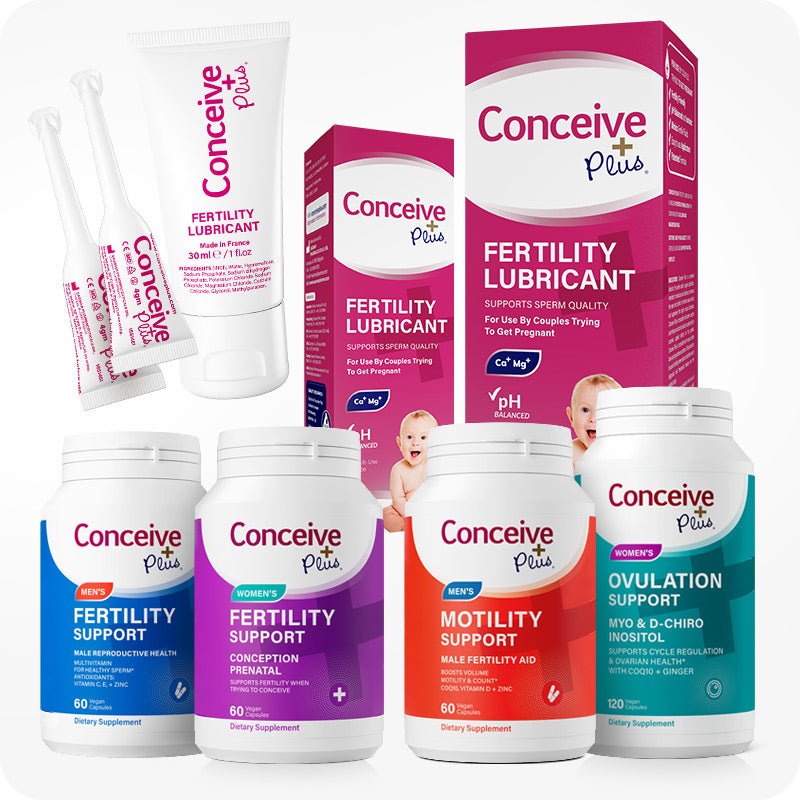
Conceive Plus Men's Fertility Support
Designed to support healthy sperm production, motility, and overall male reproductive health with clinically studied nutrients.
Shop Now →Q: What vitamins should I take before trying to conceive?
A: The American College of Obstetricians and Gynecologists (ACOG) recommends that women planning pregnancy take a prenatal vitamin containing at least 400 micrograms of folic acid daily, along with iron, calcium, and vitamin D. Key nutrients for conception include folate (which reduces neural tube defects by up to 70%), coenzyme Q10 for egg quality, vitamin D for reproductive health, and antioxidants like selenium and vitamin E. Men should also consider supplements supporting sperm health, including zinc, vitamin C, and L-carnitine. Conceive Plus offers comprehensive conception supplements formulated with these essential nutrients to support both partners' fertility health during the preconception period.
Q: When should I start taking prenatal vitamins before pregnancy?
A: The CDC and ACOG recommend starting prenatal vitamins at least one month before attempting conception, though three months is ideal for optimal nutrient accumulation. This timeline is particularly important for folic acid, which needs to build up in your system to prevent neural tube defects during the critical first trimester when the baby's spine and brain are forming. Since many women don't realize they're pregnant until 4-6 weeks gestation, beginning supplements early ensures adequate nutrient levels from conception onward. Starting your conception supplement regimen well before trying to conceive gives your body the best chance of success.
Q: Is there a difference between prenatal vitamins and conception vitamins?
A: Conception vitamins are specifically formulated to support fertility and reproductive health in both men and women before pregnancy occurs, while prenatal vitamins are designed for use during pregnancy and breastfeeding. Conception supplements often include additional ingredients like coenzyme Q10, inositol, and antioxidants that support egg and sperm quality, hormonal balance, and ovulation—benefits that prenatal vitamins may not emphasize. However, many conception vitamins also contain the foundational nutrients found in prenatals, such as folic acid and iron, making them suitable for dual purposes. Choosing a dedicated conception supplement like Conceive Plus ensures you're getting targeted support for your fertility journey before transitioning to a prenatal formula once you become pregnant.
Q: How long does it take for conception vitamins to work?
A: Most fertility experts recommend giving conception supplements at least 2-3 months to show effects, as this timeframe allows for nutritional status improvements and supports the approximately 90-day male sperm production cycle. For women, this timeline helps build nutrient reserves and supports egg quality, which develops over several months before ovulation. According to the American Society of Reproductive Medicine (ASRM), nutritional interventions show best results when maintained consistently for at least 100 days. While some couples may conceive sooner, patience and consistency with your conception supplement regimen—whether Conceive Plus or another quality brand—gives your body optimal opportunity to achieve the nutritional foundation needed for successful conception.
Q: Do I need different supplements if I'm trying to conceive versus my partner?
A: Yes, men and women benefit from somewhat different nutritional support during the conception period, as they face different reproductive health challenges. Women should prioritize folic acid, iron, vitamin D, and antioxidants like CoQ10 for egg quality and hormonal balance, while men benefit from zinc, selenium, vitamin C, and L-carnitine to support sperm motility, morphology, and DNA integrity. Research shows that male factor infertility accounts for approximately 40% of fertility challenges, making partner supplementation equally important to overall conception success. Many couples choose conception supplement systems designed for both partners, such as those offered by Conceive Plus, which provides gender-specific formulations to address each partner's unique fertility nutrition needs.
Trusted by Couples in Over 70 Countries
Support Male Fertility From the Inside Out
Male fertility is just as important as female fertility in the conception journey. Conceive Plus Men's range delivers targeted nutritional support to promote healthy sperm and overall reproductive wellbeing.
Shop Men's Range →