The Two Week Wait: Supplements, Symptoms and Science-Backed Self-Care After Ovulation


The two week wait — the period between ovulation and the earliest date a pregnancy test can detect implantation — is among the most emotionally intense phases of trying to conceive. It is the interval during which conception has either happened or it hasn't; in which the body is working through a complex hormonal and biological sequence that even the most sophisticated home test cannot yet confirm. For couples who have been trying for months or longer, the two week wait can feel interminable.
Understanding what is actually happening during this period — biologically, hormonally, and nutritionally — transforms these fourteen days from a passive waiting period into an active window during which targeted self-care can genuinely support implantation and early pregnancy. This guide covers the science of the two week wait, the symptoms to expect (and not over-interpret), the supplements with evidence for supporting implantation, and the lifestyle strategies most likely to help.
What Happens During the Two Week Wait?
The two week wait begins at ovulation — typically around day 14 of a 28-day cycle, though this varies substantially — and ends when menstruation begins or a positive pregnancy test is obtained. During this interval, the following biological sequence unfolds:
Day 1 (ovulation): The dominant follicle ruptures and releases a mature egg. The egg is swept into the fallopian tube, where it is viable for approximately 12 to 24 hours. Sperm that have been waiting in the fallopian tube — sperm can survive there for up to five days — fertilise the egg during this window.
Days 1 to 5: If fertilisation occurs, the fertilised egg (zygote) begins dividing as it travels through the fallopian tube toward the uterus. By day five, it has developed into a blastocyst — a fluid-filled ball of approximately 100 cells with a distinct inner cell mass that will become the embryo and an outer layer (trophoblast) that will become the placenta.
Days 6 to 10: Implantation occurs, most commonly between days 6 and 10 after ovulation (with day 8 or 9 being most common). The blastocyst hatches from its outer shell (zona pellucida) and begins embedding into the uterine lining. The trophoblast cells invade the endometrium and begin establishing the placental blood supply.
Days 10 to 14: Following implantation, the trophoblast cells begin producing hCG (human chorionic gonadotrophin) — the hormone detected by pregnancy tests. hCG levels double approximately every 48 hours in the early days of pregnancy. By day 14, a sensitive pregnancy test can often detect implantation, though levels may still be below the threshold of less sensitive tests.
Optimise Your Body for Conception
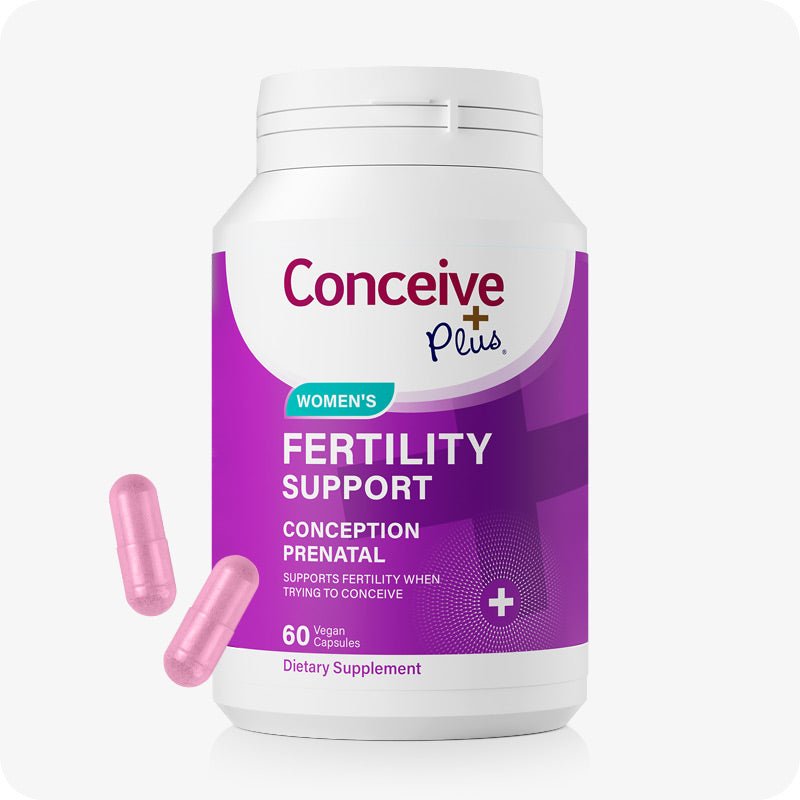
Conceive Plus Women's Fertility Support provides the evidence-based nutrients your body needs for healthy ovulation and egg quality — including methylfolate, myo-inositol, CoQ10, vitamin D3, and zinc.
Two Week Wait Symptoms: What's Real and What's Progesterone?
Many women scrutinise every physical sensation during the two week wait for signs of pregnancy. The challenging reality is that early pregnancy symptoms — breast tenderness, bloating, fatigue, cramping, heightened smell, and mood changes — are largely identical to premenstrual syndrome (PMS) symptoms. Both are caused by the same hormone: progesterone.
After ovulation, the corpus luteum — the follicle remnant in the ovary after egg release — produces progesterone. Progesterone rises in the luteal phase regardless of whether conception occurred. It maintains the uterine lining, reduces uterine contractions, and causes the characteristic symptoms of the luteal phase. If no pregnancy is established, the corpus luteum degenerates, progesterone falls, and menstruation occurs.
If conception has occurred, hCG produced by the implanting embryo signals the corpus luteum to continue producing progesterone rather than degenerating. The symptoms continue and intensify — but they were already present before implantation due to progesterone, making it impossible to distinguish pregnancy from PMS purely on the basis of symptoms in the early luteal phase.
Implantation bleeding: Some women notice light spotting around days 6 to 10 after ovulation when implantation occurs. This is typically very light — a few drops or very light pink discharge — lasting one to two days. It can be mistaken for the beginning of a period, though it occurs earlier and is much lighter. Not all pregnancies produce implantation bleeding; its absence means nothing.
Basal body temperature (BBT): Women tracking BBT will see the characteristic post-ovulation temperature rise (due to progesterone) during the luteal phase. Some describe a secondary temperature rise or "triphasic" pattern in early pregnancy, though this is not reliable enough to confirm or deny pregnancy with certainty.
When symptoms are most meaningful: Symptoms become more diagnostically meaningful from around 10 days post-ovulation onward — the point at which hCG levels, if a pregnancy is established, begin to produce their own biological effects distinct from progesterone alone.
The Two Week Wait and Progesterone Support
Progesterone is essential for maintaining the uterine lining and supporting early pregnancy. Luteal phase deficiency — insufficient progesterone production after ovulation — is associated with implantation failure and early pregnancy loss. Signs of potential luteal phase deficiency include a luteal phase shorter than ten days, light, early, or brown spotting before the period, and a history of recurrent early miscarriage.
In women undergoing IUI or IVF, progesterone supplementation (via vaginal suppositories, patches, or intramuscular injections) is routinely prescribed during the two week wait to support the uterine lining. In natural conception cycles, progesterone supplementation may be recommended by a fertility specialist if luteal phase deficiency is suspected.
Nutritional support for progesterone synthesis includes vitamin B6 — a nutrient essential for the enzymatic reactions that produce progesterone. Vitamin B6 deficiency is associated with shortened luteal phase and premenstrual syndrome. Zinc also supports corpus luteum function and progesterone production. Magnesium plays a role in progesterone receptor sensitivity.
Support Every Attempt with Conceive Plus
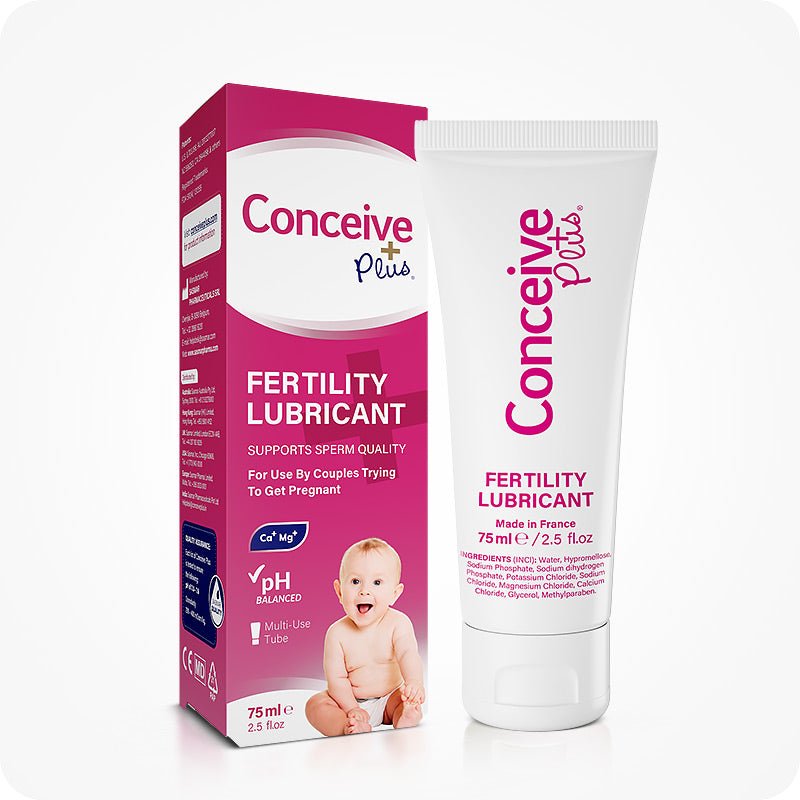
Our fertility-friendly lubricant is scientifically formulated to support sperm motility while providing the comfort you need during your fertile window. Unlike standard lubricants that can harm sperm, Conceive Plus contains the calcium and magnesium ions naturally found in the female reproductive tract.
Evidence-Based Supplements for the Two Week Wait
While no supplement can guarantee implantation, certain nutrients have meaningful evidence for supporting the luteal phase and early implantation window:
Folate / Methylfolate (5-MTHF): Folic acid supplementation before and during early pregnancy is one of the best-established nutritional interventions in all of reproductive medicine. It is essential for neural tube closure, which occurs within the first 28 days after conception — before most women even know they are pregnant. By the two week wait, you are already in the window when folic acid matters critically. The active form, methylfolate (5-MTHF), is superior for women with MTHFR gene variants (present in 30 to 40% of the population) that impair folic acid conversion.
Vitamin B6: Supports corpus luteum function, progesterone production, and progesterone receptor sensitivity. A randomised trial found that vitamin B6 supplementation extended the luteal phase in women with short luteal phases. B6 is also essential for the production of serotonin and GABA — neurotransmitters that regulate mood and may reduce the anxiety inherent to the two week wait.
Vitamin D: Vitamin D receptors are present throughout the endometrium and emerging evidence links vitamin D sufficiency to endometrial receptivity. A systematic review found that vitamin D deficiency was significantly associated with lower implantation rates in IVF cycles. Maintaining adequate vitamin D levels (above 50 nmol/L) is a reasonable precautionary measure during the two week wait.
CoQ10: While most often discussed in the context of egg quality (where it has its strongest evidence), CoQ10 also supports mitochondrial energy production in the rapidly dividing cells of an early embryo. The early cleavage stages of embryo development are extraordinarily energy-intensive, and mitochondrial function is critical to embryo viability.
Magnesium: Plays important roles in muscle relaxation (including uterine muscle), progesterone receptor function, and stress hormone regulation. Magnesium deficiency is common and is associated with increased rates of premenstrual symptoms, muscle cramps, and heightened stress response — all relevant during the two week wait.
Omega-3 fatty acids: Support an anti-inflammatory endometrial environment that may facilitate implantation. DHA in particular is important for the developing embryo's neural development in early pregnancy.
What to Avoid During the Two Week Wait
The two week wait falls in a unique biological position: conception may have already occurred, but it is too early to confirm. The prudent approach is to treat this period as if pregnancy is possible:
Alcohol: Avoid or minimise. Alcohol is a reproductive toxin and there is no established safe level in early pregnancy. If implantation has occurred, alcohol exposure during the first two weeks after fertilisation — before the placenta has developed — can affect the embryo through direct contact with uterine secretions.
Caffeine: Moderate caffeine intake (below 200 mg per day — approximately one to two cups of coffee) is generally considered safe, but it is reasonable to stay at the lower end of this range during the two week wait.
NSAIDs (ibuprofen, aspirin): Non-steroidal anti-inflammatory drugs may interfere with implantation by inhibiting prostaglandins required for the inflammatory cascade that supports trophoblast invasion. Many fertility specialists recommend avoiding NSAIDs during the two week wait except on specific medical advice. Paracetamol/acetaminophen is generally considered the safer choice for pain relief.
Extreme exercise: Moderate exercise is fine and beneficial — it reduces stress, maintains healthy blood flow, and supports hormonal balance. High-intensity training during the two week wait is unnecessary and may temporarily divert blood flow from the uterus or elevate stress hormones.
High-mercury fish: Shark, swordfish, king mackerel, and tilefish contain high levels of mercury that can accumulate in fetal tissue. Avoid these if pregnancy may have occurred; low-mercury options like salmon, sardines, and trout are excellent omega-3 sources that are safe.
Managing the Emotional Dimension
The two week wait is emotionally challenging in a way that can be difficult to communicate to people who have not experienced it. The combination of physiological uncertainty, heightened awareness of every physical sensation, and the weight of repeated cycles can produce significant anxiety and psychological strain.
Evidence consistently shows that psychological stress activates the HPA axis and elevates cortisol, which suppresses the HPG axis governing reproductive hormones. While the direct impact of acute stress on implantation in any individual cycle is uncertain, chronic stress clearly impairs reproductive hormone regulation over time. Managing the emotional dimension of the two week wait is therefore not merely about comfort — it has biological relevance.
Strategies with evidence for stress reduction during fertility treatment include mindfulness-based stress reduction (MBSR), cognitive behavioural therapy (CBT) adapted for fertility-related anxiety, acupuncture (which has some evidence for reducing fertility-related stress and potentially improving IVF outcomes), regular moderate exercise, social support from trusted people or fertility support communities, and limiting time spent tracking symptoms or searching for pregnancy signs online.
When to Test
The overwhelming temptation during the two week wait is to test early. Home pregnancy tests (HPTs) detect hCG at sensitivities typically between 6 and 25 mIU/mL — the most sensitive tests (such as FRER) can detect implantation as early as 9 to 10 days post-ovulation in some cycles, though false negatives are common before 12 days.
Testing before 12 days past ovulation risks a false negative that provides false reassurance (or triggers unnecessary distress) and may also detect a very early biochemical pregnancy that would otherwise not have been noticed. The standard recommendation is to test on the day of an expected period or 14 days after ovulation — at which point hCG levels are reliably detectable by any standard HPT if implantation has occurred.
A negative test at 14 days past ovulation is highly reliable. A positive test, however early, should prompt follow-up blood work to track rising hCG levels and confirm the pregnancy is progressing.
Frequently Asked Questions
Q: What is the two week wait?
The two week wait (TWW) is the approximately 14-day period between ovulation and the earliest date a pregnancy test can reliably detect hCG. It is the phase during which, if conception has occurred, the fertilised egg travels to the uterus and implants into the endometrium — typically around days 6 to 10 post-ovulation.
Q: Can I feel implantation happening?
Some women report mild cramping, light spotting, or breast tenderness around the time of implantation (days 6 to 10 post-ovulation). However, these sensations are not reliably present, and identical sensations are caused by progesterone in non-conception cycles. It is not possible to reliably feel implantation.
Q: What supplements should I take during the two week wait?
The most important supplement is methylfolate (or folic acid), as neural tube formation begins within days of a positive pregnancy test. Vitamin B6, vitamin D, magnesium, CoQ10, and omega-3 fatty acids also have evidence for supporting the luteal phase and early pregnancy. Avoid adding new supplements you haven't been taking without medical advice.
Q: Should I rest during the two week wait?
Normal daily activity is absolutely fine. There is no evidence that bed rest improves implantation rates in natural conception cycles — in fact, light to moderate exercise is beneficial for stress reduction and circulation. What to avoid is very intense exercise or anything that could elevate cortisol significantly.
Q: When is the earliest I can take a pregnancy test?
Sensitive tests (like FRER) can sometimes detect hCG as early as 9 to 10 days past ovulation, but false negatives are common before 12 days. The most reliable time to test is on the day of your expected period (approximately 14 days post-ovulation). Testing earlier than this risks a false negative result.
Q: What is implantation bleeding and how is it different from a period?
Implantation bleeding, when it occurs, typically appears as very light spotting — pink or brown discharge — lasting one to two days. It occurs around 6 to 10 days after ovulation, which is earlier than most periods. It is much lighter than a period and does not progress to full flow. However, many pregnancies produce no implantation bleeding at all.
Q: Can stress affect implantation?
The direct impact of acute stress during the two week wait on implantation in any individual cycle is uncertain. However, chronic stress over many months of trying to conceive clearly impairs reproductive hormone regulation. Managing stress is important for overall fertility health, even if the specific impact on implantation timing is hard to quantify.
Q: Is it okay to exercise during the two week wait?
Yes — moderate exercise such as walking, swimming, yoga, and light cycling is beneficial during the two week wait. It reduces stress, improves circulation, and maintains hormonal balance. High-intensity training is not recommended as it can elevate cortisol and temporarily divert blood flow from the uterus.
Q: Why do I get PMS symptoms even if I'm pregnant?
Both pregnancy and PMS symptoms in the luteal phase are largely caused by progesterone. After ovulation, progesterone rises whether or not conception has occurred. Symptoms like breast tenderness, bloating, fatigue, and mood changes are driven by progesterone — making them identical in early pregnancy and the pre-menstrual phase.
Q: What happens if the two week wait test is negative?
A negative test 14 days past ovulation is reliable — it means implantation has most likely not occurred in this cycle. Allow yourself to process this emotionally before moving on. Review whether there are any adjustments to make — supplement optimisation, timing, or medical assessment if this has been happening for many months.
Conclusion
The two week wait is a period of biological complexity unfolding beneath a surface of outward waiting. Understanding what is actually happening — ovulation, fertilisation, cell division, blastocyst formation, implantation, and hCG production — transforms this interval from an anxious void into something more comprehensible and manageable.
Targeted nutritional support — particularly methylfolate, vitamin B6, vitamin D, magnesium, and CoQ10 — can meaningfully support the luteal phase and early implantation window. Lifestyle choices during the two week wait matter: moderate exercise, stress management, avoiding alcohol and NSAIDs, and eating well all support the biological conditions needed for implantation.
Above all, be compassionate with yourself. The two week wait is genuinely hard. Whatever the outcome of any individual cycle, the consistency of your effort — the supplements, the lifestyle, the self-care — is building the foundation for the outcome you're working toward.
Optimise Your Body for Conception
Conceive Plus Women's Fertility Support provides the evidence-based nutrients your body needs for healthy ovulation and egg quality — including methylfolate, myo-inositol, CoQ10, vitamin D3, and zinc.