Ovulation Tracking: The Complete Guide to Identifying Your Fertile Window and Maximising Conception Success


Why Ovulation Tracking Matters for Conception
Understanding when you ovulate is one of the most powerful tools in your fertility journey. For couples trying to conceive, identifying the fertile window — the six-day period ending on ovulation day — can dramatically increase the chances of pregnancy. Research published in the New England Journal of Medicine found that the probability of conception rises from near zero outside the fertile window to approximately 30–50% on the peak day of fertility.
Yet many women are unsure when they ovulate. A landmark study in the journal Contraception revealed that only 13% of women can accurately identify their fertile window using calendar-based methods alone. This is where structured ovulation tracking becomes essential — it transforms guesswork into actionable, data-driven insight.
For women using Conceive Plus ovulation support products, pairing clinical-grade supplementation with accurate ovulation tracking creates a powerful foundation for conception. Whether you are newly trying or have been on this journey for months, understanding your cycle is the first step toward success.
How the Menstrual Cycle and Ovulation Work
Support Your Cycle with Conceive Plus Ovulation Support
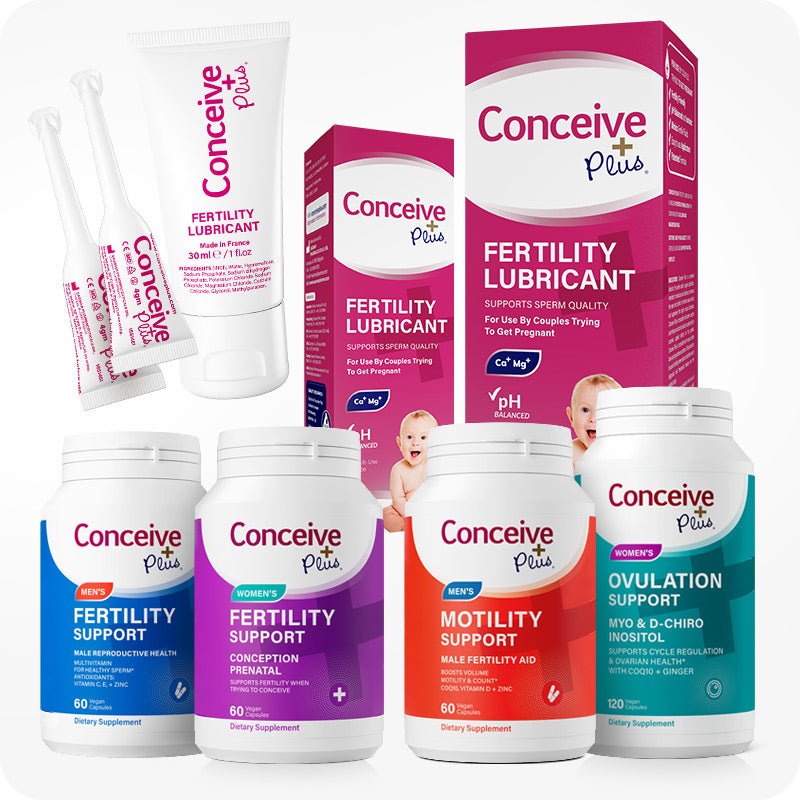
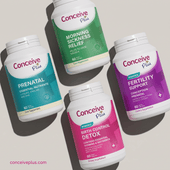
Our clinically formulated Ovulation Support combines myo-inositol and D-chiro-inositol in the optimal 40:1 ratio, paired with methylated folate and vitamin D — nutrients your body needs for healthy ovulation and egg quality. Shop Conceive Plus Ovulation Support
The menstrual cycle is divided into two main phases separated by ovulation. The follicular phase begins on day one of your period and lasts until ovulation. During this phase, follicle-stimulating hormone (FSH) stimulates the growth of ovarian follicles, each containing an egg. Typically, one dominant follicle emerges.
As the follicle matures, it produces increasing amounts of oestrogen, which triggers a surge in luteinising hormone (LH). This LH surge is the biological signal that ovulation is about to occur — usually within 24 to 36 hours. The egg is released from the ovary and travels down the fallopian tube, where it can be fertilised for approximately 12 to 24 hours.
The luteal phase follows ovulation and lasts approximately 12 to 14 days. During this phase, the ruptured follicle transforms into the corpus luteum, which produces progesterone to thicken the uterine lining in preparation for implantation. If fertilisation does not occur, hormone levels drop, and menstruation begins a new cycle.
Understanding this timeline matters because sperm can survive in the female reproductive tract for up to five days. This means that having intercourse in the days leading up to ovulation — not just on ovulation day itself — gives you the widest window for conception.
The Five Most Effective Ovulation Tracking Methods
1. Ovulation Predictor Kits (OPKs)
Ovulation predictor kits detect the LH surge in urine, typically 24 to 36 hours before ovulation. Clinical studies show that OPKs are approximately 97% accurate at detecting the LH surge when used correctly. For best results, test once daily in the early afternoon, as LH surges often begin in the morning but take several hours to reach detectable levels in urine.
2. Basal Body Temperature (BBT) Charting
Basal body temperature rises by 0.2–0.5°C (0.4–1.0°F) after ovulation due to increased progesterone levels. By tracking your temperature every morning before getting out of bed, you can confirm that ovulation has occurred. A systematic review in Human Reproduction Update found that BBT charting has a 76% sensitivity for detecting ovulation. However, because the temperature rise occurs after ovulation, BBT confirms rather than predicts ovulation.
3. Cervical Mucus Monitoring
As ovulation approaches, cervical mucus changes from dry or sticky to a wet, slippery consistency resembling raw egg whites. This fertile-quality mucus helps sperm survive and swim toward the egg. The Billings Ovulation Method, which relies solely on mucus observation, has been validated in multiple studies with pregnancy rates of 77–88% when used correctly.
4. Fertility Tracking Apps
Modern fertility apps combine cycle data, BBT readings, and OPK results to predict ovulation with increasing accuracy. A 2020 study in the Journal of the American Board of Family Medicine found that app-based predictions correctly identified the fertile window in 78% of cycles. However, apps are only as accurate as the data you enter — consistency matters.
5. Wearable Fertility Trackers
Wearable devices that measure skin temperature, heart rate variability, and other physiological markers are gaining popularity. Devices like the Oura Ring and TempDrop offer continuous monitoring without the burden of daily manual tracking. Early research suggests these may offer comparable accuracy to traditional BBT charting with better user compliance.
Common Ovulation Tracking Mistakes and How to Avoid Them
Even with the best methods, mistakes happen. One of the most common errors is starting OPK testing too late in the cycle. For women with irregular cycles, ovulation can occur much earlier than expected, and testing only mid-cycle may miss the surge entirely. Experts recommend starting OPK testing at least three to four days before your earliest expected ovulation date.
Another frequent mistake is relying on a single tracking method. Combining BBT charting with OPKs and cervical mucus observation increases accuracy significantly. A study in Fertility and Sterility found that using two or more methods simultaneously improved ovulation detection rates from 69% to 94%.
Inconsistent BBT measurement is also problematic. Taking your temperature at different times each morning, getting up before measuring, or drinking water can all skew readings. Set your thermometer on your nightstand and measure at the same time every day — including weekends — before any movement.
Finally, many women stop tracking once they see a pattern, assuming ovulation always occurs on the same day. However, cycle variability is normal: a 2019 study of over 600,000 cycles found that only 20% of women ovulate on the same day every cycle. Consistent tracking every cycle is essential.
How to Combine Tracking with Fertility Supplements
Ovulation tracking becomes even more powerful when paired with targeted nutritional support. Fertility supplements — particularly those containing myo-inositol, D-chiro-inositol, folate, vitamin D, and CoQ10 — have been shown to improve ovulation quality and egg health.
Myo-inositol is one of the most researched nutrients for ovarian function. A randomised controlled trial in the European Review for Medical and Pharmacological Sciences found that myo-inositol supplementation improved ovulation rates in women with PCOS from 35% to 65%. For women with regular cycles, it supports overall egg quality and hormone balance.
Conceive Plus Ovulation Support combines myo-inositol and D-chiro-inositol in the optimal 40:1 ratio, the ratio that most closely mirrors natural physiological levels. Combined with methylated folate and vitamin D, this formulation targets both egg quality and hormonal regularity — giving your tracking efforts the biological foundation they need.
When you track ovulation while taking targeted supplements, you can time intercourse or insemination with precision, knowing that your body has the nutrients it needs for optimal egg maturation and release.
Tracking for Irregular Cycles and PCOS
Women with irregular cycles or PCOS face unique challenges in ovulation tracking. Because cycles can vary from 35 to 60 days or longer, standard calendar-based predictions are unreliable. Additionally, women with PCOS may experience multiple LH surges or persistently elevated LH levels, which can make OPK interpretation difficult.
For these women, BBT charting combined with cervical mucus observation is often the most reliable approach. A study in the Journal of Clinical Endocrinology and Metabolism found that women with PCOS who tracked BBT consistently were able to identify ovulation in 82% of cycles — comparable to women with regular cycles.
Medical ovulation monitoring with ultrasound is another option for women with severely irregular cycles. A transvaginal ultrasound can track follicle growth directly, providing definitive information about when ovulation is approaching.
Myo-inositol supplementation is particularly beneficial for women with PCOS. A meta-analysis of 12 randomised trials found that myo-inositol significantly improved ovulation frequency and pregnancy rates in women with PCOS, with a number needed to treat of just four — meaning one in four women will achieve ovulation with supplementation alone.
The Emotional Side of Ovulation Tracking
While ovulation tracking is empowering, it can also become emotionally consuming. The pressure to time intercourse perfectly, the disappointment each month when tracking confirms ovulation but pregnancy does not occur, and the obsessive checking of fertility apps can take a toll on mental health.
A study in Human Reproduction found that women who tracked ovulation for more than six months reported significantly higher anxiety levels than those who used no tracking methods. This highlights the importance of maintaining perspective and taking breaks when needed.
Consider tracking for two to three cycles to understand your pattern, then ease into a less intensive routine. You do not need to track every single cycle forever — once you have a clear picture of your fertile window, you can often rely on simpler indicators like cervical mucus changes. Remember that ovulation tracking is a tool, not a verdict: it tells you when to try, not whether you will succeed.
Take the Next Step
Ready to support your fertility journey? Conceive Plus offers science-backed supplements designed around your body's needs — from ovulation support to prenatal nutrition. Explore Women's Fertility Support
Frequently Asked Questions About Ovulation Tracking
Q: Can I get pregnant if I have sex after ovulation?
A: The egg survives for only 12 to 24 hours after ovulation, so the window is narrow. Having sex one to two days after ovulation may still result in conception, but the chances decline rapidly. The highest pregnancy rates occur when intercourse happens one to two days before ovulation.
Q: How accurate are ovulation predictor kits?
A: When used correctly, OPKs are approximately 97% accurate at detecting the LH surge. However, they cannot confirm that ovulation actually occurred — it is possible to have an LH surge without egg release, a condition called luteinised unruptured follicle syndrome (LUFS).
Q: Can stress affect ovulation?
A: Yes. High stress levels can delay or suppress ovulation by disrupting the hypothalamic-pituitary-ovarian axis. Studies show that women with high perceived stress scores are twice as likely to experience anovulatory cycles.
Q: Do I need to track ovulation if I have regular cycles?
A: Even with regular cycles, ovulation timing can vary by several days from month to month. Tracking gives you precise data rather than averages. Women with consistently regular cycles may only need to track periodically to confirm that ovulation is occurring normally.
Q: Can medications affect ovulation tracking results?
A: Yes. Fertility medications like clomiphene citrate and letrozole can affect hormone levels and OPK accuracy. Certain antibiotics and antihistamines may also influence cervical mucus quality and BBT readings.
Q: What does it mean if I never get a positive OPK?
A: Not detecting an LH surge could indicate anovulation, irregular testing timing, diluted urine, or a very brief surge. Try testing twice daily for a few cycles. If you consistently fail to detect ovulation, consult your healthcare provider.
Q: Is it normal for ovulation day to vary each cycle?
A: Absolutely. A large-scale study found that only 20% of women ovulate on the same day every cycle. Variations of three to five days are normal, and even healthy women occasionally have anovulatory cycles.
Q: How long should I track before seeing a doctor?
A: If you are under 35 and have been tracking for 12 months without conception — or six months if over 35 — consult a fertility specialist. Earlier consultation is warranted if you have irregular cycles or known medical conditions.
Q: Does breastfeeding affect ovulation?
A: Yes. Breastfeeding suppresses gonadotropin-releasing hormone, which can delay the return of ovulation after childbirth. The duration varies widely: some women ovulate as early as six weeks postpartum, while others do not ovulate until they fully wean.
Q: Can I ovulate more than once per cycle?
A: It is rare but possible to release two eggs within 24 hours, which can lead to fraternal twins if both are fertilised. True multiple ovulations in a single cycle have been documented but are not common.