Vrugbaarheidsvriendelike glijmiddels: Alles wat jy moet weet


Vrugbaarheidsvriendelike smeermiddels: Alles wat jy moet weet
Wanneer jy probeer om swanger te raak, maak elke detail saak — insluitend iets wat so eenvoudig lyk soos persoonlike smeermiddel. Baie paartjies besef nie dat tradisionele smeermiddels sperm aansienlik kan benadeel en die kanse op konsepsie kan verminder nie. Die goeie nuus is dat vrugbaarheidsvriendelike smeermiddels spesifiek ontwerp is om spermgesondheid te ondersteun en die vaginale omgewing vir bevrugting te optimaliseer.
Of jy nou net begin met jou TTC (try to conceive) reis of al ’n rukkie besig is, om te verstaan hoe smeermiddels met sperm interaksie het — en wat ’n smeermiddel werklik vrugbaarheidsvriendelik maak — kan ’n betekenisvolle verskil maak. In hierdie omvattende gids dek ons alles wat jy moet weet oor spermvriendelike smeermiddels, insluitend waarna om te kyk, wat om te vermy, en hoe produkte soos Conceive Plus klinies getoets is om jou konsepsiedoelwitte te ondersteun.
Volgens die Amerikaanse Vereniging vir Voortplantingsgeneeskunde (ASRM) het ongeveer 12% van vroue tussen 15–44 jaar in die Verenigde State moeilikheid om swanger te raak of ’n swangerskap tot termyn te dra. Al is die keuse van smeermiddel net een deel van ’n komplekse legkaart, is dit een van die maklikste faktore om te optimaliseer.
Waarom die meeste gewone smeermiddels skadelik is wanneer jy probeer om swanger te raak
Baie paartjies gryp na ’n bottel van hul gunsteling persoonlike smeermiddel sonder om twee keer te dink. Navorsing het egter konsekwent getoon dat die meeste konvensionele smeermiddels spermfunksie ernstig kan benadeel — soms verminder dit spermmotiliteit met soveel as 60–100% binne net 30 minute van blootstelling.
Hier is waarom standaard smeermiddels problematies kan wees vir konsepsie:
- Osmolaliteit-onpassing: Die meeste kommersiële smeermiddels is hiperosmoties, wat beteken hulle onttrek water uit spermselle deur osmose. Dit veroorsaak selbeskadiging en verminder sperm se vermoë om na ’n eier toe te swem en dit te bevrug. Die Wêreldgesondheidsorganisasie (WGO) beveel aan dat produkte wat met sperm gebruik word ’n osmolaliteit tussen 280–380 mOsm/kg moet hê.
- pH-ongelykheid: Die optimale vaginale pH vir spermsurvival is tussen 7.0 en 8.5. Standaard smeermiddels het dikwels ’n suur pH (gewoonlik 3.8–4.5) om by die normale vaginale pH vir gerief te pas — maar hierdie suur omgewing is vyandig teenoor sperm. ’n Vrugbaarheidsvriendelike smeermiddel moet ’n pH hê wat spermmotiliteit ondersteun.
- Giftige bestanddele: Sommige smeermiddels bevat preserveermiddels soos benzalkoniumchloried, chlorhexidien of parabene, wat bewys is dat hulle spermisied-effekte het. Selfs gliserien, ’n algemene humektant, kan problematies wees in hoë konsentrasies.
- Viskositeitsprobleme: Dikke smeermiddels kan fisies die beweging van sperm deur die servikale slym en voortplantingskanaal belemmer.
'n Deurslaggewende studie gepubliseer in Fertility and Sterility het verskeie gewilde smeermiddels getoets, insluitend KY Jelly, Astroglide, en olyfolie. Die resultate was kommerwekkend — almal het sperm motiliteit en lewensvatbaarheid aansienlik verminder in vergelyking met kontrole-groepe. Hierdie navorsing het gehelp om die ontwikkeling van 'n nuwe kategorie produkte aan te wakker: TTC smeermiddels spesifiek geformuleer om veilig vir sperm te wees.
Wat Maak 'n Smeermiddel Regtig Vrugbaarheidsvriendelik?
Nie alle smeermiddels wat bemark word as "natuurlik" of "sag" is veilig om te gebruik wanneer jy probeer om swanger te raak nie. 'n Ware vrugbaarheidsvriendelike smeermiddel moet spesifieke kliniese kriteria voldoen om te voorkom dat dit sperm beskadig terwyl dit voldoende smeer vir gemaklike geslagsverkeer bied.
Ondersteun jou Vrugbaarheidsreis
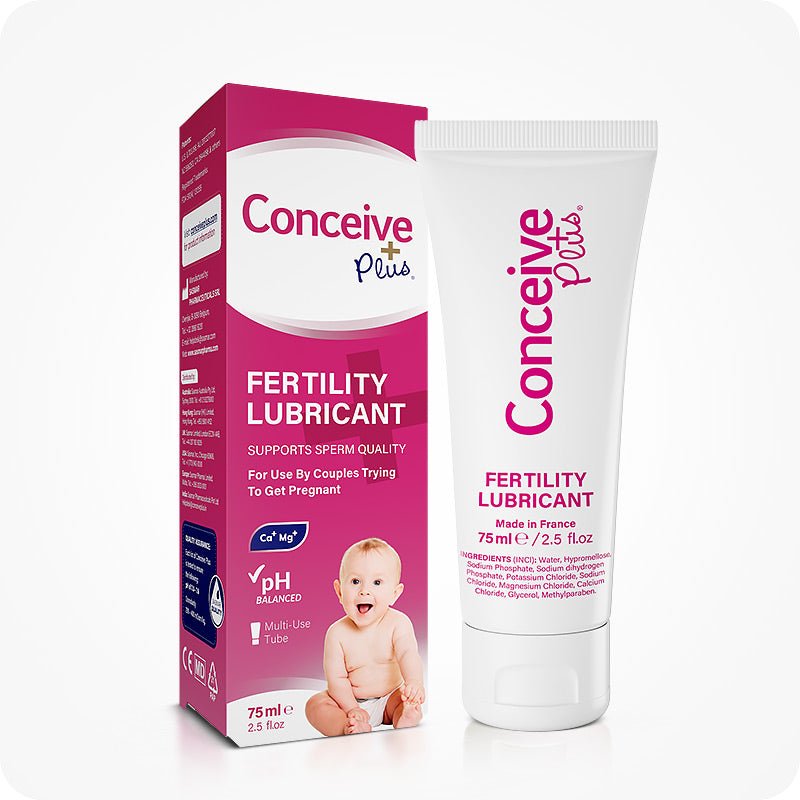
Conceive Plus vrugbaarheidsvriendelike smeermiddel is klinies getoets, isotonies, en pH-gebalanseerd om sperm motiliteit te ondersteun en 'n optimale omgewing vir konsepsie te skep.
Verken Conceive Plus →Die sleutelmerkers van 'n hoë kwaliteit vrugbaarheidsvriendelike smeermiddel sluit in:
1. Isotoniese Formulering
'n Isotoniese smeermiddel stem ooreen met die natuurlike osmolaliteit van sperma-vloeistof, wat wissel van ongeveer 250–380 mOsm/kg. Dit verseker dat sperm selle nie oortollige water verloor of opneem deur osmotiese druk nie, wat hul membraanintegriteit en motiliteit behou. Soek produkte wat spesifiek verklaar dat hulle "isotonies" of "iso-osmoties" is.
2. Sperm-vriendelike pH
Sperma-vloeistof het 'n pH van ongeveer 7.2–8.0, wat help om teen die natuurlike suurheid van die vagina te buffer. 'n Vrugbaarheidsvriendelike smeermiddel moet 'n pH hê in die reeks van 7.0–8.5 om hierdie omgewing na te boots en sperm toe te laat om motiliteit te behou terwyl hulle deur die voortplantingskanaal beweeg.
3. Geen Spermisiedele nie
Die produk moet vry wees van bekende spermisiedele, insluitend sekere preserveermiddels, gliserien in hoë konsentrasies, en alkoholgebaseerde bestanddele. Kontroleer altyd die bestanddeellys sorgvuldig.
4. Hidroksietielselulose Basis
Baie vrugbaarheidsmeermiddels gebruik hidroksietielselulose (HEC) as hul primêre verdikkingsmiddel in plaas van propileen glikol of gliserien, aangesien HEC bewys is om meer versoenbaar te wees met spermfunksie.
5. Kliniese Toetsing
Soek na smeermiddels wat klinies getoets is en in eweknie-geëvalueerde tydskrifte gepubliseer is. Produkte wat streng getoets is met spesifieke evaluering van hul effekte op sperm motiliteit en DNA-integriteit bied die grootste sekerheid van veiligheid.
6. Versoenbaar met Natuurlike Bevrugting en ART
Die beste vrugbaarheidsmeermiddels is veilig vir gebruik tydens natuurlike TTC-siklusse en ook versoenbaar met geassisteerde voortplantingstegnologieë (ART) soos intra-uteriene inseminasie (IUI) en in vitro fertilisasie (IVF).
Conceive Plus: ’n Klinies Getoetste Vrugbaarheidsmeermiddel
Onder die produkte wat spesifiek ontwerp is vir paartjies wat probeer swanger raak, staan Conceive Plus uit vir sy bewysgebaseerde formule en kliniese rekord. Ontwikkel deur reproduktiewe wetenskaplikes, was Conceive Plus een van die eerste vrugbaarheidsmeermiddels wat wyd klinies gevalideer is.
Hier is wat Conceive Plus onderskei:
- Isotoniese formule: Conceive Plus is geformuleer om die natuurlike osmolaliteit van semen te weerspieël, wat verseker dat sperm gesond en motiel bly na kontak met die smeermiddel.
- Geoptimaliseerde pH (7.0–8.5): Die pH-reeks is spesifiek gekalibreer om sperm oorlewing en motiliteit deur die vroulike voortplantingskanaal te ondersteun.
- Bevat kalsium- en magnesiumione: Hierdie ione is noodsaaklik vir normale spermfunksie, kapasitasi, en die akrosomreaksie — die proses waardeur sperm ’n eier penetreer en bevrug. Hierdie unieke ioniese formule onderskei Conceive Plus van baie mededingers.
- Geen parabene, gliserien of spermisied-agente nie: Die formule is skoon en vry van bestanddele wat bekend is om spermfunksie te ontwrig.
- Klinies getoets: Verskeie eweknie-geëvalueerde studies het getoon dat Conceive Plus nie sperm motiliteit, DNA-integriteit of bevrugtingspotensiaal negatief beïnvloed nie.
- OB-GYN aanbeveel: Conceive Plus word wyd aanbeveel deur gesondheidsorgverskaffers, insluitend reproduktiewe endocrinoloë en OB-GYNs, as ’n veilige smeermiddelopsie vir paartjies wat probeer swanger raak.
’n Studie uit 2014 gepubliseer in Systems Biology in Reproductive Medicine het spesifiek Conceive Plus saam met verskeie ander smeermiddels geëvalueer en gevind dat dit een van die min produkte was wat nie sperm motiliteit aansienlik verminder of sperm DNA-fragmentasie verhoog het nie. Hierdie studie het sy posisie as ’n goue standaard opsie vir vrugbaarheidsbewuste paartjies versterk.
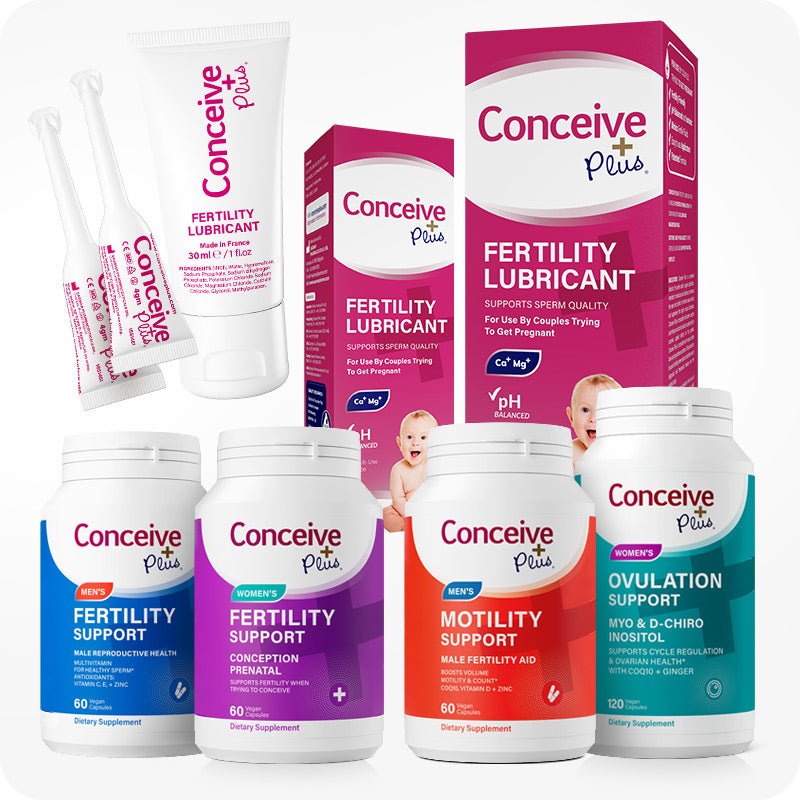
Conceive Plus is beskikbaar in verskeie formate om by verskillende voorkeure te pas:
- Bottels: Beskikbaar in 30ml en 75ml groottes vir gereelde gebruik tydens geslagsgemeenskap
- Vooraf gevulde aansoekers: Enkelgebruik-aansoekers wat die smeermiddel nader aan die serviks aflewer, wat die sperm blootstelling aan die vrugbaarheidsvriendelike omgewing maksimeer
- Multi-gebruik stelle: Gekombineerde pakkette wat beide pype en toedieners insluit
Hoe Vaginale Droogheid Konsepsie Beïnvloed en Waarom Glibberigheid Saak Maak
Vaginale droogheid tydens seksuele omgang is meer algemeen as wat baie mense besef, veral onder vroue wat probeer om swanger te raak. Die American College of Obstetricians and Gynecologists (ACOG) noem dat vaginale droogheid vroue van enige ouderdom kan raak, alhoewel dit meer algemeen voorkom tydens sekere vrugbaarheidsbehandelings en hormonale skommelinge.
Verskeie faktore kan bydra tot vaginale droogheid wanneer jy probeer om swanger te raak:
- Clomifeen sitraat (Clomid): Een van die mees voorgeskrewe vrugbaarheidsmedikasie, Clomid is ’n estrogeenreseptormodulator wat servikale slymproduksie aansienlik kan verminder, wat droogheid en ongemak tydens seksuele omgang veroorsaak.
- Hormonale skommelinge: Natuurlike hormonale veranderinge deur die menstruele siklus kan vaginale vog beïnvloed, veral in die dae voor en na ovulasie.
- Stres: Die emosionele en sielkundige stres van probeer om swanger te raak kan opwinding en natuurlike glibberigheid beïnvloed.
- Ouderdom: Vroue in hul laat 30’s en vroeë 40’s kan meer droogheid ervaar as gevolg van dalende estrogeenvlakke.
- Sommige medikasie: Antihistamiene, antidepressante, en sekere bloeddrukmedikasie kan vaginale droogheid as ’n newe-effek veroorsaak.
- Gereelde seksuele omgang: Paartjies wat seksuele omgang rondom vrugbare vensters tyd, kan vind dat verhoogde frekwensie lei tot verminderde natuurlike glibberigheid.
Vaginale droogheid veroorsaak nie net ongemak nie — dit kan ook seksuele omgang minder gereeld of minder aangenaam maak, wat die werklike aantal inseminasiegeleenthede gedurende ’n siklus kan verminder. Dit is ’n ander oortuigende rede om ’n vrugbaarheidsvriendelike glijmiddel te gebruik: dit help om te verseker dat seksuele omgang gemaklik kan plaasvind tydens die vrugbare venster sonder om ’n vyandige omgewing vir sperm te skep.
Navorsing het getoon dat ongeveer 25% van paartjies wat probeer om swanger te raak persoonlike glijmiddels gebruik, maar baie bly steeds produkte gebruik wat hul kanse kan benadeel. Oorskakeling na ’n vrugbaarheidsgeskikte glijmiddel is ’n eenvoudige, goedkoop ingryping wat ’n moontlike hindernis vir konsepsie kan verwyder.
Vrugbaarheidsglijmiddels vs. Natuurlike Alternatiewe: Wat Werk Regtig?
Voordat vrugbaarheids-spesifieke glijmiddels wyd beskikbaar was, het baie paartjies na tuisremedies en natuurlike alternatiewe vir glibberigheid gesoek. Sommige van hierdie opsies is veiliger as kommersiële glijmiddels, terwyl ander ewe skadelik of selfs meer skadelik vir sperm kan wees.
Kanola-olie
Kanola-olie is in sommige studies geëvalueer en is relatief minder skadelik vir sperm in vergelyking met watergebaseerde kommersiële smeermiddels. Dit ontbreek egter die spesifieke ioniese samestelling en pH-optimalisering van toegewyde vrugbaarheidsmeermiddels, en dit kan die vaginale mikrobiome oor tyd ontwrig, wat moontlik die risiko van bakteriële vaginose verhoog.
Baba-olie / Minerale Olie
Minerale olie word oor die algemeen as minder spermisied as baie watergebaseerde smeermiddels beskou, maar dit kan latekskondome verswak en mag nie die optimale pH- of osmolaliteit-omgewing vir sperm bied nie. Dit word nie as ’n TTC-smeermiddel aanbeveel nie.
Olyfolie
Alhoewel dit as ’n natuurlike opsie aangeprezen word, is olyfolie ingesluit in die baanbrekende Fertility and Sterility-studie wat vroeër genoem is en het dit beduidende negatiewe effekte op spermbeweeglikheid getoon. Dit word nie aanbeveel vir paartjies wat probeer om swanger te raak nie.
Pre-Seed
Pre-Seed is ’n ander bekende vrugbaarheidsmeermiddel wat sedert 2002 op die mark is. Dit was een van die oorspronklike sperm-vriendelike smeermiddels en gebruik ’n hidroksietielsellulosebasis. Pre-Seed het egter nie die kalsium- en magnesiumione wat in Conceive Plus voorkom nie, wat ’n rol speel in die ondersteuning van spermkapasitansie.
Eierwit
Rou eierwit is lankal aanbeveel as ’n natuurlike, sperm-vriendelike smeermiddel omdat die pH en konsistensie daarvan die van vrugbare servikale slym naboots. Dit dra egter ’n risiko van Salmonella-besmetting en moontlike allergiese reaksies, en dit is nie klinies getoets vir veiligheid nie. Gesondheidsorgverskaffers raai oor die algemeen teen die gebruik daarvan aan.
Die Laaste Woord oor Alternatiewe
Vir paartjies wat ernstig is oor die optimalisering van hul kanse op konsepsie, bied ’n klinies getoetste, isotone, pH-gebalanseerde vrugbaarheidsmeermiddel soos Conceive Plus die mees betroubare en bewysgebaseerde opsie. Die geringe koste in vergelyking met tuismiddels is die versekering werd dat spermkwaliteit nie onbedoeld verminder word nie.
Hoe om ’n Vrugbaarheidsmeermiddel vir die Beste Resultate te Gebruik
Om die meeste uit jou TTC smeermiddel te haal, verg meer as net die verpakking oopmaak. Hier is praktiese wenke om die doeltreffendheid te maksimeer:
Tydsberekening is Alles
Breng die smeermiddel naby aan — maar nie te ver vooraf nie — voor geslagsgemeenskap aan. Dit aanwend 5–15 minute voor geslagsgemeenskap gee die produk tyd om tot liggaamstemperatuur te warm en eweredig te versprei sonder om uit te droog. Vermy om die smeermiddel meer as 30 minute voor geslagsgemeenskap aan te wend.
Gebruik die Regte Hoeveelheid
Meer is nie noodwendig beter nie. Die meeste vrugbaarheidsglijmiddels beveel aan om 2–5ml per toepassing te gebruik. Oormatige gebruik kan natuurlike servikale slym verdun en mag nie addisionele voordeel bied nie. Volg die vervaardiger se instruksies sorgvuldig.
Oorweeg applikators vir dieper aflewering
As jy Conceive Plus met voorafgevulde applikators gebruik, word die glijmiddel nader aan die serviks afgelewer, wat kan help om ’n meer gasvrye omgewing vir sperm te skep terwyl hulle deur die servikale kanaal beweeg. Hierdie benadering is veral voordelig vir vroue met verminderde servikale slymproduksie.
Moet nie glijmiddel gebruik in plaas van om die onderliggende oorsaak aan te spreek nie
Alhoewel vrugbaarheidsglijmiddels vaginale droogheid tydens TTC aanspreek, behandel hulle nie die onderliggende oorsaak van verminderde natuurlike smeer nie. As jy aansienlike droogheid ervaar as gevolg van ’n medikasie soos Clomid, praat met jou dokter oor of dosisaanpassings of addisionele behandelings gepas is.
Tyd dit met jou vrugbare venster
Maak seker jy gebruik jou vrugbaarheidsglijmiddel tydens jou werklike vrugbare venster — die 5–6 dae voor en insluitend ovulasie. Ovulasie-voorspellerstelle (OPKs), basale liggaamstemperatuur (BBT) kaarte of toepassings wat siklusdata volg, kan jou help om hierdie venster akkuraat te identifiseer.
Bêre dit behoorlik
Hou vrugbaarheidsglijmiddels by kamertemperatuur, weg van direkte sonlig en hittebronne. Gebruik nooit produkte na hul vervaldatum nie, aangesien die pH, osmolaliteit en doeltreffendheid oor tyd kan verander.
Wat Vrugbaarheidskenners en OB-GYNs sê oor glijmiddels vir TTC
Die mediese gemeenskap word al hoe meer uitgesproke oor die belangrikheid van die keuse van glijmiddel vir paartjies wat probeer swanger raak. Hier is wat voortplantingspesialiste aanbeveel:
Die American Society for Reproductive Medicine (ASRM) het riglyne uitgereik wat aandui dat glijmiddels spermfunksie nadelig kan beïnvloed en dat paartjies wat probeer swanger raak, produkte moet gebruik wat spesifiek geformuleer is om spermvriendelik te wees. ASRM beveel aan dat klinici hul TTC-pasiënte oor glijmiddelveiligheid raadpleeg.
Die CDC se Nasionale Opname van Gesinsgroei toon dat ongeveer 9% van mans en 11% van vroue in die VSA hulp gesoek het vir onvrugbaarheid, maar baie paartjies ignoreer eenvoudige leefstylfaktore — soos die keuse van glijmiddel — wat hul vrugbaarheid kan beïnvloed.
Baie voortplantingsendokrinoloë noem dat hulle gereeld pasiënte vra oor die gebruik van glijmiddel tydens vrugbaarheidskonsultasies, veral wanneer paartjies tydgebonde geslagsverkeerprotokolle volg. Om van ’n konvensionele glijmiddel na ’n vrugbaarheidsvriendelike opsie oor te skakel, is een van die maklikste en mees onmiddellike ingrepe wat ’n paartjie kan maak.
Dokter se aanbevelings sluit gewoonlik in:
- Vermy ALLE konvensionele smeermiddels, spekse, en tuismiddels wanneer jy probeer om swanger te raak
- Gebruik slegs klinies gevalideerde, isotone, pH-gebalanseerde vrugbaarheidsmeermiddels
- Bespreek smeermiddelkeuses met jou vrugbaarheidspesialis, veral as jy ART ondergaan
- Oorweeg dat selfs kort blootstelling van sperm aan onversoenbare smeermiddels motiliteit kan verminder
Gereelde Vrae oor Vrugbaarheidsvriendelike Smeermiddels
V: Kan smeermiddel regtig verhoed dat ek swanger raak?
A: Al maak die gebruik van 'n konvensionele smeermiddel swangerskap nie onmoontlik nie, toon studies dat baie kommersiële smeermiddels spermmotiliteit en lewensvatbaarheid aansienlik verminder — soms met soveel as 60–100%. Oor tyd kan die konstante blootstelling van sperm aan ongunstige smeermiddels jou algehele kanse om elke siklus swanger te raak, verminder. Oorskakeling na 'n vrugbaarheidsvriendelike smeermiddel elimineer hierdie onnodige risikofaktor.
V: Is speeksel veilig om as smeermiddel te gebruik wanneer ek probeer om swanger te raak?
A: Nee. Speeksel het 'n suur pH en bevat ensieme en bakterieë wat sperm kan benadeel. Verskeie studies het getoon dat speeksel spermmotiliteit aansienlik verminder, soms selfs meer as kommersiële smeermiddels. Dit dra ook die risiko om mondbakterieë in die vaginale omgewing in te bring, wat moontlik die vaginale mikrobiome ontwrig. Speeksel moet nooit as smeermiddel gebruik word wanneer jy probeer om swanger te raak nie.
V: Werk Conceive Plus ook as 'n gewone smeermiddel?
A: Ja. Conceive Plus is ontwerp om effektiewe smeerkrag te bied vir gemaklike geslagsgemeenskap terwyl dit terselfdertyd 'n spermvriendelike omgewing skep. Dit het 'n syagtige, natuurlike gevoel wat die meeste gebruikers vergelykbaar met, of beter as, konvensionele smeermiddels vind. Dit kan deur paartjies in enige stadium van hul vrugbaarheidsreis gebruik word.
V: Hoe lank bly Conceive Plus effektief na toepassing?
A: Conceive Plus behou sy isotone eienskappe en smeerkrag vir die duur van die geslagsgemeenskap. Daar is gewoonlik geen behoefte om dit tydens geslagsgemeenskap weer aan te wend nie, alhoewel ekstra toepassing aanvaarbaar is indien nodig. Die produk moet 5–15 minute voor geslagsgemeenskap toegepas word vir optimale resultate.
V: Kan ek Conceive Plus saam met IUI of IVF gebruik?
A: Ja. Conceive Plus is versoenbaar met geassisteerde voortplantingstegnologieë insluitend IUI en IVF. Die isotone, spermveilige samestelling maak dit geskik vir gebruik tydens tydelike geslagsgemeenskapsprotokolle wat dikwels met vrugbaarheidsbehandelings geassosieer word. Raadpleeg egter altyd jou voortplantingsendokrinoloog voordat jy enige smeermiddel tydens 'n ART-siklus gebruik.
V: Is Conceive Plus veilig om te gebruik as ek 'n latexallergie het?
V: Conceive Plus self bevat nie lateks nie. As jy egter latekskondome saam met die produk gebruik (byvoorbeeld tydens nie-vrugbare periodes), wees bewus daarvan dat olie-gebaseerde produkte lateks kan afbreek. Conceive Plus is watergebaseerd en is veilig om met latekskondome te gebruik. Vir enige spesifieke allergie-kwessies, hersien die volledige bestanddeellys en raadpleeg jou gesondheidsorgverskaffer.
V: Is daar enige newe-effekte van die gebruik van vrugbaarheidsglijmiddels?
V: Vrugbaarheidsvriendelike glijmiddels soos Conceive Plus word oor die algemeen baie goed verdra. Sommige gebruikers kan ligte irritasie ervaar as hulle sensitief is vir enige van die bestanddele. As jy enige ongewone brand, jeuk of ongemak opmerk, stel die gebruik stop en raadpleeg jou gesondheidsorgverskaffer. Soos met enige persoonlike versorgingsproduk, is dit 'n goeie idee om die bestanddeellys na te gaan as jy bekende sensitiwiteite het.
V: Wat is die verskil tussen Conceive Plus en Pre-Seed?
V: Beide Conceive Plus en Pre-Seed is vrugbaarheidsvriendelike glijmiddels met toepaslike pH- en osmolaliteitsvlakke. Die belangrikste verskil is dat Conceive Plus kalsium- en magnesiumione bevat, wat belangrik is vir spermkapasitasie en die akrosomreaksie — prosesse wat noodsaaklik is vir bevrugting. Pre-Seed bevat nie hierdie ione nie. Albei is in eweknie-geëvalueerde literatuur ondersoek en word beskou as veilige alternatiewe vir konvensionele glijmiddels vir paartjies wat probeer om swanger te raak.
V: Kan mans met lae spermgetal of motiliteit baat vind by die gebruik van 'n vrugbaarheidsglijmiddel?
V: Absoluut. Vir mans met reeds benadeelde spermparameters is dit selfs belangriker om addisionele skade deur sperm-toxiese glijmiddels te vermy. Die gebruik van 'n vrugbaarheidsvriendelike glijmiddel verseker dat die sperm wat teenwoordig is die beste kans het om motiel en intak te bly terwyl hulle na die eier beweeg. Dit is 'n eenvoudige, koste-vrye ingryping in vergelyking met ander manlike vrugbaarheidsondersteuningsmetodes.
V: Moet ek 'n vrugbaarheidsglijmiddel elke keer gebruik as ons geslagsgemeenskap het terwyl ons probeer om swanger te raak, of net tydens my vrugbare venster?
V: Vir die beste resultate en die grootste gemoedsrus word dit aanbeveel om 'n vrugbaarheidsvriendelike glijmiddel te gebruik elke keer as jy geslagsgemeenskap het terwyl jy aktief probeer om swanger te raak — nie net tydens die vrugbare venster nie. Dit kan moeilik wees om die presiese vrugbare venster te voorspel, en gereelde gebruik verseker dat sperm nooit onnodig benadeel word nie. Boonop help konsekwente gebruik deur die siklus om die gewoonte te handhaaf en verseker dat jy nie tydens jou mees vrugbare dae vergeet nie.
Gereed om jou konsepsiereis te optimaliseer?
Conceive Plus bied 'n volledige reeks vrugbaarheidsondersteuningsprodukte — klinies getoets en vertrou deur paartjies wêreldwyd.
Blaai deur alle produkte