DHEA for Fertility: What You Need to Know Before Buying


DHEA for Fertility: What You Need to Know Before Buying
If you've spent time researching how to improve egg quality or boost fertility after 35, you've almost certainly come across DHEA for fertility. It's been discussed in IVF clinics, fertility forums, and supplement aisles alike — often with bold claims about improving egg reserve, ovarian response, and pregnancy rates.
But DHEA is a hormone, and that distinction matters enormously. Before you add it to your supplement stack, there are critical things to understand about how it works, who it might help, and what the science actually says. This guide walks you through everything — including safer, more complete approaches to fertility supplementation, like the Conceive Plus fertility supplement range.
What Is DHEA and How Does It Relate to Fertility?
DHEA (dehydroepiandrosterone) is a naturally occurring hormone produced primarily by the adrenal glands. It serves as a precursor to both estrogen and testosterone, which means your body converts DHEA into these sex hormones as needed.
Levels of DHEA for fertility consideration peak in your mid-20s and decline steadily with age. By the time a woman reaches 40, her DHEA levels may be 50–80% lower than they were in her twenties. This decline parallels the well-documented drop in ovarian reserve and egg quality seen with advancing age — a correlation that has driven significant research interest.
Fertility specialists became interested in DHEA when they noticed that women with diminished ovarian reserve (DOR) — characterised by a low antral follicle count or poor response to ovarian stimulation — often had below-average DHEA-S levels (the sulfated, storage form of DHEA measurable in the blood).
The hypothesis: if DHEA supports androgen levels in the ovarian microenvironment, supplementing it might improve follicular development and egg quality in women with poor ovarian reserve.
What the Clinical Evidence Actually Shows
Visit conceiveplus.com and explore the full Conceive Plus range — trusted by couples worldwide.
The research on DHEA for fertility is promising in some areas and limited or contradictory in others. Here's an honest breakdown:
Potential Benefits (in select populations):
- A 2010 study by Gleicher et al. in Reproductive BioMedicine Online found that DHEA supplementation was associated with improved live birth rates in women with diminished ovarian reserve undergoing IVF
- Several smaller studies report improved antral follicle counts and reduced rates of aneuploidy (chromosomally abnormal eggs) in women with DOR who supplemented DHEA for 6–16 weeks
- Some women with premature ovarian insufficiency (POI) have shown improved spontaneous ovulation after DHEA supplementation
- A 2018 meta-analysis of 17 studies found DHEA associated with higher clinical pregnancy rates in women with poor ovarian response — particularly before or during IVF cycles
Significant Limitations:
- Most studies are small, uncontrolled, or self-reported — not double-blind randomised controlled trials
- Effect is largely observed in women with DOR or poor ovarian response — women with normal ovarian reserve see little to no benefit, and may experience hormonal disruption
- Optimal dosing, timing, and duration remain unclear
- DHEA is converted differently between individuals based on genetics, gut microbiome, and existing hormone levels
Bottom line: DHEA may help a specific subset of women — those with diagnosed diminished ovarian reserve or poor response to ovarian stimulation. For most women trying to conceive naturally, DHEA is unnecessary and carries real risks.
DHEA for Fertility: Risks and Side Effects You Should Know
Because DHEA is a hormone precursor, supplementing with it can disrupt your body's delicate hormonal balance. This is not a neutral supplement like vitamin C — it has the potential for meaningful side effects, especially at doses commonly recommended online (25–75mg/day).
Reported side effects of DHEA supplementation include:
- Androgenic effects: acne, oily skin, facial hair growth, hair loss (male-pattern alopecia)
- Hormonal disruption: elevated testosterone or estrogen can actually impair ovulation and disrupt menstrual cycle regularity
- Mood changes: irritability, anxiety, or insomnia in some users
- PCOS aggravation: women with PCOS already have elevated androgens — DHEA can significantly worsen this
- Interaction risks: DHEA may interact with insulin-sensitising medications, antidepressants, and hormone therapies
Additionally, DHEA is poorly regulated as a supplement in many countries. Contamination, inaccurate dosing, and unlabelled additives are real concerns in the over-the-counter supplement market.
Who Should and Should Not Take DHEA
Based on available evidence and clinical guidelines, DHEA supplementation for fertility may be appropriate for:
- Women with confirmed diminished ovarian reserve (low AMH, low AFC) under the guidance of a reproductive endocrinologist
- Women who have had poor response to ovarian stimulation in prior IVF cycles
- Women with premature ovarian insufficiency (POI) — with close medical supervision
DHEA is generally not recommended for:
- Women with normal ovarian reserve trying to conceive naturally
- Women with PCOS (elevated androgens already present)
- Women with hormone-sensitive conditions (certain cancers, endometriosis)
- Anyone self-medicating without baseline hormone testing
- Pregnant or breastfeeding women
The critical takeaway: do not self-prescribe DHEA. Have your AMH, FSH, and DHEA-S levels tested by a reproductive specialist before considering supplementation.
DHEA Dosing: What Clinics Actually Use
When DHEA is used in clinical settings, the most commonly studied protocol is:
- Dose: 25–75 mg/day (most studies use 75 mg; some use 25 mg micronised DHEA)
- Duration: 6–16 weeks before IVF retrieval (follicle development takes approximately 90 days)
- Form: Micronised DHEA is better absorbed than standard DHEA tablets
- Timing: Morning, as DHEA levels are naturally highest in the AM
Some clinics combine DHEA with CoQ10, antioxidants, and omega-3s for a broader egg quality support protocol. This is where a comprehensive fertility supplement like Conceive Plus becomes particularly valuable — as it delivers multiple scientifically-backed nutrients in a single, regulated formulation.
A Safer, More Complete Alternative: The Conceive Plus Approach
For women who don't have a diagnosed diminished ovarian reserve or poor ovarian response — which is the majority of women trying to conceive — DHEA carries more risk than reward. What most women actually need are well-studied, safe nutrients that support overall reproductive health, egg quality, and hormonal balance.
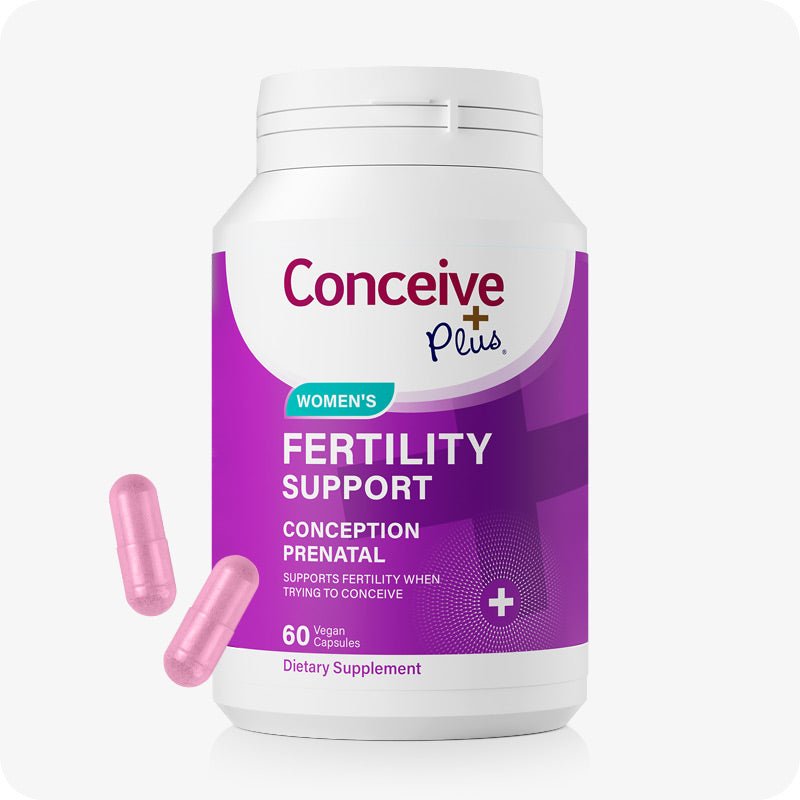
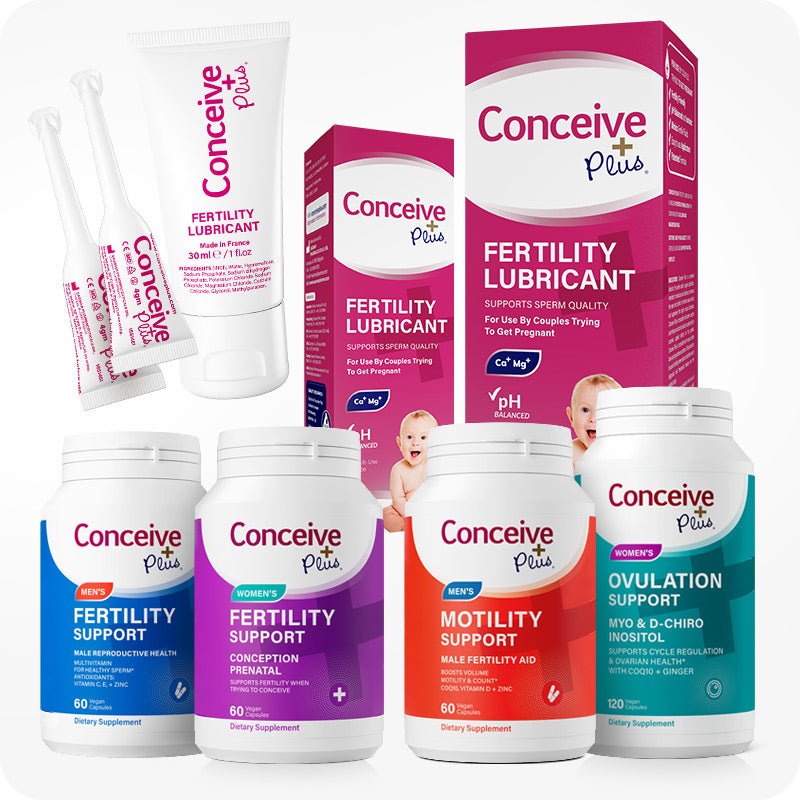
Conceive Plus fertility supplements are formulated specifically for women trying to conceive, combining nutrients with strong clinical evidence including:
- CoQ10 (Ubiquinol): Supports mitochondrial energy production in eggs, shown in studies to improve egg quality and IVF outcomes — particularly in women over 35
- Methylfolate (L-5-MTHF): The bioactive form of folate, essential for cell division, DNA synthesis, and neural tube protection — superior to standard folic acid
- Vitamin D3: Plays a role in follicular development and implantation; deficiency is associated with reduced fertility and IVF success
- Inositol (Myo + D-Chiro blend): Supports ovulatory function, insulin sensitivity, and egg quality — particularly beneficial for women with PCOS
- Zinc and Selenium: Key antioxidants protecting eggs from oxidative stress during folliculogenesis
- Vitamin E and C: Support the antioxidant environment of the ovarian follicle
Unlike DHEA, these nutrients are safe for broad use, well-regulated, and have extensive human trial data supporting their use in fertility. They address the same underlying goals — improved egg quality, better hormonal environment, reduced oxidative stress — without hormonal disruption.
Ready to support your fertility with clinically-backed nutrients?
Explore the Conceive Plus Fertility Supplement Range — formulated for women at every stage of their TTC journey, from preconception to IVF support.
DHEA vs CoQ10: Which Is Better for Egg Quality?
This is one of the most common questions in fertility communities, and the answer depends heavily on your individual situation. Here's a direct comparison:
| Factor | DHEA | CoQ10 |
|---|---|---|
| Mechanism | Androgen precursor — increases testosterone/estrogen | Mitochondrial energy support for egg quality |
| Best for | DOR, poor ovarian response, low DHEA-S | Age-related egg quality decline, oxidative stress |
| Evidence quality | Moderate — mostly small/uncontrolled studies | Good — multiple RCTs showing benefit |
| Safety profile | Moderate risk — hormonal effects, side effects | Excellent — no known hormonal disruption |
| Suitable for normal ovarian reserve | No | Yes |
| Needs medical supervision | Yes — strongly recommended | No — safe for self-supplementation |
For most women, CoQ10 (especially ubiquinol form for better absorption) is the safer, more universally applicable choice for supporting egg quality. It can be taken alongside DHEA in clinical protocols, and is a core component of the Conceive Plus women's supplement formulation.
Frequently Asked Questions About DHEA for Fertility
How long does it take DHEA to improve egg quality?
Since the entire follicle development cycle takes approximately 90 days, most clinical protocols use DHEA for 6–16 weeks before an IVF retrieval. Improvements in ovarian response and egg quality — if they occur — are typically measurable after one full cycle of supplementation (3 months).
Can I take DHEA without a fertility doctor?
It is strongly advised against. DHEA is a hormone precursor with real risks, including disruption to your menstrual cycle, aggravation of PCOS, and androgenic side effects. Without baseline hormone testing (AMH, FSH, DHEA-S, testosterone), you cannot know whether supplementation is appropriate or what dose is safe for your individual biology.
Does DHEA help women over 40 get pregnant?
The strongest evidence for DHEA benefit is in women with diminished ovarian reserve — which becomes more common with age. However, age alone does not mean DHEA is appropriate. Many women over 40 have normal or adequate ovarian reserve and are better served by broad nutritional support (CoQ10, methylfolate, vitamin D, antioxidants) than DHEA supplementation.
What is the right dose of DHEA for fertility?
Clinical studies typically use 25–75 mg/day of micronised DHEA. However, the appropriate dose varies significantly by individual — some women are rapid converters and may experience side effects at 25 mg, while others may need higher doses. This is why testing and medical oversight are essential before starting.
Is DHEA safe to take during pregnancy?
No. DHEA should be discontinued before embryo transfer or once pregnancy is confirmed. Elevated androgens during early pregnancy may interfere with placental development and fetal wellbeing. There are no safety studies supporting DHEA use during pregnancy.
Can DHEA cause a positive pregnancy test?
DHEA does not cause a false positive pregnancy test. Home pregnancy tests detect hCG (human chorionic gonadotropin), which DHEA does not mimic or stimulate.
Does DHEA affect ovulation?
It can — positively or negatively depending on baseline hormone levels. In women with DOR, DHEA may improve ovulatory function by supporting follicular development. In women with normal or elevated androgens (including PCOS), DHEA can disrupt the hormonal balance needed for regular ovulation.
Can men take DHEA for fertility?
Some preliminary research suggests DHEA may support testosterone levels and sperm parameters in men with low DHEA-S. However, evidence is limited, and DHEA in men can also convert to estrogen — potentially worsening fertility if estrogen rises too high. Safer, better-evidenced alternatives for male fertility include zinc, selenium, L-carnitine, CoQ10, and vitamin C — all components of the Conceive Plus men's supplement.
Is DHEA available over the counter?
In the United States, DHEA is classified as a dietary supplement and is available without a prescription. In many other countries (UK, EU, Australia), DHEA is classified as a prescription-only medicine due to its hormonal activity. This difference in regulation does not change the underlying risks — hormonal supplements should always be used with medical oversight.
What should I take instead of DHEA if I don't have DOR?
For women with normal ovarian reserve, a comprehensive fertility supplement covering CoQ10, methylfolate, vitamin D3, inositol, antioxidants, and essential minerals provides broad, safe support for reproductive health. The Conceive Plus women's fertility supplement range is designed exactly for this — evidence-based ingredients, clinically-informed formulation, without the hormonal risks of DHEA.
Conclusion: DHEA for Fertility — Targeted Medicine, Not a Universal Solution
DHEA for fertility has a real place in reproductive medicine — specifically for women with diminished ovarian reserve or poor ovarian response to stimulation, under the guidance of a reproductive specialist. For this group, the clinical evidence is meaningful and the potential benefit is real.
For everyone else — the majority of women trying to conceive — DHEA is not the answer. The risks of hormonal disruption, androgenic side effects, and worsened PCOS symptoms outweigh the benefits when ovarian reserve is normal.
What the vast majority of women TTC actually need is: optimised nutrition, reduced oxidative stress, and the right micronutrient support. That's exactly what Conceive Plus delivers — a complete, clinically-informed fertility supplement designed to support every woman's reproductive health journey, from preconception through IVF.
Start your fertility supplement journey with confidence.
Browse the full Conceive Plus Fertility Supplement Collection — designed with clinicians, formulated for results.
Browse our complete fertility product range at conceiveplus.com — free shipping available on qualifying orders.