Lubricant That Doesn't Kill Sperm: What to Use When TTC


Lubricant That Doesn't Kill Sperm: What to Use When TTC
If you're trying to conceive and reaching for a bottle of lubricant, you may be unknowingly doing more harm than good. Most standard lubricants — even water-based ones marketed as "gentle" or "natural" — have been shown to significantly impair sperm motility, viability, and DNA integrity. Finding a lubricant that doesn't kill sperm is one of the most overlooked, yet critically important decisions couples make when trying to conceive (TTC).
This comprehensive guide covers everything you need to know: why conventional lubricants are harmful, what makes a lubricant sperm-safe, and exactly what to look for — including why Conceive Plus is the clinically tested, FDA-cleared choice recommended by reproductive specialists worldwide.
Why Most Lubricants Kill Sperm
The human vaginal environment is carefully regulated — it's naturally acidic (pH 3.8–4.5) to protect against infection. Sperm, however, need an alkaline to neutral environment (pH 7.0–8.5) to survive. When sperm enter the reproductive tract, cervical mucus helps buffer the pH and provide the ions sperm need to activate. The wrong lubricant disrupts this delicate system.
Several peer-reviewed studies have demonstrated the damage conventional lubricants cause:
- K-Y Jelly reduced sperm motility by 60–100% within 30 minutes of exposure in vitro (Anderson et al., 1998).
- Astroglide reduced progressive sperm motility by 95–99% in laboratory testing.
- Olive oil and saliva, often suggested as "natural" alternatives, have also been shown to impair sperm function significantly.
- A 2012 study in Fertility and Sterility found that even lubricants labelled "natural" or "organic" could reduce sperm motility by up to 87% depending on their osmolality and pH.
The problem lies in two main factors: pH imbalance and osmolality mismatch.
The pH Problem
Most lubricants are formulated to match vaginal pH (3.8–4.5), which is appropriate for vaginal health — but devastating for sperm. At this low pH, sperm motility slows dramatically and sperm begin to die within minutes.
The Osmolality Problem
Osmolality measures the concentration of dissolved particles in a fluid. Human semen has an osmolality of approximately 300–380 mOsm/kg. Most lubricants are hyperosmotic (too concentrated), causing sperm cells to lose water and shrivel — a process called crenation — effectively killing them.
The World Health Organization (WHO) recommends that lubricants used during TTC have osmolality below 1,200 mOsm/kg, though ideally below 380 mOsm/kg to fully mirror seminal fluid. Conceive Plus is formulated within this optimal range.
What Makes a Lubricant That Doesn't Kill Sperm
Ready to give your sperm the best chance? Conceive Plus lubricant is FDA-cleared, ion-enriched, and trusted by fertility specialists. Shop Conceive Plus Lubricants →
A truly sperm-safe lubricant must meet all of the following criteria:
- pH-balanced for sperm: Between 7.0 and 8.5 — matching the environment sperm need to remain active and viable.
- Iso-osmotic or physiological osmolality: Matching the osmolality of seminal fluid (300–380 mOsm/kg) to prevent cellular damage.
- Free of spermicidal agents: No nonoxynol-9, chlorhexidine, benzalkonium chloride, or preservatives that impair sperm.
- Ion-supplemented: The cervical mucus around ovulation contains calcium and magnesium ions that help capacitate sperm (activate them for fertilisation). The best lubricants replicate these ions.
- Clinically tested: Not just lab-tested in vitro, but validated in real reproductive settings.
- Regulatory-cleared: FDA clearance or CE marking (EU medical device) adds an extra layer of credibility.
Conceive Plus: The Lubricant That Doesn't Kill Sperm
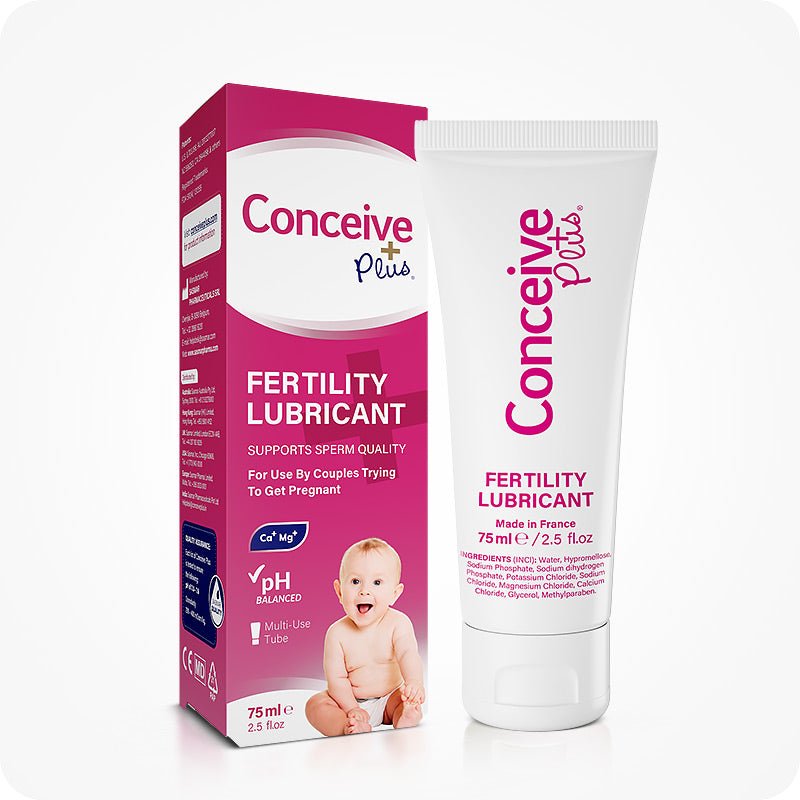
Conceive Plus is the only sperm-safe lubricant clinically formulated with both calcium (Ca²⁺) and magnesium (Mg²⁺) ions — a differentiating feature no other lubricant offers. These ions are found naturally in fertile cervical mucus and are essential for:
- Sperm capacitation (the process that enables sperm to fertilise an egg)
- Hyperactivation of sperm motility (the vigorous swimming needed to penetrate the egg)
- Maintaining the integrity of the sperm plasma membrane
Conceive Plus is also:
- FDA-cleared as a medical device for use during conception
- pH-balanced to match fertile cervical mucus (7.2–8.0)
- Iso-osmotic — formulated to closely mirror seminal fluid osmolality
- Paraben-free, glycerin-free, and fragrance-free
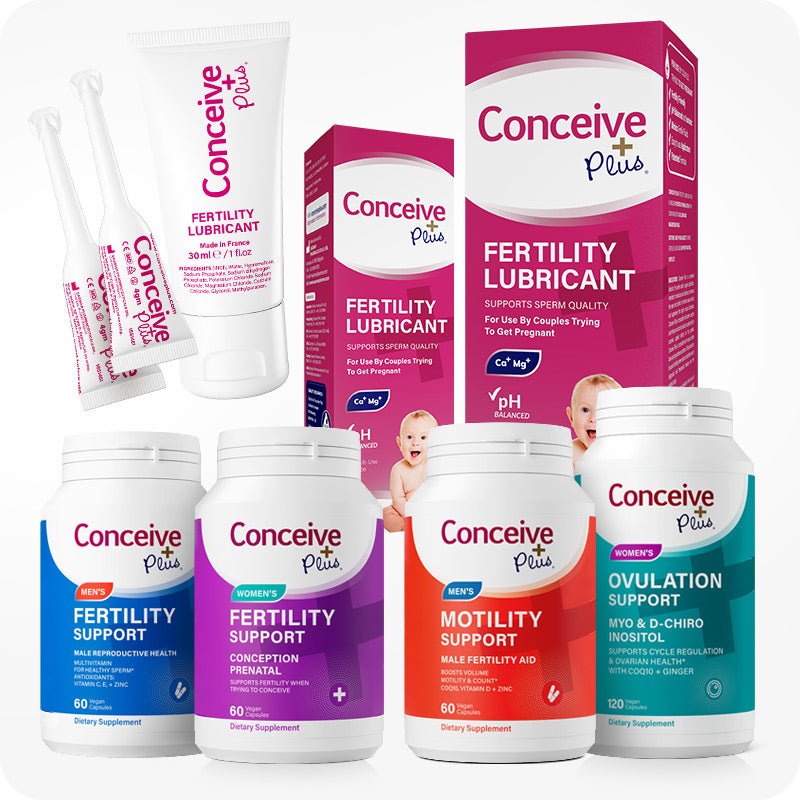
- Available in both gel applicators (for internal use, timed with ovulation) and 75ml tube (external/intimate use)
In clinical settings, Conceive Plus is recommended by OB-GYNs and reproductive endocrinologists as the preferred lubricant for patients undergoing fertility treatment, IUI, and natural conception attempts.
Conceive Plus vs Pre-Seed: Which Sperm-Safe Lubricant is Better?
Pre-Seed is often the first sperm-safe lubricant people encounter when researching TTC. Both are designed not to harm sperm, but there are key differences:
| Feature | Conceive Plus | Pre-Seed |
|---|---|---|
| Ca²⁺/Mg²⁺ ions | ✅ Yes (unique feature) | ❌ No |
| FDA-cleared | ✅ Yes | ✅ Yes |
| pH-balanced (7.0–8.0) | ✅ Yes | ✅ Yes |
| Iso-osmotic | ✅ Yes | ✅ Yes |
| Paraben-free | ✅ Yes | ❌ Contains parabens |
| Glycerin-free | ✅ Yes | ❌ Contains glycerin |
| Applicator included | ✅ Yes (multi-pack) | ✅ Yes |
| Clinical research | ✅ Published studies | ✅ Published studies |
The addition of calcium and magnesium ions in Conceive Plus goes beyond simply "not harming sperm" — it actively supports the biological processes that sperm need to fertilise an egg. This is what sets Conceive Plus apart as a lubricant that doesn't kill sperm but actively supports conception.
Conceive Plus is also paraben-free and glycerin-free, which matters for women prone to yeast infections (glycerin can feed yeast) and those avoiding endocrine-disrupting compounds (parabens).
How to Use Conceive Plus for Maximum Effectiveness
To get the most from a lubricant that doesn't kill sperm, timing and application matter:
Step 1: Track Your Ovulation
Conceive Plus is most effective when used during your fertile window — typically the 5 days before ovulation and the day of ovulation itself. Use ovulation predictor kits (OPKs), basal body temperature (BBT) tracking, or cervical mucus monitoring to identify your peak fertile days.
Step 2: Use the Internal Applicators
Conceive Plus applicators allow you to deposit the gel internally, close to the cervix, mimicking the cervical mucus environment. Apply 15–30 minutes before intercourse to allow the product to warm to body temperature.
Step 3: Use the Tube for External Application
The 75ml tube is ideal for external use during intercourse. Apply a small amount externally during intimacy. This version provides comfort and lubrication without interfering with sperm.
Step 4: Avoid Other Lubricants
During your TTC cycle, avoid all other lubricants — including coconut oil, olive oil, saliva, and standard over-the-counter brands — even if you feel comfortable using them otherwise.
Common Lubricants to Avoid When TTC
The following lubricants are proven to significantly impair sperm and should be avoided during TTC:
- K-Y Jelly — High osmolality, wrong pH, dramatically reduces sperm motility
- Astroglide — Studies show nearly complete elimination of sperm motility
- Durex Play — Not sperm-safe; contains ingredients that harm sperm
- Coconut oil — Antibacterial properties can kill sperm; pH imbalance
- Olive oil — High osmolality, wrong pH
- Saliva — Contains enzymes and bacteria that impair sperm motility
- Vaseline / petroleum jelly — Does not wash away easily, physically traps sperm
- Baby oil / mineral oil — Can degrade condoms; not suitable for TTC
What the Research Says About Sperm-Safe Lubricants
The science is clear. A landmark study published in Fertility and Sterility (Agarwal et al., 2008) evaluated several lubricants and found that mineral oil and Conceive Plus most closely resembled the reproductive tract environment, while commonly used lubricants like K-Y Jelly, Astroglide, and Replens caused significant sperm DNA fragmentation and motility loss.
A 2014 study from the University of California examined sperm-safe lubricants under real TTC conditions and found that couples using appropriately pH- and osmolality-balanced lubricants had statistically comparable conception rates to couples who used no lubricant at all — confirming that the right lubricant that doesn't kill sperm is effectively neutral to conception outcomes.
Conversely, a 2019 prospective study in Human Reproduction found that women using standard lubricants during TTC had a statistically significant reduction in the odds of conception (OR 0.69) compared to those who used no lubricant or sperm-safe alternatives.
Fertility Lubricant Myths Debunked
Myth 1: "Natural" means safe for sperm
False. Coconut oil, olive oil, and other "natural" lubricants can all impair sperm function. Natural doesn't mean iso-osmotic or pH-balanced for sperm.
Myth 2: Water-based lubricants are fine
Not necessarily. Most water-based lubricants are formulated for vaginal pH, not sperm health. Being water-based alone does not make a lubricant sperm-safe.
Myth 3: You only need lubricant if you have vaginal dryness
Many couples use lubricants for comfort even without dryness — and that's fine, as long as the lubricant doesn't harm sperm. Vaginal dryness during TTC is also more common than people realise, often caused by ovulation-monitoring interventions, stress, and hormonal shifts.
Myth 4: Sperm-safe lubricants don't feel as good
Modern sperm-safe lubricants like Conceive Plus are designed for both comfort and conception. They provide smooth, natural-feeling lubrication without compromising the intimate experience.
FAQ: Lubricant That Doesn't Kill Sperm
Q: Does Conceive Plus help you get pregnant?
A: Conceive Plus is designed to create an environment that supports sperm survival and function, without harming sperm. It contains calcium and magnesium ions that support sperm capacitation. While it's not a fertility treatment, it removes a potential barrier to conception — sperm-toxic lubricants — and actively supports the biology of fertilisation.
Q: Can I use Conceive Plus with IUI?
A: Yes. Conceive Plus is commonly recommended in IUI cycles and has been evaluated in IUI settings. Always confirm with your fertility clinic, but it is generally considered safe and non-interfering with IUI procedures.
Q: How long does sperm survive in Conceive Plus?
A: Studies show sperm motility in Conceive Plus is maintained at levels comparable to seminal fluid, suggesting it does not impair sperm survival time. Standard sperm survival in the reproductive tract is 3–5 days when cervical mucus is fertile quality.
Q: Is Conceive Plus safe for women with yeast infections?
A: Conceive Plus is glycerin-free, which means it does not contain the sugars that can promote yeast growth. It is generally considered suitable for women prone to yeast infections, though if you have an active infection, you should address it before TTC.
Q: How much lubricant should I use when TTC?
A: For internal applicators, use the full pre-filled amount (approximately 2–3ml) applied 15–30 minutes before intercourse. For the tube version, a small pea-to-dime-sized amount applied externally is typically sufficient. Avoid excessive amounts, as this won't improve sperm survival and may dilute cervical mucus.
Q: What's the difference between the Conceive Plus gel and the tube?
A: The gel applicators are designed for internal use, depositing the product near the cervix to mimic fertile cervical mucus. The tube is designed for external use during intercourse. Both are sperm-safe; the applicators are typically preferred for maximising the conception-supportive environment.
Q: Can lubricant help if I have low cervical mucus?
A: Yes. Some women produce limited cervical mucus around ovulation, which can make conception harder. A sperm-safe lubricant like Conceive Plus can help compensate by providing the lubrication and ionic environment sperm need.
Q: Is there any lubricant safe during the two-week wait (TWW)?
A: During the TWW, implantation has already occurred or will occur, so sperm motility is less of a concern. However, using a pH-balanced, gentle product like Conceive Plus remains preferable to harsh conventional lubricants.
Q: Does Pre-Seed work as well as Conceive Plus?
A: Both are sperm-safe and FDA-cleared. The key advantage of Conceive Plus is its calcium and magnesium ion formula, its paraben-free and glycerin-free formulation, and its broader clinical validation. Many couples and fertility specialists prefer Conceive Plus for these reasons.
Q: Where can I buy Conceive Plus lubricant?
A: Conceive Plus is available online at conceiveplus.com/collections/fertility-lubricants and through major pharmacies and online retailers.
Final Thoughts
Finding a lubricant that doesn't kill sperm is one of the simplest, most actionable steps you can take when trying to conceive. The evidence is overwhelming: most everyday lubricants harm sperm, and the right product can remove this barrier entirely while actively supporting the biology of conception.
Conceive Plus stands alone as the only sperm-safe lubricant formulated with calcium and magnesium ions, pH-balanced for sperm, iso-osmotic, and cleared by the FDA for use during conception. It doesn't just avoid harming sperm — it creates the environment sperm need to thrive.
Whether you're in your first month of trying or well into a fertility journey, switching to Conceive Plus is a smart, evidence-based decision. Your sperm will thank you.
Do not let the wrong lubricant stand between you and your baby. Switch to the lubricant that does not kill sperm — clinically proven, FDA-cleared. Get Conceive Plus Today →