Age and Fertility: Understanding the Biological Clock and Maximising Your Conception Potential at Every Stage


The relationship between age and fertility is one of the most discussed — and often misunderstood — topics in reproductive health. While it is true that fertility follows a biological timeline, understanding that timeline with precision empowers you to make informed decisions rather than feel anxious about decline.
The Science of Age and Fertility
For women, fertility peaks in the early-to-mid twenties and begins a gradual decline around age 32, with a more noticeable acceleration after 35 and a steeper drop after 40. This trajectory reflects the natural aging of eggs. A woman is born with her entire lifetime supply of approximately 1 to 2 million eggs. By puberty, around 300,000 to 400,000 remain. By age 37, roughly 25,000 remain; by 51, fewer than 1,000. But age-related fertility decline is not a cliff. Many women in their late thirties and early forties conceive naturally and have healthy pregnancies. The key is understanding where you stand and taking proactive steps.
For men, age also plays a role. Male fertility begins a gentle decline around age 40, with decreases in sperm quality including motility, morphology, and DNA fragmentation becoming more apparent after 45. While men continue producing sperm throughout life, the genetic quality of that sperm can deteriorate, increasing risks for certain conditions. Understanding these changes gives you the information you need to make proactive choices about timing, testing, and support.
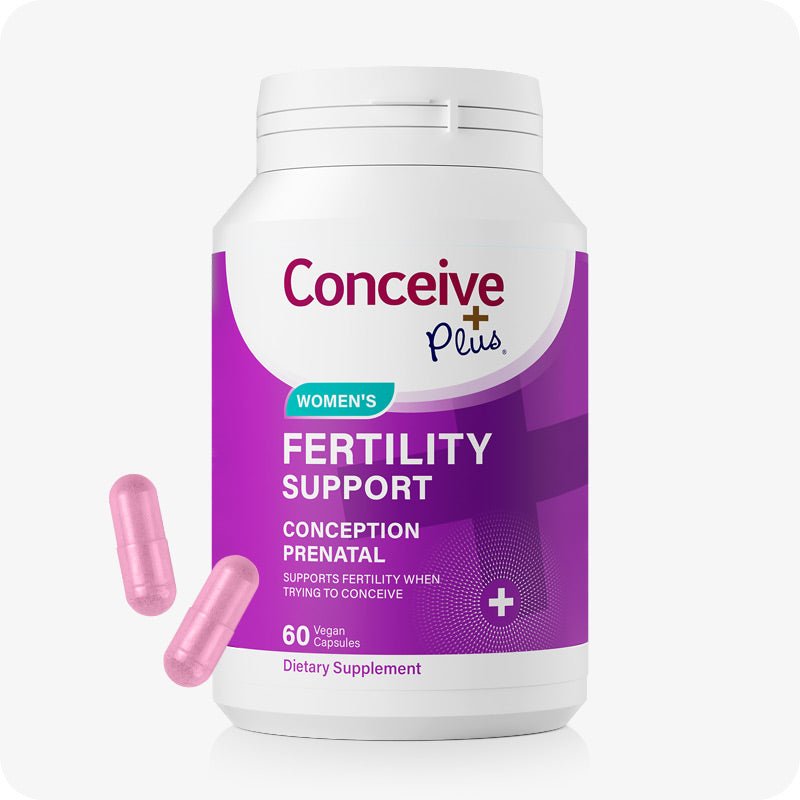
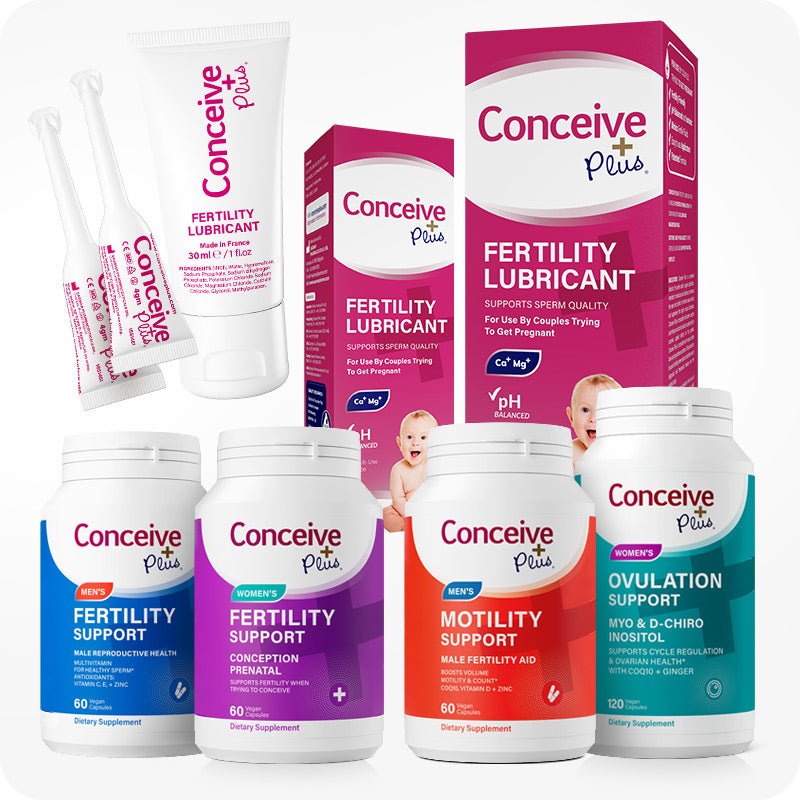
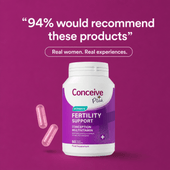
At any age, the right nutritional support can make a meaningful difference to your fertility journey. Conceive Plus Women’s Fertility Support is a scientifically formulated supplement containing myo-inositol, folic acid, and key micronutrients that support ovarian function and egg quality — especially important as you navigate the biological realities of age. For men, Conceive Plus Men’s Fertility Support provides targeted nutrients to support sperm quality and DNA integrity. Age is a factor, not a verdict — give your body every advantage.
How Female Age Affects Egg Quality and Quantity
The most significant impact of age on female fertility concerns both the number of eggs remaining and their quality. Unlike skin cells or blood cells, eggs are non-renewable — every ovulation cycle depletes the finite pool a little further. Equally important is egg quality. Younger eggs are far more likely to have the correct number of chromosomes, while the risk of chromosomal abnormalities increases steadily with age. At age 25, the chance of a chromosomal abnormality in a conceived pregnancy is approximately 1 in 500. By age 35, it rises to about 1 in 200. By age 40, it reaches 1 in 60, and by 45, approximately 1 in 20. This explains why miscarriage rates increase with age — most first-trimester losses result from chromosomal abnormalities.
The quality decline stems from the long interval between when eggs form and when they ovulate — potentially decades later. The cellular machinery managing chromosome separation becomes less precise, and the mitochondria powering each egg become less efficient. However, this trajectory is not uniform. Some women in their late thirties have excellent reserve and egg quality, while some women in their twenties may have diminished reserve. Individual testing should guide your planning.
Ovarian Reserve Testing
Several clinical markers provide valuable insight into your personal fertility timeline. Anti-Müllerian Hormone is produced by small ovarian follicles and correlates strongly with remaining egg count. A simple blood test at any point in your cycle can measure it. Levels above 1.0 ng/mL generally suggest adequate reserve. Low AMH doesn’t mean you cannot conceive — it simply indicates fewer eggs remain, not that those eggs are of poor quality.
Follicle-Stimulating Hormone measured on day 3 of your cycle tells a complementary story. As ovarian reserve declines, the brain produces more FSH to stimulate follicle growth. Antral Follicle Count uses transvaginal ultrasound to count visible small follicles — 10 to 20 is normal. These markers are most useful when interpreted together rather than in isolation.
Male Age and Fertility
Paternal age matters more than many realise. After age 40, men experience gradual declines in semen volume, sperm motility, and morphologically normal sperm. More importantly, sperm DNA fragmentation increases with paternal age and is associated with lower fertilisation rates, poorer embryo development, higher miscarriage rates, and increased risks of certain conditions in offspring. A landmark study found the risk of miscarriage increases by approximately 23% for every five years of paternal age after 30. Supporting sperm health through nutrition and lifestyle can mitigate some age-related changes.
Fertility After 35 and After 40
After 35, the medical community uses the term “advanced maternal age” primarily for risk management, not inevitability. Many women conceive naturally and have healthy pregnancies. After 40, natural conception probability per cycle drops to about 5 to 10 percent compared to 20 to 25 percent at age 30. But with assisted reproductive technologies, many women over 40 achieve successful pregnancies. If over 35 and trying for six months without success, or over 40 and trying for three months, consult a fertility specialist.
Proactive Strategies at Every Age
Track ovulation with BBT or ovulation predictor kits. Follow a Mediterranean-style diet rich in antioxidants, healthy fats, and lean protein. Maintain a healthy BMI. Consider targeted supplementation with myo-inositol, CoQ10, folate, zinc, and vitamin D. Manage stress through mindfulness, adequate sleep, and moderate exercise. And don’t wait to seek specialist help — early intervention preserves options and reduces frustration.
Your fertility journey is uniquely yours, and the right support can make all the difference. Conceive Plus Women’s Fertility Support is trusted by thousands of women worldwide to support healthy ovarian function and egg quality at every age. Backed by clinical-grade ingredients and manufactured to the highest standards — because when it comes to fertility, compromise isn’t an option. Explore the full Conceive Plus range and take the next step with confidence.
FAQ: Age and Fertility
1. At what age does female fertility start to decline? Around age 32 gradually, with more noticeable decrease after 35 and steeper drop after 40.
2. Can I improve egg quality at 38? While you cannot increase egg count, you can support egg quality through nutrition, antioxidants, CoQ10 supplementation, and a healthy lifestyle.
3. Does age affect male fertility? Yes. After 40, sperm quality declines with reduced motility, increased DNA fragmentation, and higher genetic abnormality risks.
4. What’s the best age to freeze eggs? Under 35, when egg quality is highest. Freezing at any age preserves your fertility potential at that moment.
5. Can I get pregnant naturally at 42? Yes, many women do, though per-cycle probability is lower at around 5 percent.
6. How long should I try before seeing a specialist? Under 35: 12 months. 35 to 40: 6 months. Over 40: 3 months.
7. Does AMH predict my chances of conceiving? AMH indicates egg quantity, not quality. Low AMH means fewer eggs remain but doesn’t predict your ability to conceive.
8. Can supplements reverse age-related decline? Supplements cannot reverse the biological clock but can optimise remaining egg function and improve reproductive health.
9. Is IVF less successful for older women? IVF success rates decline with age, particularly after 40, but many women over 40 achieve pregnancy with optimised protocols.
10. What can men do to protect fertility as they age? Antioxidant-rich nutrition, healthy weight, limiting alcohol, avoiding smoking, and taking targeted supplements like zinc, selenium, and CoQ10.